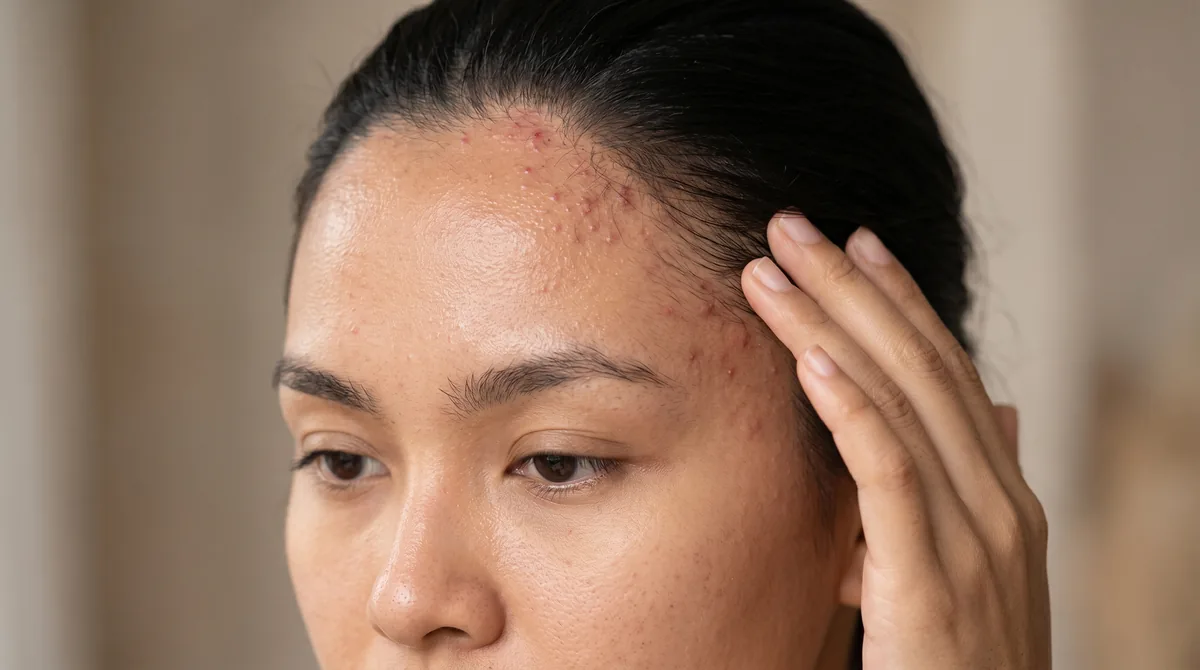
You shower after every workout. You change your clothes immediately. You use the same face wash that worked perfectly well back home. But here, in this heat, your forehead breaks out within hours of leaving the gym. Your chest develops small, angry bumps under your sports bra line. Your back erupts in clusters you can’t even reach. And the dermatologist keeps saying it’s just sweat and friction, prescribing the same benzoyl peroxide that isn’t making a dent.
This article contains affiliate links. See our affiliate disclosure for details.
Here’s what’s actually happening. The water you’re showering in after your workout contains dissolved minerals, calcium and magnesium primarily, that don’t rinse clean. When you sweat in 45-degree heat, those minerals mix with sebum, dead skin cells, and bacteria on your skin surface. The result is a sticky, pore-clogging residue that standard acne treatments can’t address because they’re targeting the wrong mechanism. Research published in the Journal of Clinical and Aesthetic Dermatology found that hard water significantly impairs skin barrier function and increases transepidermal water loss, creating an environment where acne-causing bacteria thrive.
This isn’t regular acne. It’s not hormonal, it’s not dietary, and it’s not because you’re not washing enough. It’s environmental, and it requires a different approach. Let’s break down exactly what’s happening to your skin in hot, hard-water climates, and what actually works to clear it.
Why Sweat Acne Is Different in Hard Water Climates
Sweat acne, clinically called acne mechanica, develops when sweat, friction, heat, and occlusion combine to irritate hair follicles. In temperate climates with soft water, this usually resolves quickly with basic hygiene. But in Gulf conditions, you’re dealing with a compounding factor: mineral-laden water that leaves a film on your skin even after you think you’ve rinsed clean.
Hard water contains high concentrations of calcium carbonate and magnesium. When you shower, these minerals bind to soap and form a precipitate, soap scum, that adheres to your skin. A study in the International Journal of Cosmetic Science demonstrated that hard water reduces the effectiveness of cleansers by up to 60% and leaves a residue that can persist for hours after washing.
Post-workout, your pores are dilated from heat. Your skin is covered in sweat, which is slightly acidic and contains urea, ammonia, and salts. When you rinse with hard water, the mineral residue mixes with this sweat cocktail and creates a sticky layer that traps bacteria, sebum, and dead skin cells inside your pores. The result? Inflammatory papules and pustules that appear within 12 to 24 hours of exercise.
This explains why your breakouts concentrate in specific zones. Your forehead and hairline, where sweat drips and hair traps moisture. Your chest and between your breasts, where sports bras create friction and occlusion. Your upper back and shoulders, where backpack straps or gym bags rub against damp skin. These aren’t random locations. They’re the areas where sweat, friction, and mineral buildup converge.
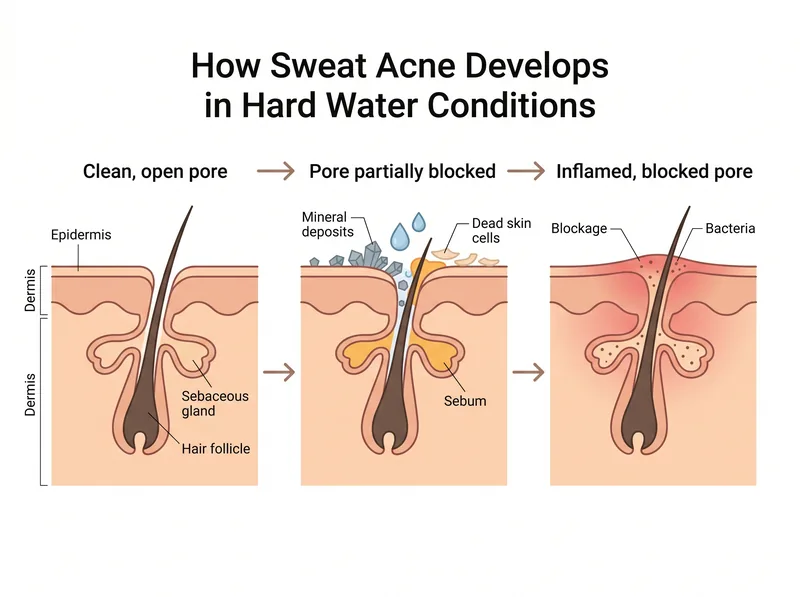 Hard water minerals (calcium and magnesium) combine with sweat, sebum, and dead skin cells to create a sticky residue that blocks pores and triggers inflammation.
The Three Types of Sweat Acne and How to Identify Them
Not all post-workout breakouts are the same. Understanding what you’re dealing with changes how you treat it. Here’s how to tell the difference.
Acne mechanica presents as small, uniform bumps clustered in friction zones. They’re usually the same size, appear suddenly after workouts, and feel slightly tender to touch. The bumps are inflammatory, meaning they’re red and raised, but they don’t develop whiteheads unless they become infected. This is what most people experience in hot climates, and it’s directly related to the combination of sweat, friction, and mineral residue clogging pores.
Fungal acne, technically called pityrosporum folliculitis, looks similar but behaves differently. The bumps are itchy, not just tender. They don’t respond to standard acne treatments like benzoyl peroxide or salicylic acid. They often appear on the chest, back, and shoulders rather than the face, and they worsen with heat and humidity. The American Academy of Dermatology notes that fungal acne thrives in environments with excessive moisture and occlusion, which describes Gulf summer conditions perfectly.
Heat rash, or miliaria, is a third category that’s often confused with acne. It appears as tiny, clear or red bumps that develop when sweat ducts become blocked. Unlike acne, heat rash doesn’t involve the hair follicle or sebaceous gland, it’s purely a sweat duct issue. The bumps are smaller, more widespread, and often appear in areas covered by tight clothing. They usually resolve within a few days once you stop sweating and stay cool.
The treatment approach differs for each type. Acne mechanica responds to exfoliation and barrier repair. Fungal acne requires antifungal treatments. Heat rash needs cooling and loose clothing. Misdiagnosing the type means you’ll use the wrong products and see no improvement, which is why so many women feel frustrated after months of trying standard acne routines.
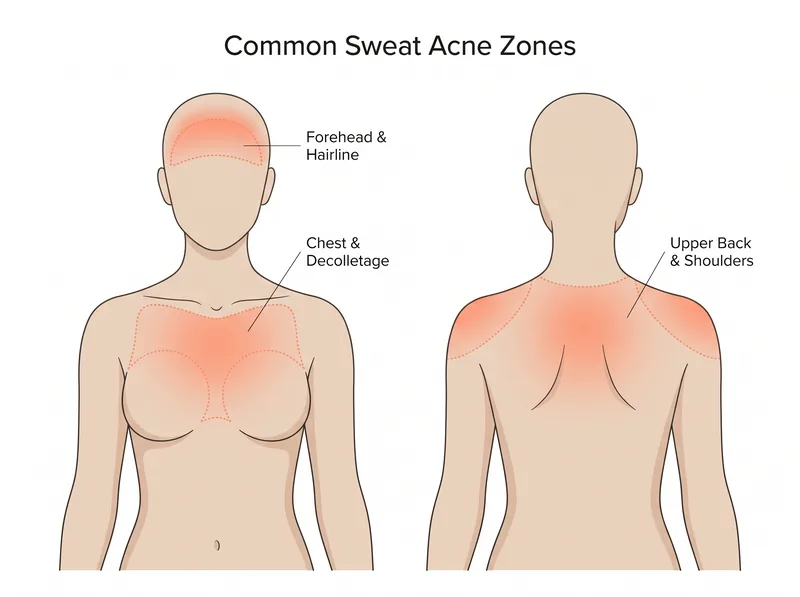 Sweat acne concentrates in areas with the highest density of sweat glands and friction from clothing or hair.
The Mineral Residue Problem Your Cleanser Can’t Fix
Standard acne cleansers are formulated for soft water. They rely on surfactants to lift oil and dirt from the skin, but in hard water, those surfactants bind to calcium and magnesium instead of doing their job. The result is that you’re not actually cleaning your skin, you’re just redistributing the residue.
This is where chelating agents become critical. Chelating ingredients like EDTA (ethylenediaminetetraacetic acid) or citric acid bind to mineral ions and prevent them from forming the sticky film that clogs pores. Mineral buildup isn’t just a hair problem, it affects your skin barrier in the same way, creating a physical blockage that traps bacteria and sebum beneath the surface.
After intense workouts in Gulf heat, your skin needs a two-step cleansing approach. First, a micellar water or chelating rinse to break down mineral residue and sweat salts. Then, a gentle salicylic acid or benzoyl peroxide cleanser to address the acne-causing bacteria and inflammation. Skipping the first step means the second step can’t penetrate effectively.
For body acne on the back and chest, a chelating body wash or even a clarifying shampoo like Regrowth+ can help remove the mineral layer before you apply acne treatments. The goal is to reset your skin to a clean baseline before treating the inflammation, not to over-strip or over-treat with harsh actives that will only worsen barrier damage.
What Works: The Post-Workout Protocol for Hot Climates
Timing matters more than you think. Mayo Clinic research shows that bacteria begin colonizing sweat-covered skin within 30 minutes. That’s your window. If you can’t shower immediately after working out, at least rinse your face, chest, and back with plain water to remove the sweat layer. Letting it sit while you drive home or run errands gives bacteria time to proliferate and minerals time to bond to your skin.
Your cleanser choice is critical. Look for products with salicylic acid (0.5% to 2%) or benzoyl peroxide (2.5% to 5%) combined with chelating agents. Salicylic acid is oil-soluble, so it penetrates into pores to dissolve sebum and dead skin cells. Benzoyl peroxide kills acne-causing bacteria on contact. But neither works effectively if mineral residue is blocking their access to the pore.
After cleansing, use a toner or essence with niacinamide or zinc. Niacinamide regulates sebum production and reduces inflammation without drying the skin. Zinc has antimicrobial properties and helps control oil. Both ingredients support barrier repair, which is essential in climates where your skin is under constant environmental stress.
Moisturize even if you have oily skin. Skipping moisturizer signals your sebaceous glands to produce more oil to compensate for dehydration. Choose a lightweight, oil-free, non-comedogenic formula with humectants like hyaluronic acid or glycerin. These ingredients draw water into the skin without adding occlusive oils that can trap sweat and bacteria.
And here’s the detail most people miss: use a fresh towel every time. WebMD notes that damp towels are breeding grounds for bacteria, and reusing the same towel to dry your face or body after a workout reintroduces the bacteria you just washed off. It sounds excessive, but it makes a measurable difference in how quickly breakouts resolve.
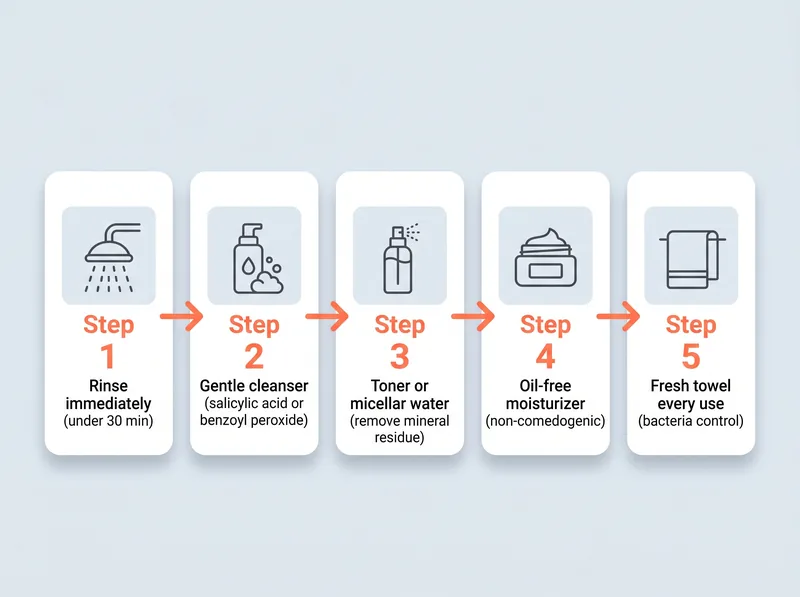 A consistent post-workout protocol removes sweat, minerals, and bacteria before they can trigger breakouts.
Ingredient Adjustments for Sweat-Prone Skin in Extreme Heat
Not all acne-fighting ingredients perform well in hot, humid conditions. Some break down in heat, others increase sun sensitivity, and a few actually worsen the problem by over-drying skin and triggering rebound oil production.
Benzoyl peroxide is effective but unstable in heat. It degrades when exposed to high temperatures, losing potency over time. If you’re using benzoyl peroxide products in the Gulf, store them in a cool, dark place, ideally in the fridge. Apply them immediately after showering while your skin is still cool. And start with a lower concentration (2.5%) to avoid excessive irritation, you can always increase if needed.
Salicylic acid is more heat-stable and better suited for hot climates. It’s also less irritating than benzoyl peroxide for most people. Look for leave-on treatments rather than cleansers, because the ingredient needs contact time with the skin to work. A salicylic acid toner or serum applied after cleansing gives you better results than a wash-off product.
Retinoids, including adapalene (Differin) and tretinoin, are highly effective for acne but increase photosensitivity. In climates with intense UV exposure, you need to be strategic. Apply retinoids only at night, use a broad-spectrum SPF 50 during the day, and consider starting with a lower strength to minimize irritation. Retinol in extreme heat requires careful handling to avoid barrier damage.
Avoid heavy oils and occlusives during the day. Ingredients like coconut oil, shea butter, and petrolatum trap heat and sweat against the skin, worsening acne mechanica. Save these for nighttime use if your skin tolerates them, but during the day, stick to lightweight, breathable formulas that won’t create a barrier.
When to See a Dermatologist and What to Ask For
If you’ve been following a consistent post-workout skincare routine for six to eight weeks and you’re not seeing improvement, it’s time to consult a dermatologist. Persistent sweat acne can indicate an underlying issue like hormonal imbalance, fungal overgrowth, or a compromised skin barrier that needs medical intervention.
Be specific about your environment when you see a dermatologist. Many doctors trained outside the Gulf region aren’t familiar with the unique challenges of hard water and extreme heat. Bring up the mineral content of your water, the temperature and humidity levels you’re exposed to, and the fact that your breakouts worsen after workouts despite immediate cleansing. This context helps them understand that you’re not dealing with standard acne.
Ask about prescription options that target the specific mechanisms at play. Topical antibiotics like clindamycin can reduce bacterial colonization. Azelaic acid has both antibacterial and anti-inflammatory properties and is more heat-stable than many other actives. For severe cases, oral antibiotics or hormonal treatments like spironolactone might be appropriate, but these come with side effects and should be reserved for cases that don’t respond to topical treatments.
If fungal acne is suspected, request a culture or KOH test to confirm. Fungal acne requires antifungal treatments like ketoconazole cream or oral fluconazole, and using standard acne treatments will only worsen the condition. A proper diagnosis saves you months of frustration and ineffective treatment.
Lifestyle Adjustments That Actually Reduce Breakouts
Your workout clothing matters more than you think. Synthetic fabrics like polyester and nylon trap heat and moisture against your skin, creating the perfect environment for acne mechanica. Cleveland Clinic research shows that occlusive clothing significantly increases the risk of folliculitis and acne in hot climates. Switch to moisture-wicking, breathable fabrics like bamboo or technical cotton blends that pull sweat away from your skin.
Don’t wear the same sports bra or workout top twice without washing. Bacteria, sweat salts, and sebum accumulate in fabric fibers, and wearing the same gear again reintroduces these irritants to your skin. If you work out daily, you need at least three to four sets of workout clothes to rotate through, allowing each set to be properly laundered between uses.
Hair can be a major contributor to forehead and temple acne. If you have long hair, tie it back completely during workouts to prevent it from trapping sweat against your skin. After exercising, wash your hairline and temples separately from the rest of your face, this area accumulates more sweat and product residue than you realize. And if you use heavy styling products or oils in your hair, they migrate to your forehead and clog pores, especially when you sweat.
Consider the timing and intensity of your workouts. Exercising outdoors in peak heat (11 AM to 4 PM) exposes your skin to both extreme temperatures and UV radiation, both of which worsen inflammation and barrier damage. If possible, work out early morning or evening when temperatures are lower. Indoor workouts in air-conditioned spaces reduce the sweat load on your skin, though you’ll still need to address the hard water issue when you shower.
And here’s something most people don’t think about: hydration from the inside affects how your skin responds to external stressors. Dehydration concentrates the salts and urea in your sweat, making it more irritating to your skin. Drinking adequate water (at least 3 liters daily in hot climates) dilutes sweat composition and helps your skin maintain barrier function.
References
- Hard Water and Skin Barrier Function: A Clinical Study - Journal of Clinical and Aesthetic Dermatology
- Effects of Hard Water on Cleanser Efficacy and Skin Residue - International Journal of Cosmetic Science
- Folliculitis: Causes, Symptoms, and Treatment - American Academy of Dermatology
- Acne: Symptoms, Causes, and Treatment Approaches - Mayo Clinic
- Lifestyle Habits That Can Worsen Acne - WebMD