You moved to a place where the sun feels like it’s personally angry with you, and now your dermatologist-recommended retinol routine feels like a terrible idea. The flaking you could handle back home has turned into full-scale peeling. Your skin stings when you walk outside. And you’re wondering if retinol is even worth it when you’re living somewhere that hits 45°C by noon.
Here’s what’s actually happening. Retinol increases cell turnover, which means your skin is shedding faster and the new cells underneath are more vulnerable. In extreme heat and intense UV exposure, that vulnerability becomes a real problem. The same retinol concentration that worked perfectly in London or Toronto can cause significant photosensitivity and barrier damage in the Gulf. This article contains affiliate links. See our affiliate disclosure for details.
But you don’t have to give up retinol entirely. You just need to use it differently. The approach that works in hot, dry climates with year-round sun exposure requires adjustments to timing, concentration, buffering, and sun protection. This guide walks through exactly how to modify your retinol routine so you get the anti-aging and skin-smoothing benefits without the damage.
Key Takeaways
• Start with the lowest retinol concentration (0.25% or less) and increase slowly over months, not weeks, in extreme heat climates
• Apply retinol only at night, at least 30 minutes after cleansing, and wait 20 minutes before applying moisturizer to reduce irritation
• Use SPF 50 or higher every single day, reapplied every two hours when outdoors, as retinol significantly increases sun sensitivity
• Buffer retinol with a hydrating serum or mix it with your moisturizer during the adaptation phase to reduce irritation in dry climates
• Take retinol breaks during peak summer months (June-August) if you’re experiencing persistent irritation, barrier damage, or excessive sun exposure
Why Retinol Behaves Differently in Extreme Heat
Retinol works by accelerating cell turnover and increasing collagen production. That’s why it’s effective for fine lines, acne, and hyperpigmentation. But it also temporarily compromises your skin barrier while those new cells are forming.
In temperate climates, that compromise is manageable. You’re indoors most of the time. UV exposure is seasonal. Humidity helps your skin retain moisture. But in the Gulf, you’re dealing with year-round intense UV, low humidity, and extreme temperature fluctuations between air-conditioned indoors and scorching outdoors.
Research on retinoid photosensitivity shows that retinol-treated skin is significantly more vulnerable to UV damage, particularly UVB rays. When you’re living somewhere with a UV index that regularly hits 10 or higher, that vulnerability becomes a daily concern, not a seasonal one.
The other issue is barrier function. Desalinated water and low humidity already stress your skin barrier. Add retinol’s exfoliating effect, and you’ve got a recipe for chronic irritation, transepidermal water loss, and inflammation. That’s why the flaking and redness you experienced mildly in cooler climates can become severe here.
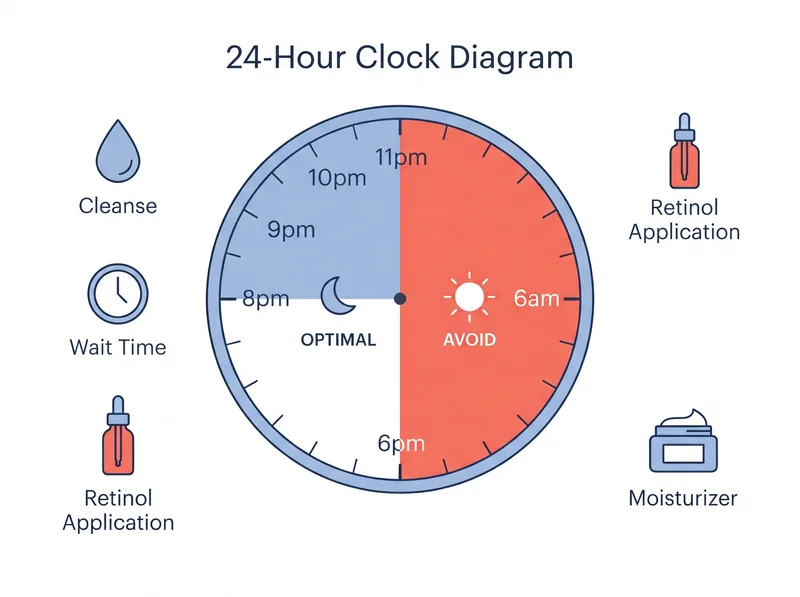 The evening application window matters more in extreme heat than in temperate climates.
The Right Concentration and Formulation for Hot Climates
If you’re new to retinol or new to this climate, start with 0.25% or lower. I know that sounds conservative, but the goal is to build tolerance without triggering a barrier crisis. In extreme heat, your skin is already stressed. Don’t add more stress than necessary.
Retinol comes in different forms: retinol, retinaldehyde, and retinyl palmitate. Retinaldehyde is closer to retinoic acid (the prescription-strength version) and works faster, but it’s also more irritating. Retinyl palmitate is gentler but requires more conversion steps to become active, so it’s slower and less effective. Pure retinol is the middle ground.
For hot climates, look for encapsulated or time-release retinol formulations. These deliver the active ingredient more slowly, which reduces irritation. Studies on retinoid delivery systems show that microencapsulation significantly reduces irritation while maintaining efficacy.
Avoid retinol products with high concentrations of alcohol, fragrance, or essential oils. Your skin doesn’t need additional irritants when it’s already dealing with heat stress and retinol. Stick to minimal, barrier-supporting formulations with ingredients like hyaluronic acid, ceramides, or niacinamide.
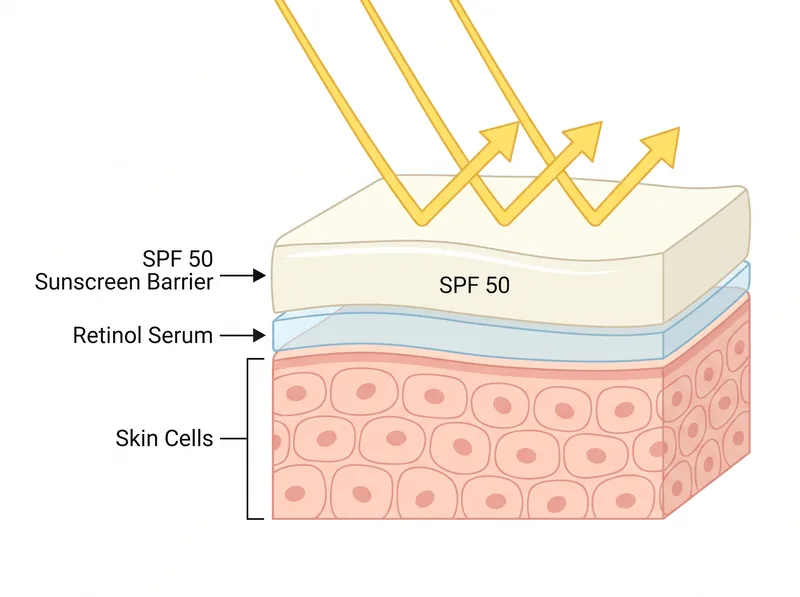 In Gulf conditions, SPF 30 isn’t enough when you’re using retinol. You need SPF 50 minimum, reapplied every two hours outdoors.
Application Timing and Technique That Actually Works
Retinol goes on at night. Always. But in extreme heat climates, the timing within your evening routine matters more than you’d think.
Cleanse your face, then wait 20 to 30 minutes before applying retinol. This waiting period allows your skin’s pH to normalize and reduces irritation. If you apply retinol to damp skin immediately after cleansing, you’re increasing penetration, which sounds good but actually increases irritation in compromised barriers.
Use a pea-sized amount for your entire face. Dot it on your forehead, cheeks, and chin, then blend outward. Avoid the eye area, corners of your nose, and anywhere your skin is already irritated. If you’re dealing with stress-related skin inflammation, skip those areas entirely until the inflammation resolves.
Wait another 20 minutes after applying retinol before layering on your moisturizer. This allows the retinol to absorb without being diluted or buffered unintentionally. In the adaptation phase, you can mix retinol directly with your moisturizer to reduce irritation, but once your skin tolerates it, separate application is more effective.
The Non-Negotiable Sun Protection Protocol
If you’re using retinol, SPF 50 is the minimum. Not SPF 30. Not SPF 45. Fifty or higher, every single day, even if you’re indoors most of the time. UV penetrates windows. Reflected heat and light from pavement and buildings increases exposure. You can’t afford to be casual about this.
Apply sunscreen as the last step of your morning routine, and reapply every two hours if you’re outdoors. Sunscreens formulated for extreme heat are designed to stay stable and effective in high temperatures without melting off or leaving a white cast.
Look for broad-spectrum protection that covers both UVA and UVB. UVA ages your skin and penetrates deeper. UVB causes burns. Retinol makes you vulnerable to both. Mineral sunscreens (zinc oxide, titanium dioxide) are generally more stable in heat than chemical filters, but modern chemical sunscreens have improved significantly.
Here’s the reality check: if you’re not willing to commit to rigorous sun protection, don’t use retinol in this climate. The risk of hyperpigmentation, burns, and long-term photodamage outweighs any anti-aging benefit you’ll get from the retinol itself.
Buffering Strategies to Reduce Irritation
Buffering means creating a protective layer between retinol and your skin, or mixing retinol with another product to slow its absorption. It’s not cheating. It’s smart adaptation to environmental stress.
The simplest buffering method is applying a hydrating serum or essence before retinol. Hyaluronic acid, glycerin, or a barrier repair serum creates a moisture cushion that reduces irritation without blocking retinol’s effectiveness. You’ll still get results, just with less redness and flaking.
Another approach is mixing retinol directly with your night moisturizer. Use a 1:1 ratio in the beginning, then gradually reduce the moisturizer as your skin adapts. This is particularly useful during the first two months of retinol use in hot climates, or when you’re increasing to a higher concentration.
If you’re dealing with significant dryness or barrier damage (common when you’re adjusting to hard water and low humidity), consider the sandwich method: apply moisturizer, wait 10 minutes, apply retinol, wait another 10 minutes, then apply a second layer of moisturizer. It slows penetration but protects your barrier.
When to Take Retinol Breaks (And Why It’s Not Failure)
Taking breaks from retinol isn’t giving up. It’s recognizing that your skin has limits, especially in extreme conditions.
If you’re experiencing persistent redness, burning, or peeling that doesn’t improve after two weeks of buffering and reduced frequency, stop using retinol for at least a week. Let your barrier recover. Use gentle, hydrating products with ceramides, centella, or colloidal oatmeal.
Consider taking retinol breaks during peak summer months (June through August in the Gulf) if you’re spending more time outdoors or traveling. The combination of increased sun exposure and retinol is risky. You can resume in September when temperatures drop slightly and you’re back to your normal routine.
Some women cycle retinol seasonally in hot climates: use it from October through May, take a break June through September. You’ll still see long-term benefits from consistent use during the cooler months, and you’ll avoid the barrier damage that comes from pushing through peak heat.
What to Pair With Retinol (And What to Avoid)
Retinol plays well with some ingredients and clashes with others. In extreme heat, where your skin is already stressed, you need to be strategic about what you’re layering.
Safe to use with retinol: hyaluronic acid, niacinamide, ceramides, peptides, and squalane. These support your barrier and hydration without interfering with retinol’s function. Niacinamide in particular helps reduce irritation and inflammation.
Use with caution: vitamin C and AHAs (glycolic acid, lactic acid). These aren’t necessarily incompatible with retinol, but using them together increases irritation risk. If you want both in your routine, use vitamin C in the morning and retinol at night. Use AHAs on alternate nights, not the same night as retinol.
Avoid entirely: benzoyl peroxide, high-concentration salicylic acid, and other retinoids. Benzoyl peroxide can deactivate retinol. Combining multiple exfoliating acids or retinoids will wreck your barrier. Pick one active ingredient per night and stick with it.
References
- Retinoids in the treatment of skin aging: an overview of clinical efficacy and safety - PubMed Central
- Microencapsulated retinol: comparative clinical efficacy and tolerance versus conventional retinol - ScienceDirect
- How to use retinoid treatment for anti-aging - American Academy of Dermatology
- Photoprotection and vitamin A derivatives in cosmetics - PubMed