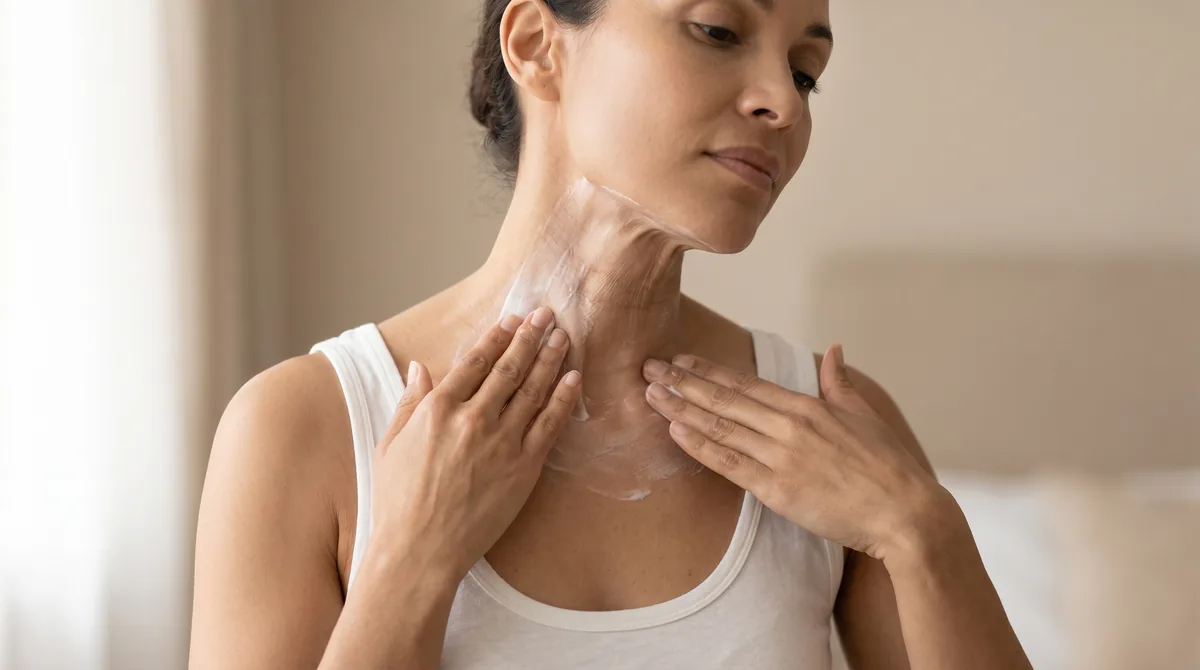
You’ve nailed your facial skincare routine. Retinol at night, vitamin C in the morning, SPF every single day. Your face looks good. But then you catch your reflection at a certain angle and realize your neck is telling a completely different story.
The neck and décolletage age faster than the face, and in dry climates with hard water, the problem accelerates. The skin here is thinner, has fewer oil glands, and gets constant exposure to the same environmental stressors as your face but rarely gets the same level of care. Add in the Gulf’s intense UV exposure and low humidity, and you’ve got a perfect storm for premature aging in an area most women ignore until the damage is already visible.
Here’s what’s actually happening to the skin on your neck and chest, why it’s worse in harsh climates, and the specific steps that reverse the signs you’re seeing now. This isn’t about adding ten products to your routine. It’s about extending what you’re already doing and making a few targeted changes that address the unique needs of this forgotten area. This article contains affiliate links. See our affiliate disclosure for details.
Why the Neck and Décolletage Age Faster Than Your Face
The skin on your neck is structurally different from your face. It’s thinner, with about 30% less collagen density in the dermis and significantly fewer sebaceous glands. That means less natural oil production and less structural support from the start.
But the real problem is movement. Your neck is in constant motion. Every time you look down at your phone, turn your head, swallow, or sleep on your side, you’re creating repetitive creasing in skin that’s already thinner and less resilient than facial skin. Over time, these dynamic wrinkles become static lines that don’t smooth out when you straighten your head.
The décolletage has its own issues. It’s one of the most sun-exposed areas of your body, especially in climates where tank tops and sundresses are year-round wear. UV damage here shows up as hyperpigmentation, crepey texture, and visible capillaries. The skin is also prone to sleeping creases because of side-sleeping positions that compress the chest area for hours every night.
In the Gulf region, you’re dealing with additional environmental factors. Hard water strips moisture from this already oil-poor area every time you shower. The extreme heat causes chronic low-grade dehydration that shows up first in thinner skin. Indoor air conditioning creates dramatic humidity swings that compromise the skin barrier. Your neck and chest are getting hit from all sides, and most women don’t realize it until the horizontal lines and sun damage are already entrenched.
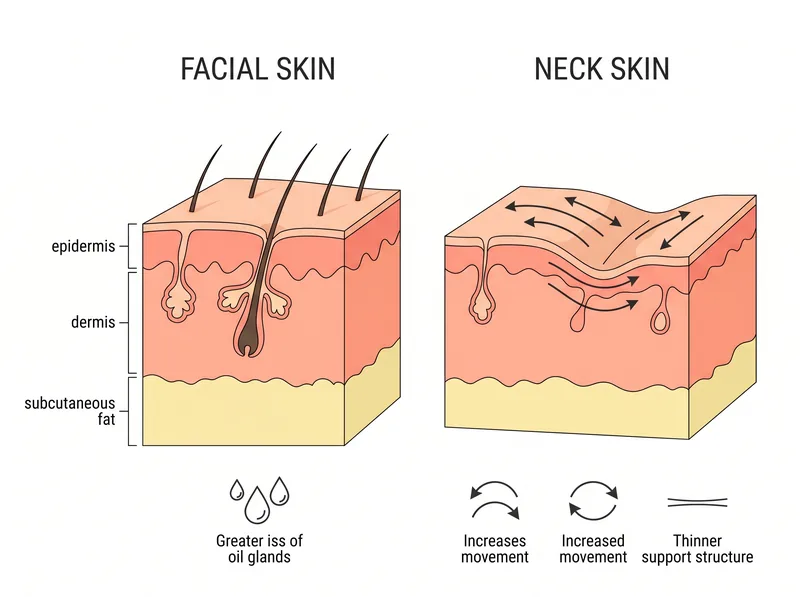 The neck has thinner skin, fewer oil glands, and constant movement, making it age faster than facial skin.
The Hard Water Factor: Why Showering Makes It Worse
If you’ve noticed your neck feels tight and dry immediately after showering, it’s not your imagination. Hard water contains high concentrations of calcium and magnesium that bind to the skin’s surface, changeing the lipid barrier and preventing moisture retention.
The neck and décolletage are particularly vulnerable because they have fewer sebaceous glands to compensate for this moisture loss. While your face might produce enough oil to partially offset the drying effects of hard water, your neck can’t. The result is chronic dehydration, impaired barrier function, and accelerated visible aging in the form of fine lines and crepey texture.
This is the same issue affecting your scalp health, another commonly forgotten area with thin, delicate skin that’s exposed to hard water daily. The mineral buildup doesn’t just affect your hair. It’s sitting on your skin, creating a film that blocks product absorption and prevents your neck from holding onto the moisture it desperately needs.
The fix isn’t complicated, but it does require a chelating step. Using a gentle chelating cleanser on your neck and chest once or twice a week removes the mineral buildup and allows your barrier-repair products to actually penetrate. For women dealing with significant mineral exposure, a chelating shampoo like Regrowth+ can double as a neck and chest cleanser in the shower, removing the buildup before you apply your regular body products.
What Actually Works: Ingredients That Target Neck-Specific Aging
Neck skin responds to the same active ingredients as facial skin, but the delivery matters more. Because the skin is thinner and has less natural oil, it’s more prone to irritation from high-strength actives. You need gentler formulations or slower introduction protocols.
Retinoids are the gold standard for reversing collagen loss and improving skin texture, but starting with a 0.025% retinol or a retinaldehyde formula is smarter for the neck than jumping straight to prescription-strength tretinoin. Research shows that consistent low-dose retinoid use produces significant improvement in neck skin texture and firmness over 12 weeks without the irritation that causes most women to quit.
Peptides are underrated for neck care. Matrixyl 3000 and copper peptides specifically target collagen synthesis and skin firmness. They’re gentle enough for daily use and work synergistically with retinoids when layered correctly. The neck tolerates peptides well because they don’t cause the flaking and sensitivity that retinoids can trigger in this delicate area.
Niacinamide is essential for barrier repair in hard water climates. It increases ceramide production, reduces transepidermal water loss, and improves the skin’s ability to retain moisture despite environmental stress. For the neck and décolletage, a 5% niacinamide serum applied before moisturizer makes a visible difference in skin texture within four weeks. It’s one of the few ingredients that addresses both the hydration deficit and the pigmentation issues common in sun-damaged chest skin.
Don’t skip antioxidants. Vitamin C, vitamin E, and ferulic acid protect against ongoing UV damage and help fade existing hyperpigmentation. The décolletage in particular benefits from a morning antioxidant serum because it’s so chronically sun-exposed. Look for stable formulations in airless pumps, as vitamin C degrades rapidly in Gulf heat and humidity.
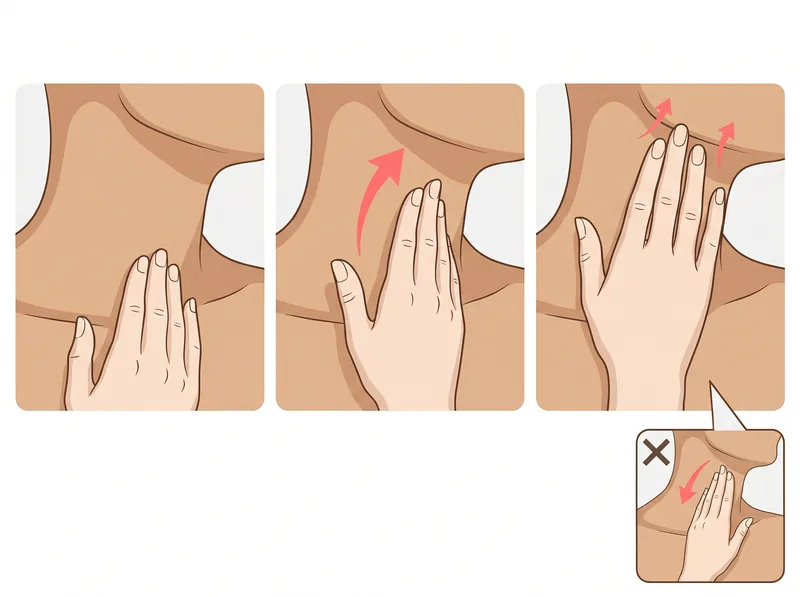 Always apply neck products with upward strokes from collarbone to jawline to work with, not against, gravity.
The Application Technique That Actually Matters
How you apply products to your neck is as important as what you apply. The standard advice is to use upward strokes from the collarbone to the jawline, and it’s not just aesthetic preference. Gravity is already working against this area. Applying products downward reinforces the directional pull that contributes to sagging.
Start with damp skin. Apply your serum or treatment product to a neck that’s still slightly moist from cleansing or from a hydrating mist. This improves penetration and helps thin-textured products spread more easily without tugging at delicate skin.
Use the flat of your hand, not your fingertips. Press the product into the skin with your palm, then smooth upward with gentle pressure. Don’t pull or drag. The neck doesn’t have the same structural support as the face, and aggressive application can actually stretch the skin over time.
Extend everything down to your collarbones. Most women stop at the base of the neck, but the décolletage needs the same care. Any product you’re using on your face should continue down to at least the top of your chest. This includes retinoids, antioxidants, and SPF. The visible line of demarcation between a well-cared-for face and a neglected chest is one of the most aging things you can see on a woman.
SPF for the Neck: The Non-Negotiable Step You’re Probably Skipping
If you’re only applying sunscreen to your face, you’re undoing every other effort you’re making. The neck and décolletage need daily broad-spectrum SPF 30 minimum, and in Gulf climates, SPF 50 is smarter.
The issue is that most facial sunscreens feel too heavy or greasy when extended to the neck and chest, especially in heat. You need a formula that absorbs quickly, doesn’t pill under clothing, and doesn’t leave a white cast on the décolletage. Mineral sunscreens with zinc oxide work well here because they’re less likely to cause irritation on thin skin, but you’ll need a tinted or sheer formula to avoid the chalky finish.
Reapplication is the part everyone skips. Your neck is exposed all day, but most women only apply sunscreen once in the morning. If you’re outside for more than two hours or if you’re sweating, you need to reapply. A powder SPF or a spray formula makes midday reapplication more realistic for the neck and chest area without changeing makeup or feeling heavy in the heat.
Don’t forget the sides and back of your neck if you wear your hair up frequently. UV exposure isn’t just frontal. The back of the neck is particularly prone to sun damage in women who spend time outdoors or drive with the window down. A quick spray of SPF on these areas takes five seconds and prevents the kind of sun damage that’s nearly impossible to reverse later.
 Bringing your phone to eye level instead of dropping your head can prevent horizontal neck creases from forming.
Tech Neck: The Modern Problem Making Horizontal Lines Worse
Tech neck is real, and it’s not just about posture-related pain. The repeated forward head position you hold when looking at your phone creates horizontal creases across the neck that, over time, become permanent static wrinkles. If you’re spending hours a day looking down at a screen, you’re mechanically aging your neck faster than any environmental factor could.
The fix is simple but requires conscious effort: bring your phone to eye level instead of dropping your head to the phone. This keeps your neck in a neutral position and prevents the constant creasing that etches lines into the skin. It feels awkward at first, but after a few days it becomes automatic.
For lines that are already formed, topical treatments help but they won’t fully reverse deep creases caused by years of repeated folding. Retinoids improve the texture and make the lines less pronounced. Peptides can thicken the skin slightly, which reduces the appearance of depth. But the most effective intervention is preventing further damage by changing the mechanical habit that’s causing the problem.
Some women see improvement with silicone patches worn overnight on the neck. These create occlusion that hydrates the skin and physically prevents creasing during sleep. Studies on occlusive patches show temporary improvement in fine line appearance, though the effect is not permanent and requires consistent use. They’re worth trying if you’re a side sleeper and you wake up with visible sleep creases on your neck or chest that take hours to fade.
The Décolletage: Sun Damage, Crepiness, and What Reverses It
The chest area shows sun damage differently than the face. Instead of deep wrinkles, you typically see crepey texture, diffuse redness, broken capillaries, and scattered hyperpigmentation that looks like freckles or age spots. This is chronic UV damage accumulating over decades, and it’s harder to treat than facial aging because the skin here is thinner and more reactive.
Retinoids work, but you need patience and a gentler approach. Start with twice-weekly application of a 0.025% retinol formula, and only increase frequency once your skin tolerates it without flaking or redness. The chest is more prone to irritation than the face, and pushing too hard too fast will cause a setback that leaves you worse off than when you started.
For pigmentation, a combination approach works best. Vitamin C in the morning for antioxidant protection and brightening. Niacinamide for barrier support and melanin regulation. A gentle AHA like lactic acid or mandelic acid once or twice a week to increase cell turnover without the harshness of glycolic acid. The goal is gradual, consistent improvement over months, not dramatic results in weeks.
Crepey texture is the hardest to reverse because it’s a sign of advanced collagen and elastin loss. Topicals help, but they won’t restore the skin to a smooth, youthful state once the damage is severe. Consistent use of retinoids, peptides, and barrier-repair ingredients can improve the appearance by about 30-40% over six months, which is significant but not transformative. The real value is in preventing further deterioration and maintaining what you have now.
Professional treatments like fractional laser or radiofrequency can produce more dramatic improvement in crepey chest skin, but they’re expensive, require downtime, and carry risks of hyperpigmentation in darker skin tones. For most women, a solid at-home routine that includes retinoids, antioxidants, and religious SPF is the most realistic and cost-effective approach.
Hydration Strategy: Why Your Neck Needs Different Moisturizers
The neck and décolletage need richer, more occlusive moisturizers than your face, especially in dry climates. Because this area has fewer sebaceous glands and loses moisture more rapidly, lightweight gel moisturizers that work well on oily facial skin will leave your neck feeling tight and dehydrated.
Look for formulations with ceramides, cholesterol, and fatty acids that mimic the skin’s natural lipid barrier. These ingredients don’t just sit on the surface. They integrate into the barrier structure and improve the skin’s ability to hold onto water despite environmental stress. In hard water climates, this barrier-repair function is critical because the water itself is actively changeing your skin’s moisture retention every time you shower.
Hyaluronic acid is helpful but only if it’s layered correctly. Apply it to damp skin, then seal it in with an occlusive moisturizer. If you apply hyaluronic acid to dry skin in a low-humidity environment, it can actually pull moisture out of the deeper skin layers and make dehydration worse. This is a common mistake in Gulf climates where indoor humidity is often below 30%.
Night is the best time to use richer formulations on your neck and chest. Your skin’s barrier repair function peaks during sleep, and occlusive ingredients work more effectively when you’re not sweating or moving around. A thick cream or balm applied before bed gives your neck the intensive hydration it needs to recover from daily environmental exposure without feeling heavy or greasy during the day.
References
- Topical Retinoids in the Treatment of Photoaged Skin - Journal of Cosmetic Dermatology
- The Effect of Overnight Silicone Patches on Wrinkle Depth - Aesthetic Surgery Journal
- Basic Information About Water Hardness - US Environmental Protection Agency
- Niacinamide: A B Vitamin that Improves Aging Facial Skin Appearance - Dermatologic Surgery
- The Role of Moisturizers in Addressing Various Kinds of Dermatitis - American Academy of Dermatology