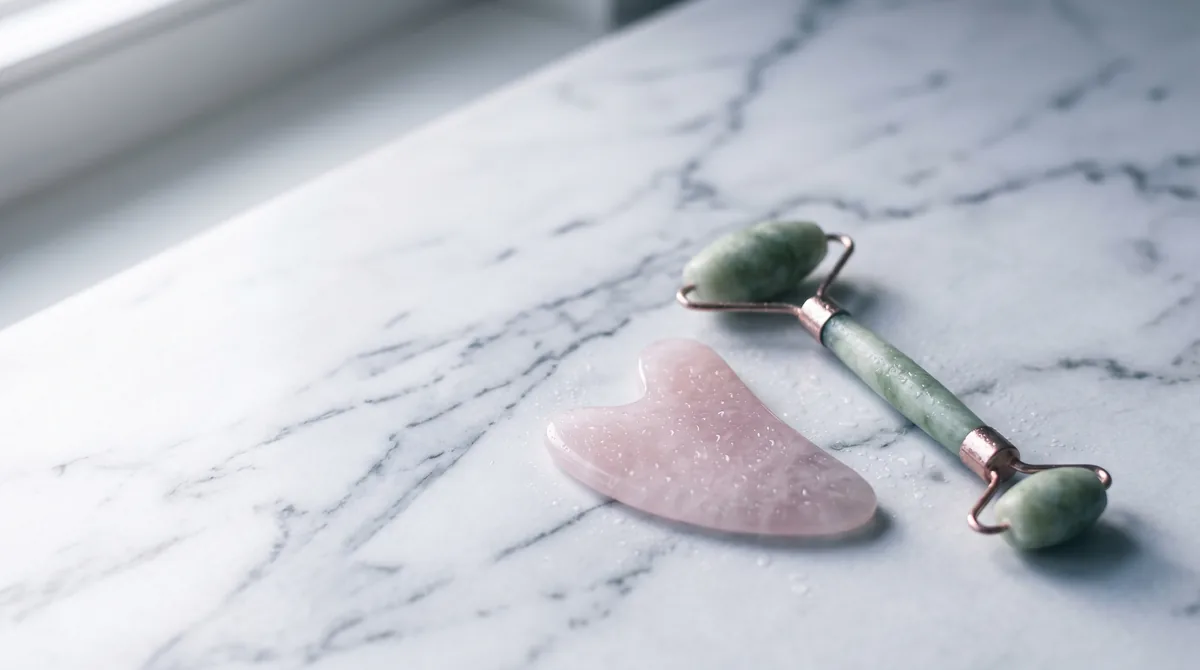
You bought the jade roller. Maybe the rose quartz gua sha too. And for the first week, your face felt cooler, tighter, less puffy. Then the humidity hit. The tool started feeling warm within seconds. A strange film appeared on the stone. Your skin got irritated after using it. Now the tools sit in your bathroom drawer, and you’re wondering if face tools even work in climates like this.
Here’s what’s actually happening. The environmental factors that stress your skin in hot, humid climates are the same ones that make traditional face tool protocols fail. Hard water leaves mineral deposits on stone surfaces. Humidity creates bacterial breeding grounds. Heat neutralizes the cooling effect that makes these tools feel effective. And your skin barrier, already compromised by extreme conditions, can’t tolerate the pressure levels that work in temperate climates.
This article contains affiliate links. See our affiliate disclosure for details.
Face tools aren’t useless in the Gulf. But they require different storage, different cleaning protocols, and different techniques. What works in London or New York won’t work here. Your skin is already dealing with hard water damage. The last thing it needs is contaminated tools making things worse.
Why Standard Storage Rules Don’t Apply Here
Most face tool advice assumes you live in a temperate climate with moderate humidity. Store your tools in a cool, dry place, they say. Use them at room temperature for best results. But room temperature in the Gulf is 25-28°C with 60-80% humidity. That’s not cool. That’s not dry. And it changes everything.
Stone tools are porous. Jade, rose quartz, and nephrite all have microscopic surface irregularities that trap moisture and bacteria. In high humidity, these surfaces never fully dry between uses. The moisture creates biofilm, that slippery coating you’ve probably felt on your roller after a few days. That’s bacterial growth. You’re rolling bacteria across your face.
Temperature matters more than you’d think. The cooling sensation from a jade roller comes from the stone being cooler than your skin. But if your bathroom sits at 28°C and your skin is 32°C (normal in heat), the four-degree difference isn’t enough to create the lymphatic drainage effect these tools are known for. The tool warms to skin temperature within 30 seconds. You lose the benefit.
Hard water adds another layer of complexity. The mineral content in Gulf water leaves calcium and magnesium deposits on any surface it touches. Your tools included. Those white streaks aren’t just cosmetic. They create rough patches that can irritate already compromised skin and provide more surface area for bacterial adhesion.
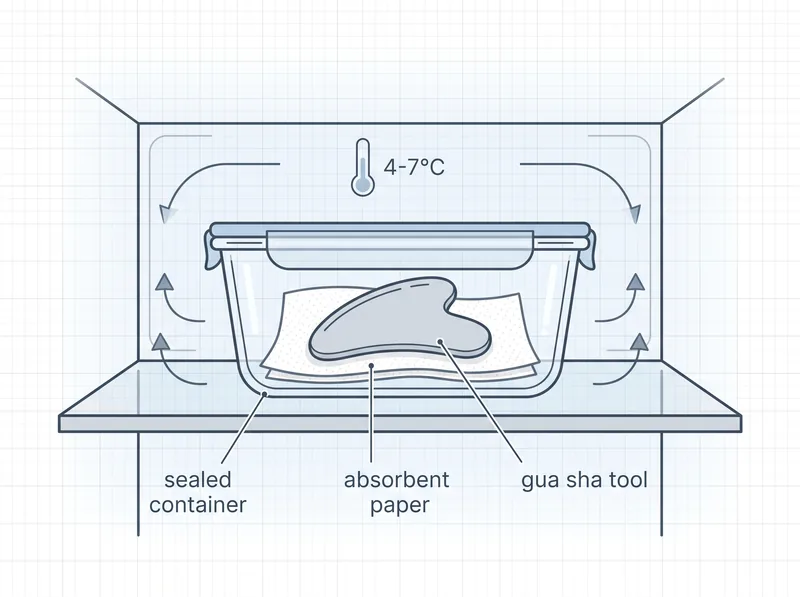 Store tools in a sealed container with absorbent material to prevent bacterial growth in humid conditions.
The Refrigerator Storage Protocol
Store your face tools in the refrigerator. Not the bathroom. Not a drawer. The fridge. This isn’t about luxury or spa vibes. It’s about creating the temperature differential that makes these tools functional and preventing bacterial growth that happens at room temperature in humid climates.
Here’s the system that works. Get a small glass or plastic container with a tight-sealing lid. Line it with a clean paper towel or cotton cloth. Place your tools inside, wrapped loosely in another paper towel. Seal the container. Store it in the main body of your fridge, not the door (temperature fluctuates too much there).
The paper towel serves two purposes. It absorbs condensation that forms when you remove cold tools into warm, humid air. And it prevents the tools from sitting in any moisture that accumulates in the container. Change the paper towel every 3-4 days, or whenever it feels damp. If you see any discoloration on the towel, that’s bacterial growth. Clean your tools immediately.
Temperature should be 4-7°C. That’s cold enough to create a significant temperature difference against skin (25-28 degrees) but not so cold it causes ice crystal formation in porous stone. Some women keep tools in the freezer. Don’t. Extreme cold can cause micro-fractures in stone, especially jade, and the thermal shock when applied to skin can damage capillaries in already heat-stressed skin.
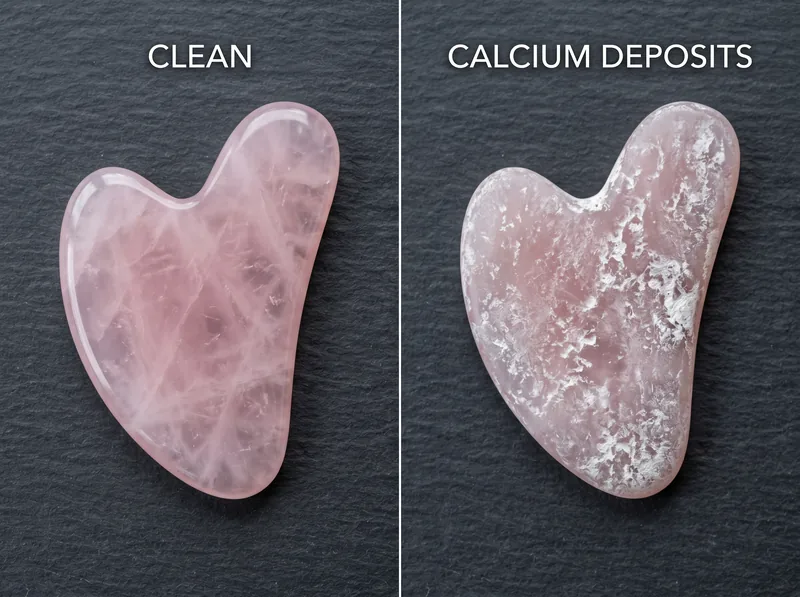 Hard water leaves mineral deposits on stone tools that can irritate skin and harbor bacteria.
Cleaning Protocols for Hard Water Environments
Wash your tools after every single use. Not once a week. Every time. In humid climates, bacteria multiply exponentially faster than in dry environments. The biofilm you can’t see after one use becomes visible contamination after three. By five uses without cleaning, you’re applying a bacterial culture to your face.
Don’t use tap water. The same hard water damaging your skin will coat your tools with mineral deposits. Use distilled water or filtered water with low mineral content. If you don’t have access to either, boil tap water and let it cool. Boiling precipitates out some (not all) of the calcium and magnesium. It’s not perfect, but it’s better than straight tap water.
The cleaning method matters. Use a gentle, pH-balanced cleanser. Not soap (leaves residue), not alcohol (dries out stone and can cause micro-cracks), not antibacterial wipes (leave chemical residue). A simple micellar water or the same gentle cleanser you use on your face works well. Apply a small amount to a soft cloth, wipe the entire surface of the tool, then rinse thoroughly with distilled water.
Dry immediately and completely. This is critical in humid climates. After rinsing, pat the tool dry with a clean towel, then let it air-dry for 10-15 minutes in an air-conditioned room before returning it to refrigerator storage. If you put a damp tool in a sealed container, you’ve just created a bacterial incubator. The condensation that forms in the container will be contaminated.
When Mineral Buildup Happens Anyway
Even with distilled water, you’ll eventually see mineral deposits. They come from your skin’s natural oils mixing with environmental minerals, from the hard water in your shower if you use tools during cleansing, from tap water splashes. White, chalky patches. Dull finish where the stone used to shine. Rough texture where it was smooth.
Monthly deep cleaning removes buildup before it becomes permanent. Mix equal parts distilled water and white vinegar in a small bowl. Submerge your tools for 10-15 minutes. The acetic acid in vinegar dissolves calcium carbonate deposits without damaging stone. You’ll see the water turn cloudy as minerals release. Don’t leave tools soaking longer than 20 minutes. Extended acid exposure can etch softer stones like rose quartz.
After the vinegar soak, rinse thoroughly with distilled water. Any vinegar residue left on the tool will change your skin’s pH when you use it. Rinse at least three times, checking that you can’t smell any vinegar scent. Then dry completely as described above. Some women report their tools feel different after vinegar cleaning, smoother and cooler. That’s because you’ve removed the insulating layer of mineral deposits.
For stubborn buildup, use a soft toothbrush with the vinegar solution to gently scrub affected areas. Don’t use abrasive scrubbers or baking soda paste. Both can scratch stone surfaces, creating more microscopic crevices for bacteria and minerals to accumulate. If buildup won’t come off with vinegar and gentle brushing, the tool has reached end of life. Replace it.
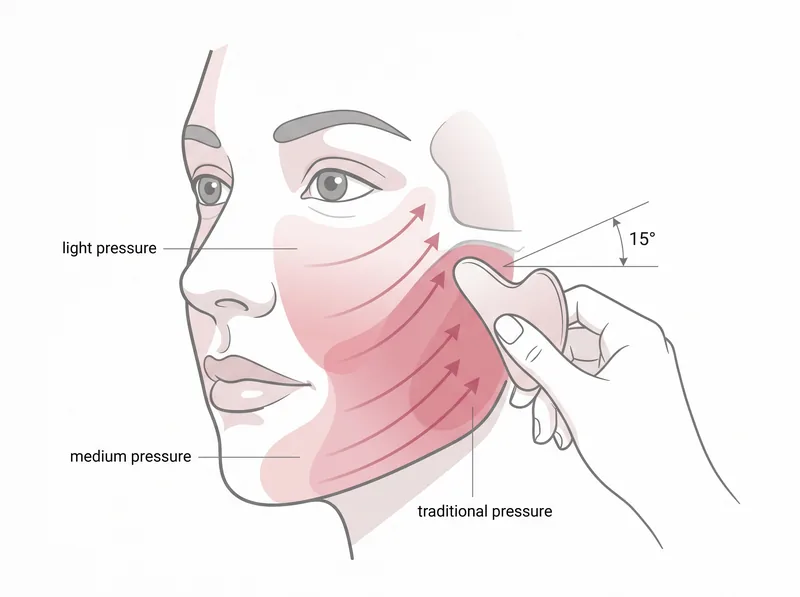 In extreme heat, skin barrier is already compromised. Use lighter pressure than traditional gua sha protocols recommend.
Technique Adjustments for Compromised Skin Barriers
Use lighter pressure than traditional gua sha protocols recommend. Your skin barrier is already stressed from heat, hard water, and UV exposure. The lipid barrier in dry climates is chronically compromised. Aggressive scraping creates micro-tears that become entry points for bacteria and irritants. What would be therapeutic pressure in a temperate climate becomes damaging pressure here.
The tool should glide, not drag. If you’re pulling skin or creating lasting redness, you’re using too much pressure. The goal is lymphatic drainage and muscle relaxation, not deep tissue work. Think of it as encouragement, not force. The stone should move smoothly across well-moisturized skin with minimal resistance. If it’s catching or skipping, add more facial oil or serum.
Shorter sessions work better. Traditional gua sha protocols recommend 10-15 minutes of work. In hot climates, limit sessions to 5-7 minutes. Your skin heats up quickly in ambient warmth. Extended manipulation increases inflammation rather than reducing it. The cooling effect you want from the tool dissipates after 5 minutes anyway. After that, you’re just dragging a warm stone across your face.
Morning use beats evening use. Your face is less inflamed, less heat-stressed, and less exposed to environmental damage in the morning. The lymphatic drainage effect is more pronounced because you’ve been horizontal for hours. Evening use, after a full day of heat exposure and hard water contact, often increases redness rather than reducing it. Your skin needs gentle repair at night, not mechanical manipulation.
What Actually Works vs. What’s Marketing
Jade stays cooler longer than rose quartz. This isn’t mystical. It’s thermal conductivity. Jade has higher heat capacity, meaning it absorbs and retains temperature change better than quartz. In practical terms, a jade roller pulled from the fridge stays cool against your skin for 2-3 minutes. Rose quartz warms up in 60-90 seconds. If cooling is your primary goal, jade wins.
But rose quartz is less porous than jade. It harbors less bacteria in humid conditions and is easier to clean thoroughly. The trade-off is real. Some women keep both: jade for the actual rolling/scraping work, rose quartz for quick morning de-puffing when they don’t have time for full cleaning protocols. Neither is superior. They serve different purposes.
Metal rollers are gaining popularity in hot climates for good reason. Stainless steel doesn’t absorb moisture, doesn’t develop biofilm, doesn’t accumulate mineral deposits, and stays cold significantly longer than stone. The downside is they feel clinical, not luxurious. And if you have metal sensitivities (nickel allergy is common), they can cause contact dermatitis. But for pure functionality in humid, hard water environments, metal outperforms stone.
Facial icing with ice cubes wrapped in cloth provides the same lymphatic drainage benefit as cold tools without the bacterial risk or maintenance requirements. It’s not as elegant. You can’t travel with it. But if your primary goal is reducing morning puffiness through cold therapy, ice works better than any tool. The temperature differential is greater, the effect lasts longer, and there’s no cleaning protocol beyond washing a washcloth.
When Tools Make Things Worse
If you’re experiencing active breakouts, rosacea flares, or eczema patches, stop using face tools entirely. The mechanical action spreads bacteria across your face. The pressure increases inflammation in already inflamed skin. And the cooling effect, while temporarily soothing, can cause reactive vasodilation (blood vessels expanding after constriction) that makes redness worse an hour later.
Watch for these warning signs. Increased breakouts along the path where you use the tool. Persistent redness that lasts more than 30 minutes after use. New sensitivity or stinging when you apply products. Small bumps or texture changes that weren’t there before. Any of these indicate your skin barrier can’t handle the mechanical stress right now. Take a break for 2-3 weeks while focusing on barrier repair.
Some skin types don’t benefit from face tools in extreme climates. Very thin skin (common in fair-skinned women and increases with age) bruises easily from the pressure. Extremely dehydrated skin (from chronic AC exposure) lacks the moisture cushion that allows tools to glide properly. Sensitized skin from retinoid use or recent professional treatments needs time to heal before introducing mechanical manipulation.
The hard truth is that face tools are adjuncts, not solutions. They can reduce morning puffiness if used correctly. They feel good. They provide a moment of self-care. But they won’t fix the underlying environmental damage causing your skin issues. If you’re dealing with chronic dryness, inflammation, or barrier damage, your time and money are better spent on a chelating cleanser like Regrowth+ to address hard water buildup and a proper barrier-repair routine than on tools that require extensive maintenance to avoid making things worse.
Building a Realistic Maintenance Routine
Be honest about your bandwidth. If you’re not going to clean tools after every use, don’t use them daily. Twice-weekly use with proper cleaning is better than daily use with sporadic cleaning. Contaminated tools are worse than no tools. The barrier damage and bacterial exposure outweigh any lymphatic drainage benefit.
Set up your environment for success. Keep distilled water in your bathroom. Store cleaning supplies (gentle cleanser, soft cloth, paper towels) next to where you use the tools. Have the sealed container ready in the fridge. If the maintenance routine requires hunting for supplies or multiple steps in different rooms, you won’t do it consistently. Friction is the enemy of habit formation.
Consider rotating tools on a schedule. Use one tool for 3-4 days while the other is in deep cleaning (vinegar soak, thorough drying, mineral inspection). This prevents the rushed morning cleaning that leads to inadequate drying and bacterial growth. It also extends the life of your tools because each one gets recovery time between uses.
Track replacement timing. Stone tools don’t last forever in humid climates with hard water exposure. Even with perfect maintenance, expect to replace them every 8-12 months. If you notice persistent dullness, rough patches that won’t clean off, or any cracks or chips, replace immediately. A $30 tool isn’t worth a skin infection or chronic irritation. The real cost of face tools in extreme climates isn’t the initial purchase. It’s the ongoing maintenance and periodic replacement.
References
- Biofilm Formation and Control in Humid Environments - National Center for Biotechnology Information
- Effects of Manual Lymphatic Drainage on Facial Edema - PubMed Central
- Hard Water Effects on Skin Barrier Function - American Academy of Dermatology
- Thermal Properties of Natural Stone Materials - ScienceDirect