If you’ve moved to a dry climate and watched your usual moisturiser stop working, you’ve probably heard someone recommend ceramides. The advice is everywhere. But here’s what most articles won’t tell you: ceramides aren’t just another hydrating ingredient you slap on and forget. They’re structural lipids that literally rebuild your skin’s protective barrier, and in low-humidity environments where that barrier gets stripped daily, understanding how they work changes everything about how you use them.
Your skin barrier isn’t a single layer. It’s a complex lipid matrix made of ceramides, cholesterol, and fatty acids arranged in precise ratios. When the Gulf’s low humidity, hard water, and constant air conditioning change that structure, you don’t just get dry skin. You get a compromised barrier that can’t hold moisture, can’t protect against irritants, and can’t repair itself efficiently. Desalinated water compounds the problem by stripping natural oils faster than your skin can replace them.
Medically reviewed by Dr. Layla Hassan, Trichologist. This article contains affiliate links. See our affiliate disclosure for details.
The science behind ceramide replacement is surprisingly similar to the protein-lipid restoration your hair needs after chelating mineral buildup. You’re not just adding moisture. You’re rebuilding architecture. And in climates where your barrier gets assaulted hourly, that distinction matters more than any marketing claim about ‘intense hydration’ ever will.
What Ceramides Actually Do (The Brick-and-Mortar Model)
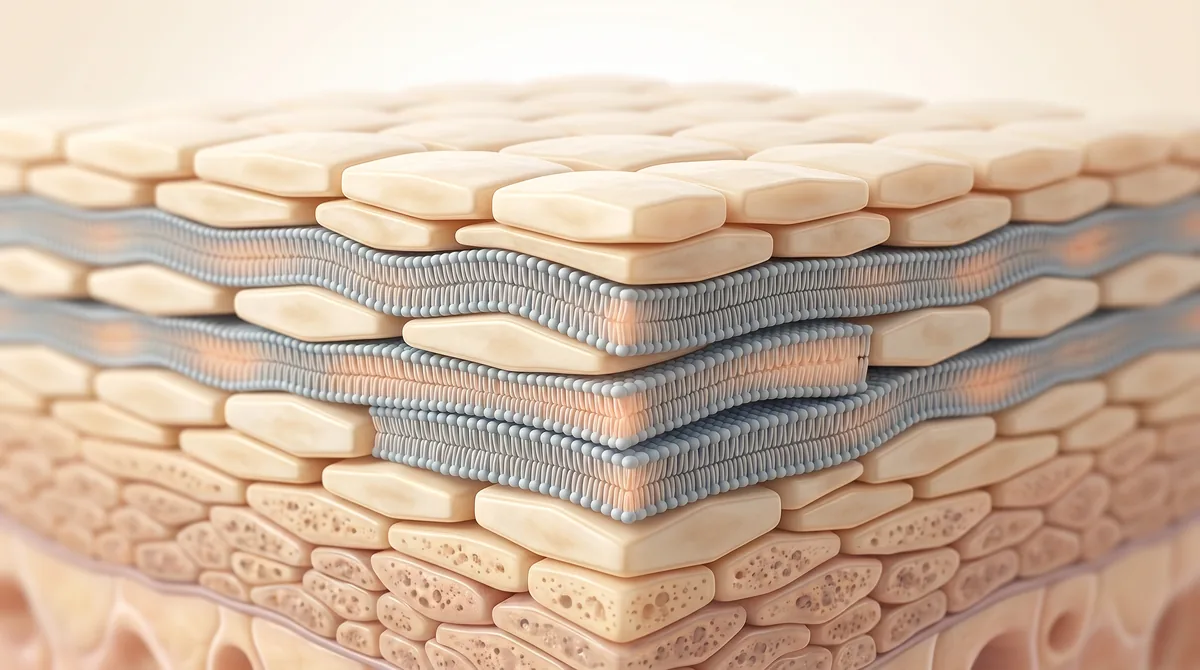
Your skin’s outermost layer, the stratum corneum, functions like a brick wall. The ‘bricks’ are dead skin cells called corneocytes. The ‘mortar’ is a lipid matrix composed of three key components: ceramides (about 50% of the mix), cholesterol (25%), and free fatty acids (15%). This isn’t just a helpful metaphor. It’s the actual structural model dermatologists use to understand barrier function.
Ceramides are sphingolipids, meaning they have a specific molecular structure: a sphingoid base backbone attached to a fatty acid chain. There are at least twelve different types of ceramides in human skin, each with slightly different chain lengths and configurations. The most studied are Ceramide 1 (now called Ceramide EOS), Ceramide 3 (Ceramide NP), and Ceramide 6 (Ceramide AP). They organize into lamellar sheets, stacked layers that create a water-impermeable seal.
When this lipid matrix is intact, your skin can hold water, regulate temperature, and keep irritants out. Research published in the Journal of Clinical and Aesthetic Dermatology shows that ceramide-deficient skin loses up to 75% more transepidermal water than healthy skin. In a climate where outdoor humidity regularly drops below 20%, that deficiency becomes a structural crisis, not just a cosmetic concern.
Here’s the thing most moisturiser marketing skips: you can’t just add ceramides topically and expect them to slot into your existing barrier like puzzle pieces. The lipid matrix requires specific ratios and proper delivery systems to actually integrate. That’s why some ceramide creams work and others just sit on the surface doing nothing.
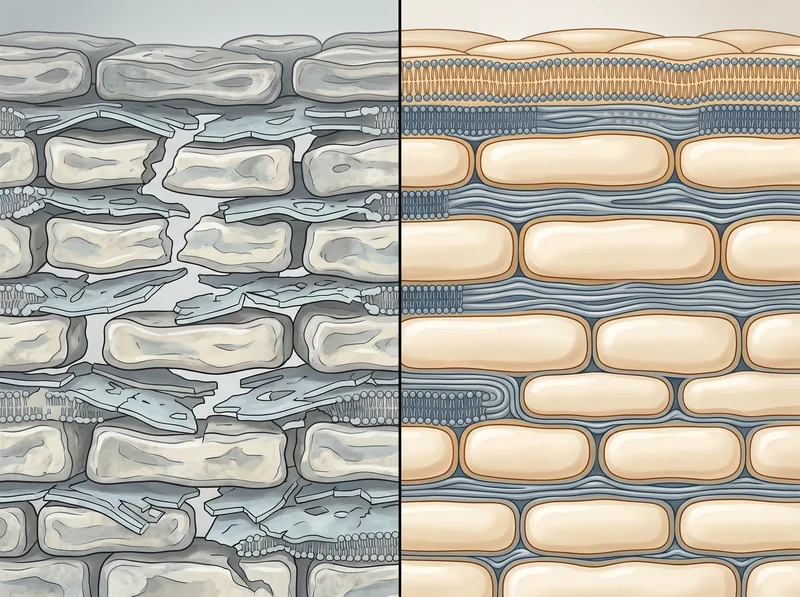 Left: Changeed barrier with gaps in lipid matrix. Right: Healthy barrier with organized ceramide layers providing protection.
Why Dry Climates Deplete Ceramides Faster
Low humidity doesn’t just dry your skin. It actively changes ceramide synthesis. Your skin produces ceramides through a complex enzymatic process involving glucosylceramide and sphingomyelin. When the stratum corneum is constantly dehydrated, those enzymes don’t function optimally. You end up in a vicious cycle: low humidity depletes ceramides, depleted ceramides can’t hold moisture, lack of moisture further impairs ceramide production.
Hard water makes it worse. The calcium and magnesium ions in Gulf tap water bind to the skin’s natural moisturizing factor (NMF) and change the pH balance needed for proper lipid synthesis. Every shower potentially strips more ceramides than your skin can replace overnight. Add in air conditioning that maintains indoor humidity around 30-40%, and you’re fighting barrier depletion sixteen hours a day.
Then there’s the heat. Temperatures above 40°C increase transepidermal water loss (TEWL) by up to 300% compared to temperate climates. Studies on desert populations show measurably lower ceramide levels in the stratum corneum compared to people in humid regions, even when controlling for age and skin type.
The environmental assault is constant. And unlike hair, which you can protect with a chelating shampoo like Regrowth+ to remove mineral buildup before conditioning, your skin is exposed all day. You can’t chelate your face every morning. You need a barrier repair strategy that accounts for continuous depletion.
The Ceramide Ratio Problem (Why Not All Formulas Work)
Not all ceramide moisturisers are created equal, and the difference isn’t just concentration. It’s ratio. Remember that 50:25:15 split of ceramides, cholesterol, and fatty acids? Research shows that topical lipid replacement works best when it mimics that natural ratio. A cream with 5% ceramides but no cholesterol won’t rebuild your barrier. It’ll just add one component to a broken structure.
The most studied ratio is 3:1:1 (ceramides:cholesterol:free fatty acids), sometimes adjusted to 2:1:1 depending on the specific ceramide types used. Clinical trials published in the British Journal of Dermatology found that this ratio restored barrier function 40% faster than ceramides alone. The lipids need each other to form proper lamellar structures.
Delivery system matters too. Ceramides are large, waxy molecules that don’t penetrate easily. The best formulas use liposomal encapsulation or specific emulsifiers that help ceramides reach the stratum corneum rather than sitting on the surface. Look for products that list ‘ceramide NP’ or ‘ceramide AP’ rather than just ‘ceramides’ on the ingredient list. That specificity usually indicates a more sophisticated formulation.
And here’s what nobody tells you: ceramide creams work slower than hyaluronic acid or glycerin. You won’t see results in three days. Barrier repair takes two to four weeks of consistent use because you’re literally rebuilding lipid layers, not just adding surface moisture. In dry climates, that timeline matters. You need patience and the right expectations.
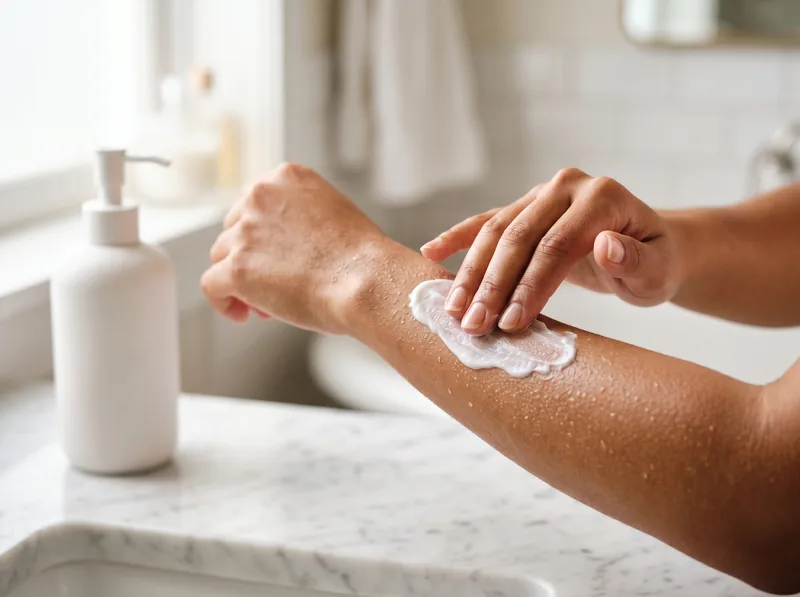 Apply ceramide moisturisers to damp skin within three minutes of cleansing for maximum lipid penetration.
How to Use Ceramide Moisturisers Strategically
Timing is everything. Apply ceramide products to damp skin within three minutes of cleansing. Why? Because water in the stratum corneum creates temporary pathways that help lipids penetrate. If you wait until your skin is completely dry, you’re just coating the surface. Pat your face with a towel, leaving it slightly damp, then apply immediately.
Layer strategically. In dry climates, a single ceramide cream often isn’t enough. The most effective protocol: hydrating toner or essence first (to add water), ceramide serum or cream second (to trap that water and rebuild lipids), then an occlusive layer like squalane or a heavier cream (to seal everything in). This mimics the skin’s natural structure: water in the deeper layers, lipids in the barrier, protective seal on top.
Don’t skip cholesterol. If your ceramide moisturiser doesn’t contain cholesterol, add a separate product that does. Some people use a few drops of rosehip oil (high in fatty acids) mixed with their ceramide cream to improve the lipid ratio. It sounds fussy, but in climates where your barrier is under constant assault, that extra step makes a measurable difference.
Reapply during the day if you’re in air-conditioned offices. A light ceramide lotion over makeup won’t ruin your look and will prevent the 3 PM barrier breakdown that leaves your skin tight and flaky. Think of it like reapplying lip balm. Your face needs the same continuous protection.
Ceramides vs Other Barrier Repair Ingredients
Ceramides aren’t the only barrier repair ingredient, but they’re the most structurally accurate. Hyaluronic acid holds water (up to 1000 times its weight), but it doesn’t rebuild lipid layers. Glycerin is a humectant that draws moisture from the air, but in low humidity, there’s no moisture to draw. Niacinamide stimulates ceramide production, which is helpful, but if your barrier is severely compromised, you need direct lipid replacement, not just synthesis stimulation.
Niacinamide works well in combination with ceramides, actually. Studies show that 5% niacinamide increases ceramide synthesis by up to 34% over twelve weeks. But it’s a long-term strategy, not an immediate fix. For acute barrier damage, ceramides do the heavy lifting.
Peptides are another popular ingredient, and some (like palmitoyl pentapeptide) do support barrier function by signaling skin cells to produce more lipids. But again, they’re indirect. They tell your skin what to do. Ceramides are the actual building blocks. In dry climates where synthesis is already impaired, direct replacement is more reliable.
The best approach? Combination therapy. A formula with ceramides (for structure), niacinamide (for synthesis), and a humectant like glycerin (for hydration) addresses barrier repair from multiple angles. That’s why dermatologist-favorite brands like CeraVe and Dr. Jart+ use this multi-ingredient strategy rather than relying on ceramides alone.
What to Expect (Realistic Timeline for Barrier Repair)
Week one: You probably won’t notice much. Your skin might feel slightly more comfortable, less tight after cleansing, but visible changes are minimal. This is normal. You’re starting to fill in gaps in the lipid matrix, but the barrier isn’t rebuilt yet.
Week two: Reduced flaking and less reactivity to products. If you’ve been experiencing stinging when applying toners or serums, that should start to calm down. Your skin’s pH is stabilizing, and the ceramide layers are beginning to organize into proper lamellar structures.
Week three to four: This is when you see real improvement. Skin texture smooths out, moisture retention improves noticeably, and that tight, uncomfortable feeling in air conditioning diminishes. TEWL measurements (if you have access to them) typically show 20-30% improvement by week four of consistent ceramide use.
Long-term (three months): Full barrier restoration. Your skin can now maintain hydration without constant reapplication. You’ll notice you need less moisturiser overall because your barrier is actually functioning properly. Some people find they can reduce ceramide use to every other day once their barrier is rebuilt, though in extreme climates, daily use is usually still necessary.
References
- Skin Barrier Function and the Role of Ceramides in Atopic Dermatitis - Journal of Clinical and Aesthetic Dermatology
- Environmental Effects on Skin Barrier Function in Desert Climates - PubMed Central
- Topical Lipid Therapy in Atopic Dermatitis: Ratios and Clinical Outcomes - British Journal of Dermatology
- Niacinamide and Ceramide Synthesis in Human Skin - American Academy of Dermatology