If you’ve developed body acne since moving to the Gulf, you’re not imagining it. The breakouts on your back, chest, and shoulders aren’t about hygiene or what you’re eating. They’re about what happens when your skin tries to function in 45-degree heat with 70% humidity and you’re sweating through your clothes before you’ve left the house.
Body acne in hot climates follows a specific pattern. It shows up on your upper back first, then spreads to your chest and shoulders. It gets worse after the gym, after being outside, after wearing certain fabrics. And it doesn’t respond to the face acne treatments you’ve tried. This article contains affiliate links. See our affiliate disclosure for details.
What you’re dealing with is folliculitis and acne mechanica, conditions triggered by the combination of heat, sweat, friction, and the specific bacterial environment that thrives in Gulf conditions. Here’s what’s actually causing it and the treatment protocol that works.
Why Body Acne Develops in Hot Climates
Body acne in the Gulf isn’t the same as facial acne. It’s primarily caused by folliculitis, inflammation of the hair follicles triggered by bacteria, yeast, or physical irritation. When you’re sweating constantly in extreme heat, your skin creates the perfect environment for this to develop.
Here’s what happens. Sweat itself doesn’t cause acne, but it changes your skin’s pH and creates moisture that allows bacteria and yeast to multiply. Add friction from clothing, backpacks, or sports bras, and you get acne mechanica, breakouts caused by physical pressure combined with heat and moisture.
The specific bacteria involved is usually Staphylococcus aureus or Malassezia yeast. Both thrive in warm, moist environments. Gulf humidity keeps your skin from drying between sweat episodes, which means these organisms never get the break they need to return to normal levels.
Hard water makes this worse. Mineral deposits from hard water can clog pores and create additional irritation. If you’re also dealing with chlorine from pools or desalinated water from showers, you’re adding chemical irritants that further compromise your skin barrier.
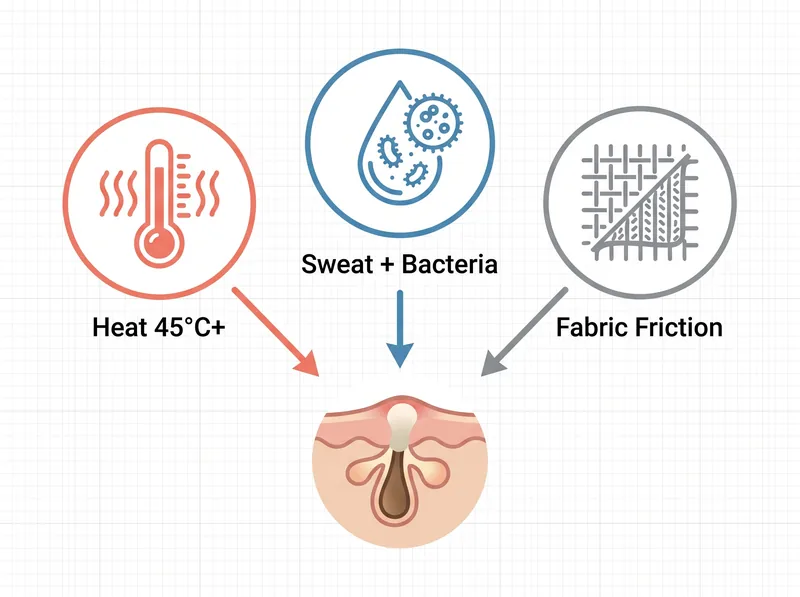 The three environmental factors that create the perfect conditions for body acne in Gulf climates
The Three Types of Body Acne You’re Seeing
Not all body breakouts are the same. Understanding what type you have determines which treatment will work. Most women in hot climates deal with a combination of these three.
Bacterial folliculitis appears as small, red, inflamed bumps clustered on your upper back, shoulders, or chest. They’re tender to touch and may develop white heads. This is caused by bacteria entering hair follicles, usually Staph aureus. It gets worse after sweating and often appears in areas where clothing rubs.
Fungal acne (Malassezia folliculitis) looks like uniform, small bumps that are itchy rather than painful. They don’t have visible heads and don’t respond to traditional acne treatments. This is actually a yeast overgrowth, not acne, but it looks identical. It thrives in heat and humidity and often appears on the chest and upper back.
Acne mechanica is caused by friction, heat, and pressure. It shows up where sports bras sit, where backpack straps rest, under tight workout clothes. The bumps are inflamed and can be painful. This type is directly related to physical irritation combined with sweat. Sports bra dermatitis is a specific subset of this condition.
What Makes Gulf Body Acne Different
Body acne in the Gulf has specific triggers you won’t find in temperate climates. The combination of extreme heat, high humidity, hard water, and lifestyle factors creates a unique environment for breakouts.
You’re sweating more than your body evolved to handle. Research shows that sweat production increases exponentially above 35 degrees Celsius, and Gulf summers regularly exceed 45 degrees. Your skin is constantly wet, which keeps pores occluded and bacteria levels high.
Air conditioning creates a secondary problem. You’re moving between extreme heat and cold multiple times daily, which changes your skin’s ability to regulate temperature and oil production. The rapid temperature changes also cause your pores to expand and contract, trapping debris and bacteria.
Chlorinated pools and hard water showers add chemical irritation. Many women here swim daily for exercise, exposing their skin to chlorine that strips protective oils and changes the skin’s natural pH. Combined with hard water minerals, this creates a compromised barrier that’s more susceptible to bacterial and fungal overgrowth.
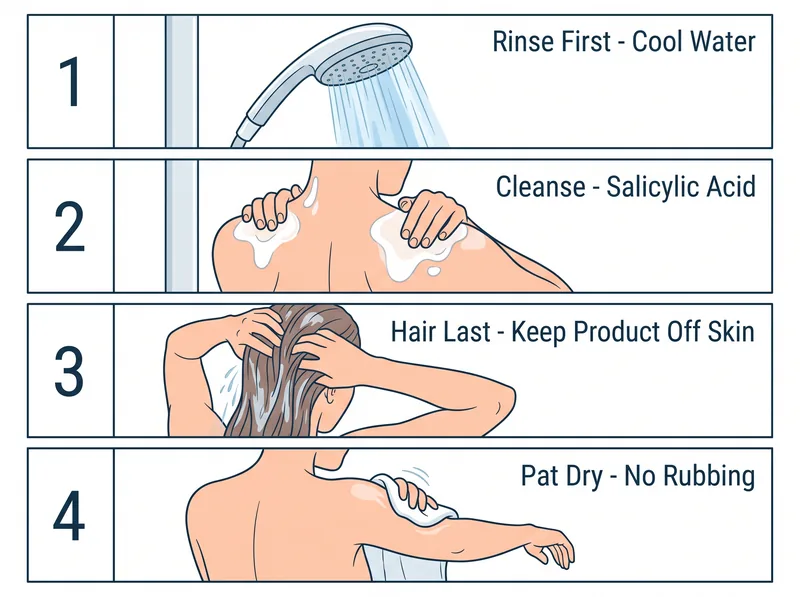 The correct order matters: how to shower after sweating to prevent breakouts
The Treatment Protocol That Actually Works
Treating body acne in hot climates requires a different approach than facial acne. You need products that address bacteria and yeast while accounting for constant sweating and environmental factors. Here’s the protocol that works.
Start with a salicylic acid body wash. Use it daily, focusing on affected areas. Salicylic acid penetrates pores and has antibacterial properties. Let it sit on your skin for 2-3 minutes before rinsing. This contact time matters. The American Academy of Dermatology recommends this for body acne specifically.
Add a benzoyl peroxide wash 2-3 times weekly. Alternate with your salicylic acid wash. Benzoyl peroxide kills acne-causing bacteria more effectively than salicylic acid but can be drying, which is why you don’t use it daily. Start with 2.5% or 5% concentration. Apply to dry skin before showering, leave for 5 minutes, then rinse.
For fungal acne, you need an antifungal approach. Use a ketoconazole or selenium sulfide shampoo as a body wash 2-3 times weekly. These are available over the counter in most pharmacies. Apply to affected areas, leave for 5-10 minutes, then rinse. This targets Malassezia yeast that salicylic acid won’t touch.
Apply a lightweight, non-comedogenic moisturizer after showering. Your skin needs hydration even with acne. Look for products with niacinamide, which has anti-inflammatory properties and helps regulate oil production. Avoid heavy creams or oils that will trap sweat.
The Shower Routine That Prevents Breakouts
How you shower matters as much as what products you use. The order and timing of your routine directly affects whether breakouts improve or worsen. This is especially critical after sweating.
Shower immediately after sweating. Don’t wait. Every minute you stay in sweaty clothes allows bacteria to multiply and penetrate pores. If you can’t shower right away, change into clean, dry clothes at minimum. Bring a change of clothes to the gym.
Rinse with cool water first. This closes pores and prevents bacteria from entering while you cleanse. Hot water opens pores, which sounds good but actually allows more bacteria in before you’ve cleaned the surface. Start cool, cleanse, then you can warm the water if needed.
Wash your body before your hair. This is critical. Shampoo and conditioner run down your back and chest, leaving residue that clogs pores. If you wash your body first, then your hair, that residue stays on your skin. Always wash hair last, then do a final rinse of your back and chest.
Pat dry, don’t rub. Rubbing with a towel creates friction that irritates inflamed follicles. Pat gently and let your skin air dry for a few minutes before getting dressed. This reduces moisture trapped against your skin.
Fabric and Clothing Changes That Help
What you wear directly affects body acne in hot climates. Fabric choice, fit, and how often you change clothes all play a role in whether breakouts improve or persist.
Switch to moisture-wicking fabrics for anything that touches your back or chest. Cotton absorbs sweat and stays wet against your skin. Technical fabrics pull moisture away and dry quickly. This matters more in Gulf heat than in temperate climates where cotton is fine.
Avoid tight clothing when possible. Acne mechanica is caused by friction and pressure. Tight sports bras, fitted tops, and backpack straps all create the pressure and friction that trigger breakouts. Choose looser fits or use padded straps.
Change your clothes twice daily minimum. Even if you haven’t visibly sweated, you’ve produced enough moisture to create problems. Have a midday clothing change if you’re outside or active. Keep a spare top in your car or office.
Wash workout clothes after every wear. Never re-wear gym clothes, even if you “didn’t sweat that much.” Bacteria and yeast colonize fabric and re-infect your skin. Use hot water and add white vinegar to the rinse cycle to kill organisms that detergent alone might miss.
When to See a Dermatologist
Some body acne requires professional treatment. If you’ve followed the protocol above for 6-8 weeks without improvement, or if your symptoms match the following patterns, see a dermatologist.
Painful, deep nodules or cysts need prescription treatment. These won’t respond to over-the-counter products. You may need oral antibiotics or, in severe cases, isotretinoin. Don’t wait until scarring develops.
Widespread fungal acne that doesn’t respond to antifungal washes may require oral antifungal medication. Topical treatments can’t always reach deep enough to clear a systemic overgrowth. A dermatologist can prescribe fluconazole or itraconazole.
Recurring folliculitis in the same areas may indicate antibiotic-resistant bacteria. MRSA (methicillin-resistant Staphylococcus aureus) is increasingly common in hot, humid regions. This requires culture testing and targeted antibiotic treatment.
Post-inflammatory hyperpigmentation (dark spots left after breakouts heal) is harder to treat in hot climates because sun exposure worsens it. A dermatologist can prescribe treatments that work without photosensitivity, which is critical when you’re outside in intense UV.
The Hard Water Factor
Hard water in the Gulf contributes to body acne in ways most women don’t realize. The mineral content affects both your skin barrier and how well your cleansers work.
Calcium and magnesium in hard water prevent soap from rinsing cleanly. You’re left with a film of soap residue mixed with minerals that clogs pores. This is why your skin might feel tight or filmy after showering, even though you rinsed thoroughly.
Consider a shower filter for your body acne areas. While whole-house systems are expensive, a shower filter removes chlorine and reduces mineral content enough to make a difference. Look for filters that specifically address chlorine and heavy metals.
If a filter isn’t an option, use a chelating body wash once weekly. The same chelating agents that remove mineral buildup from hair work on skin. A product like Regrowth+ chelating shampoo can be used as a body wash to remove mineral deposits that regular cleansers miss.
Rinse with filtered or bottled water as a final step if your body acne is severe. This sounds excessive, but for women with persistent breakouts that don’t respond to other treatments, removing hard water minerals from the final rinse can be the factor that allows healing.
References
- Acne mechanica: A review - PubMed Central
- Thermoregulation and sweat secretion in hot environments - PubMed Central
- Tips for treating acne - American Academy of Dermatology
- Community-associated MRSA skin infections in hot, humid climates - PubMed Central