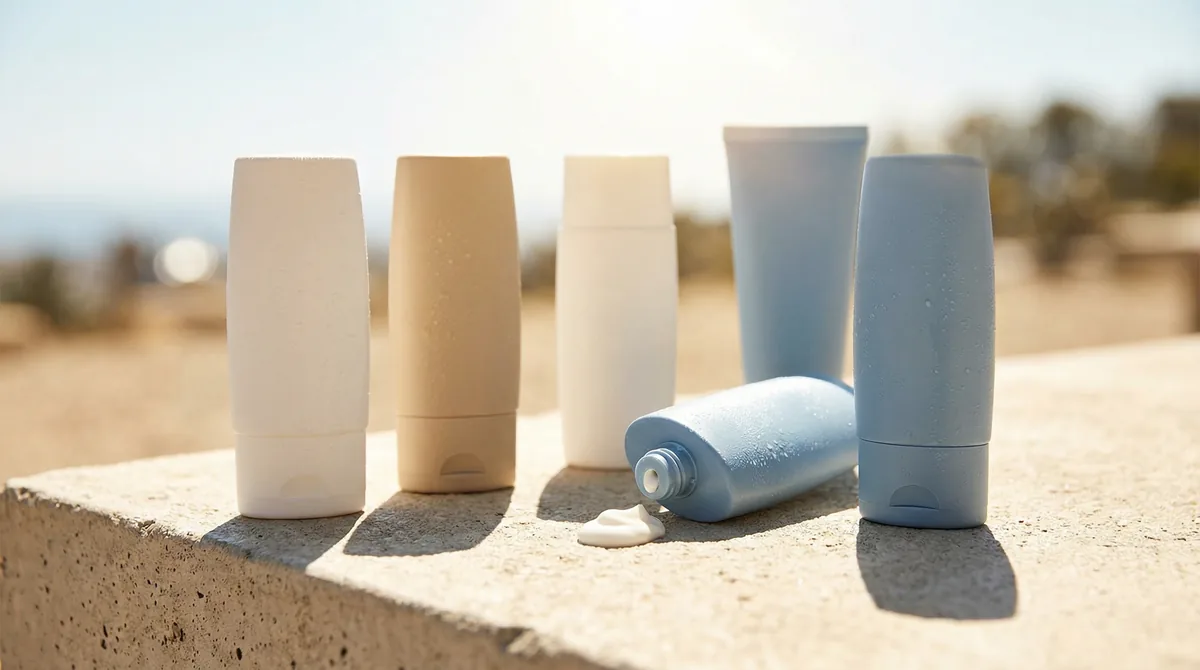
You’ve stood in front of the bathroom mirror at 7 a.m., carefully applied your sunscreen, and by 9 a.m. it’s sliding down your face in the parking lot. Or it’s left a chalky white film that makes you look like you’ve aged a decade. Or it’s pilling under your makeup, creating those little rolled-up bits that announce to everyone you’re wearing SPF.
Here’s what nobody tells you about sunscreen in extreme heat: most formulations weren’t designed for climates where the air temperature hits 45°C and the humidity makes everything feel like it’s melting. The Gulf region, parts of Australia, Southern California in summer, the intense heat creates a perfect storm that breaks down standard sunscreen formulations within hours.
This article contains affiliate links. See our affiliate disclosure for details.
The challenge isn’t just UV protection. It’s finding a formula that stays put when you’re sweating, doesn’t oxidize into an orange mask by lunchtime, and doesn’t leave that telltale white cast that photographs terribly in the harsh midday sun. After testing dozens of formulations in real Gulf conditions (not just reading ingredient lists), here’s what actually works when the heat is relentless.
Key Takeaways
• Chemical sunscreens with newer filters like Tinosorb S and Uvinul A Plus offer the best heat stability and no white cast, but may irritate sensitive skin in extreme climates
• Tinted mineral sunscreens solve the white cast problem while providing additional coverage, but require careful shade matching in high humidity where oxidation is common
• Gel and serum formulations outperform creams in heat above 40°C because they contain less oil that can break down and slide off skin
• The two-finger rule (applying sunscreen the length of two fingers for face and neck) is critical in dry climates where you lose more product to evaporation than you realize
• Reapplication every 90 minutes is necessary in extreme heat, not the standard two hours, due to increased sweating and faster product breakdown
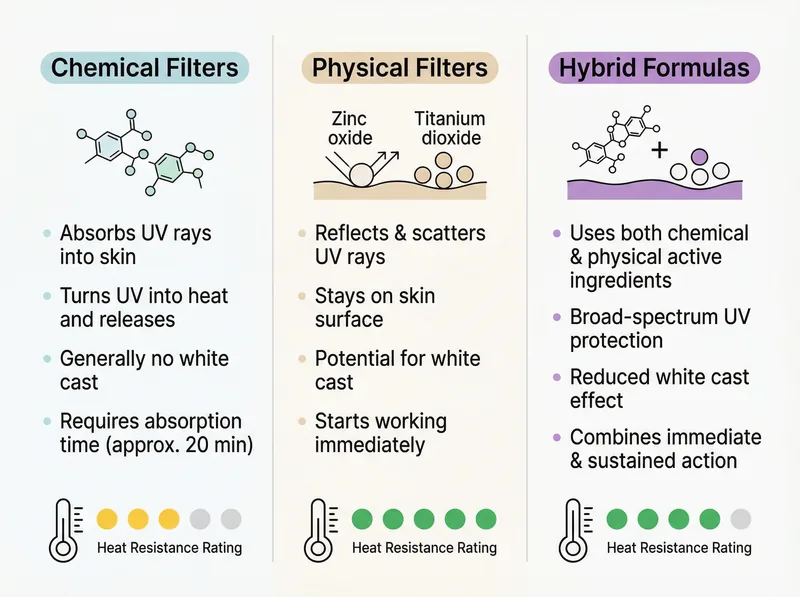 How different sunscreen formulations perform in temperatures above 40°C
Why Standard Sunscreen Fails in Extreme Heat
Most sunscreen is formulated for temperate climates. The stability testing happens at 25°C with 60% humidity. But when you’re walking from an air-conditioned building into 45-degree heat with 80% humidity, the temperature shock alone can destabilize the emulsion.
The oil phase in cream sunscreens starts to separate. You’ve seen this if you’ve ever left a tube in your car: that clear liquid that seeps out isn’t water, it’s the carrier oils breaking free from the emulsion. On your face, this happens more slowly but just as inevitably. The result? Uneven coverage and that greasy film that attracts dust and makes you look perpetually shiny.
Physical filters like zinc oxide and titanium dioxide face a different problem. They sit on top of your skin rather than absorbing into it. In extreme heat, as you sweat, these particles can clump together, creating that chalky appearance and leaving gaps in your UV protection. Research published in the Journal of the American Academy of Dermatology shows that mineral sunscreen effectiveness can drop by up to 40% within two hours in high-humidity, high-temperature conditions.
Then there’s the hard water factor. If you’re washing your face with mineral-heavy water, you’re leaving a film on your skin that interferes with sunscreen adhesion. The calcium and magnesium ions can actually bind with some sunscreen ingredients, reducing their effectiveness before you’ve even stepped outside.
Chemical vs. Physical vs. Hybrid: What Works in 45-Degree Heat
Chemical sunscreens absorb UV radiation and convert it to heat. In theory, this should be a problem in already-hot climates. In practice, the newer generation of chemical filters handles heat remarkably well.
Look for formulations with Tinosorb S (bis-ethylhexyloxyphenol methoxyphenyl triazine), Tinosorb M (methylene bis-benzotriazolyl tetramethylbutylphenol), or Uvinul A Plus (diethylamino hydroxybenzoyl hexyl benzoate). These photostable filters don’t degrade under intense UV exposure, and they’re formulated to stay in solution even when your skin temperature rises. They also leave zero white cast because they’re completely transparent.
The downside? Chemical filters can be irritating if you have sensitive skin, and the irritation often worsens in extreme heat when your skin barrier is already compromised by environmental stress. If you’re experiencing stinging or redness, especially around the eye area, chemical sunscreens might not be your answer.
Physical (mineral) sunscreens have come a long way. Micronized zinc oxide particles are now small enough to blend more easily, though they’ll never be completely invisible on deeper skin tones. The advantage in extreme heat is that they sit on the surface, so they’re less likely to cause irritation. But they’re also more likely to rub off on clothing, towels, and anything else that touches your face.
Hybrid formulations combine both types of filters. This is often the sweet spot for Gulf conditions: you get the photostability of chemical filters with the immediate protection and gentleness of physical filters. The best hybrids use a lower percentage of chemical filters (reducing irritation risk) while the physical component helps the formula stay put on sweaty skin.
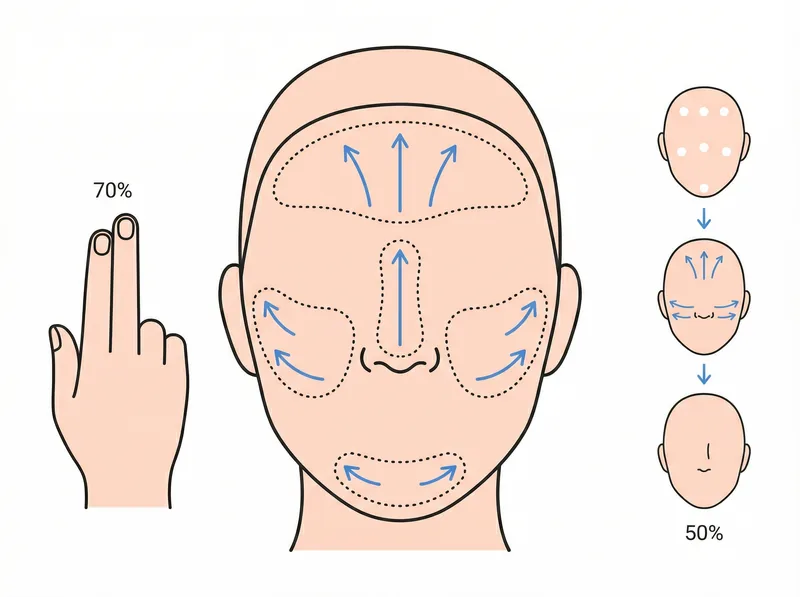 The two-finger rule and layering technique that ensures even coverage without product waste
Texture Matters: Gels, Serums, and Ultra-Light Formulas That Stay Put
Forget thick, white creams. In extreme heat, you want the lightest possible texture that still delivers SPF 50+ protection. Gel formulations are your friend here. They’re typically water-based or alcohol-based, which means they dry down quickly and don’t leave an oily residue that will slide off your face by noon.
Japanese and Korean sunscreens have mastered this category. Look for products labeled as ‘essence’ or ‘aqua gel’ types. These formulations use silicone polymers that create a breathable, water-resistant film without the heavy feel of traditional sunscreens. Studies on sunscreen adherence show that gel formulations maintain more consistent coverage in high-humidity environments compared to cream formulations.
Serum sunscreens are the newest category, and they’re important for layering under makeup. They’re typically more expensive, but the lightweight texture means you’re more likely to apply the full recommended amount (which most people don’t with heavy creams). The key is finding one that dries to a true matte or satin finish, not just ‘less shiny than regular sunscreen.’
One warning about ultra-light formulas: they often contain high levels of alcohol to achieve that quick-dry effect. If you’re already dealing with compromised skin barrier function from hard water or environmental stress, alcohol can make it worse. Look for formulations that use silicones and film-forming polymers instead of alcohol for that lightweight feel.
The White Cast Problem: Solutions for Every Skin Tone
White cast isn’t just cosmetically annoying. It’s a sign that your sunscreen isn’t blending properly, which often means it’s not distributing evenly, which means your UV protection has gaps.
For fair to light skin tones, micronized zinc oxide formulations work well if you’re willing to spend a few extra minutes blending. The trick is to apply in thin layers rather than one thick application. Put on half the amount you need, blend thoroughly, wait two minutes for it to set, then apply the second half. This prevents that chalky buildup.
For medium to deep skin tones, tinted mineral sunscreens are the answer. But here’s the catch: you need to find the right shade, and that shade needs to stay true in high humidity. Some tinted sunscreens oxidize (turn orange) within an hour of application in Gulf heat. Test any new tinted sunscreen by applying it and then stepping outside for 30 minutes. If it’s changed color, keep looking.
Chemical sunscreens eliminate the white cast problem entirely because they’re invisible. If you don’t have sensitive skin, this is your simplest solution. Look for formulations specifically marketed as ‘invisible’ or ‘clear’ and check reviews from people in hot climates, not just general reviews.
A newer option: iron oxide-tinted sunscreens. These contain the same pigments used in mineral makeup, so they provide a hint of coverage while offering additional protection against visible light (which can cause hyperpigmentation). The tint is usually subtle enough to work across a range of skin tones, and iron oxides are extremely stable in heat.
Makeup Compatibility: What Works Under and Over SPF
If you wear makeup, your sunscreen needs to play well with your foundation and setting products. This is where most SPF formulations fail in extreme heat: they pill, they make makeup slide off, or they create a greasy base that foundation can’t grip.
The golden rule: let your sunscreen dry completely before applying makeup. In Gulf humidity, this takes longer than you think. Give it a full five minutes. If you’re in a rush, use a small fan or step into air conditioning for a minute to speed up the drying process.
Silicone-based sunscreens work best under makeup because they create a smooth, primed surface. Look for ingredients like dimethicone, cyclopentasiloxane, or cyclomethicone high up in the ingredient list. These create a barrier that helps makeup adhere while still allowing your skin to breathe.
If you’re using a powder foundation or mineral makeup, apply it over a completely dry, matte-finish sunscreen. If you’re using liquid or cream foundation, a slightly tacky sunscreen base actually helps it stick better. Match your sunscreen finish to your foundation type.
For touch-ups throughout the day, powder sunscreens are convenient but not sufficient as your primary SPF. They’re fine for reapplication over makeup if you’ve already applied proper sunscreen in the morning, but they don’t provide enough coverage on their own. A better option: SPF setting sprays that you can mist over makeup every few hours.
Application Technique: The Two-Finger Rule and Layering Strategy
You’re probably not using enough sunscreen. Most people apply about 25% of the recommended amount, which means they’re getting about 25% of the stated SPF protection. In extreme heat, where you’re losing product to sweat and evaporation faster, this problem is even worse.
The two-finger rule: squeeze sunscreen along the length of your index and middle fingers. That’s roughly the amount you need for your face and neck. It will feel like too much. Apply it anyway.
Here’s the technique that works in high humidity: apply in thin layers. Use half the amount first, blend it thoroughly into your skin using upward and outward motions. Wait two minutes. Then apply the second half. This prevents the pilling and clumping that happens when you try to blend a thick layer all at once.
Don’t forget your neck, ears, and the back of your hands. These areas get intense sun exposure in the Gulf and they’re often neglected. Your neck and chest are particularly vulnerable because the skin is thinner and shows sun damage more quickly.
For body sunscreen in extreme heat, spray formulations are convenient but tricky. You need to spray generously and then rub it in to ensure even coverage. Don’t rely on the spray alone; the wind can blow away half the product before it reaches your skin. A better option for body: lightweight lotion formulas that you can apply quickly in the shower before drying off completely. The slight dampness helps the product spread more easily.
Reapplication Reality: When Every Two Hours Isn’t Enough
The standard advice is to reapply sunscreen every two hours. In extreme heat, that’s not sufficient. When you’re sweating continuously and the UV index is 11+, you need to reapply every 90 minutes, possibly more often if you’re swimming or doing outdoor activities.
This is where most people fail at sun protection: reapplication is inconvenient, especially if you’re wearing makeup or in a professional setting where you can’t just pull out a bottle of sunscreen. You need a strategy.
If you work indoors, apply a thorough layer in the morning and reapply before you leave the building ultimately. If you’re going to be outdoors during lunch or running errands, carry a small tube for touch-ups. Set a phone reminder for 90-minute intervals.
For makeup wearers, SPF powder or setting spray is your reapplication method. It’s not perfect, but it’s better than nothing. The key is to apply it generously; don’t just dust it on. You want visible coverage. If you’re using a brush-on powder SPF, do at least three full passes over your entire face.
Consider your scalp, especially if you have a part or thinning hair. Scalp sunburn is common in the Gulf and it’s often overlooked until you’re dealing with painful peeling. A lightweight SPF spray designed for hair and scalp can be applied without making your hair greasy. Or wear a hat, which is honestly the most effective solution for scalp protection.
Hard Water and Sunscreen: The Chelating Prep Step
If you’re washing your face with hard water before applying sunscreen, you’re starting with a disadvantage. The mineral deposits left on your skin interfere with how sunscreen adheres and spreads. You might notice your sunscreen pills or doesn’t blend smoothly; this is often a hard water issue, not a product issue.
The solution is to use a chelating cleanser in the morning before sunscreen application. These cleansers contain ingredients like EDTA or citric acid that bind to mineral deposits and remove them. Your skin should feel squeaky clean, almost stripped. That’s the point: you want a completely clean canvas for sunscreen.
If you can’t find a chelating facial cleanser, micellar water works as a prep step. The surfactants in micellar water help remove mineral residue. Use it after your regular cleanser, before sunscreen. Let your skin dry completely, then apply SPF.
Another option: rinse your face with filtered or distilled water after washing with hard water. Keep a spray bottle of filtered water in your bathroom. After cleansing, mist your face thoroughly and pat dry. This removes the mineral film that hard water leaves behind.
For body sunscreen application, the same principle applies. If you’re showering in hard water and then applying sunscreen, you’re fighting an uphill battle. Consider using a chelating body wash or doing a final rinse with filtered water before drying off and applying SPF.
References
- Sunscreen Application, Safety, and Sun Protection: The Evidence - Journal of the American Academy of Dermatology
- Sunscreen Product Performance and Other Determinants of Consumer Preferences - ScienceDirect - Journal of the American Academy of Dermatology
- Sunscreen: How to Help Protect Your Skin from the Sun - American Academy of Dermatology
- Sun Protection Factor (SPF) and Sun Protection - World Health Organization