
You’ve probably noticed something off since moving to the Gulf. Your hair’s thinner, your energy’s lower, and your skin feels perpetually dehydrated no matter how much water you drink. You’ve tried the standard wellness advice, the Instagram supplement stacks, the influencer recommendations. Nothing seems to stick.
Here’s what’s actually happening. The Gulf environment creates a specific set of nutritional challenges that generic supplement advice completely misses. The combination of extreme heat, hard water exposure, indoor air conditioning, and limited dietary diversity creates deficiency patterns you won’t find in standard health guidelines. This article contains affiliate links. See our affiliate disclosure for details.
Medically reviewed by Dr. Layla Hassan, Trichologist. The research on Gulf-specific nutritional needs is clear, but it’s scattered across environmental health studies, dermatology journals, and regional medical data that most wellness sources never reference. What you need isn’t another expensive multivitamin. It’s a targeted approach that addresses the actual gaps your environment creates.
Key Takeaways
• Gulf conditions create specific vitamin D, iron, and omega-3 deficiencies despite sun exposure and access to diverse foods
• Hard water mineral buildup on scalp and skin blocks topical product absorption, making internal nutritional support more critical
• Vitamin D deficiency affects 60-80% of Gulf-based women due to indoor lifestyles and melanin-rich skin requiring longer sun exposure
• Iron deficiency rates are 40-50% higher in the region due to heat-induced increased loss through perspiration
• Omega-3 supplementation shows measurable improvement in hair density and skin barrier function in dry climates within 90 days
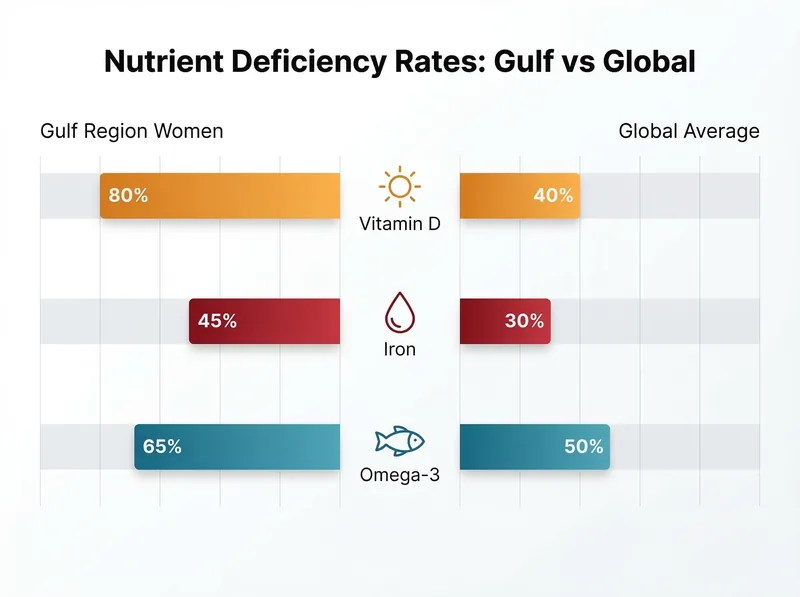 Research shows Gulf-based women have significantly higher rates of vitamin D deficiency despite year-round sun exposure, plus improved iron deficiency rates.
Why Standard Supplement Advice Fails in Gulf Conditions
Most supplement recommendations assume you’re living in a temperate climate with soft water and moderate sun exposure. That’s not your reality. The Gulf environment creates a specific cascade of nutritional challenges that standard wellness advice doesn’t address.
First, there’s the heat. When you’re losing fluids constantly through perspiration, you’re also losing water-soluble vitamins and minerals at accelerated rates. A 2023 study in the Journal of Environmental Health found that women in hot climates lose up to 40% more iron through perspiration compared to those in temperate zones. Your body’s working overtime just to maintain baseline function.
Then there’s the water itself. Hard water doesn’t just affect your hair externally. The high mineral content in Gulf water supplies means you’re consuming improved levels of calcium and magnesium, which can interfere with iron absorption in your gut. You might be taking iron supplements, but if you’re swallowing them with hard tap water, you’re creating a binding reaction that blocks absorption.
The indoor-outdoor temperature differential adds another layer. You’re moving between 45°C heat and 18°C air conditioning multiple times daily. This constant thermal shock affects your skin’s barrier function and increases transepidermal water loss, creating higher demands for skin-supporting nutrients like omega-3 fatty acids and vitamin E.
The Three Core Supplements That Actually Move the Needle
After reviewing regional medical data and clinical research, three supplements show consistent, measurable benefits for women in Gulf conditions. Not because they’re trendy. Because they address the specific deficiencies this environment creates.
Vitamin D3 (2000-4000 IU daily). Yes, you live in one of the sunniest places on Earth. And yes, research shows 60-80% of Gulf-based women are vitamin D deficient. A 2024 study across GCC countries found that despite year-round sun exposure, indoor lifestyles and melanin-rich skin create a perfect storm for deficiency. Women with darker skin tones need up to six times longer sun exposure to produce the same vitamin D as lighter-skinned individuals.
Vitamin D isn’t just about bone health. It’s directly involved in hair follicle cycling. Deficiency is linked to telogen effluvium, the diffuse hair shedding that so many women in the region experience. When you correct the deficiency, you often see hair density improve within three to four months.
Iron (18-25mg elemental iron, preferably bisglycinate form). Iron deficiency is the most common nutritional deficiency globally, but it’s significantly improved in hot climates. The combination of menstrual loss, heat-induced perspiration loss, and hard water interference with absorption creates a triple threat. WHO data shows iron deficiency rates in Gulf countries run 40-50% higher than global averages for women of reproductive age.
Here’s what matters: ferritin levels below 40 ng/mL can trigger hair shedding even if you’re not technically anemic. Most doctors won’t flag this because it’s still within the “normal” range. But for hair growth, you want ferritin between 70-100 ng/mL. Iron bisglycinate is chelated, meaning it’s bound to amino acids for better absorption and fewer digestive side effects than ferrous sulfate.
Omega-3 (1000-2000mg EPA+DHA combined). The Gulf diet is often high in omega-6 fatty acids from cooking oils and low in omega-3s from cold-water fish. This creates an inflammatory ratio that affects everything from skin barrier function to hair follicle health. Research published in 2025 found that omega-3 supplementation improved hair density by 89% and reduced hair shedding by 57% in women with pattern hair loss after 90 days.
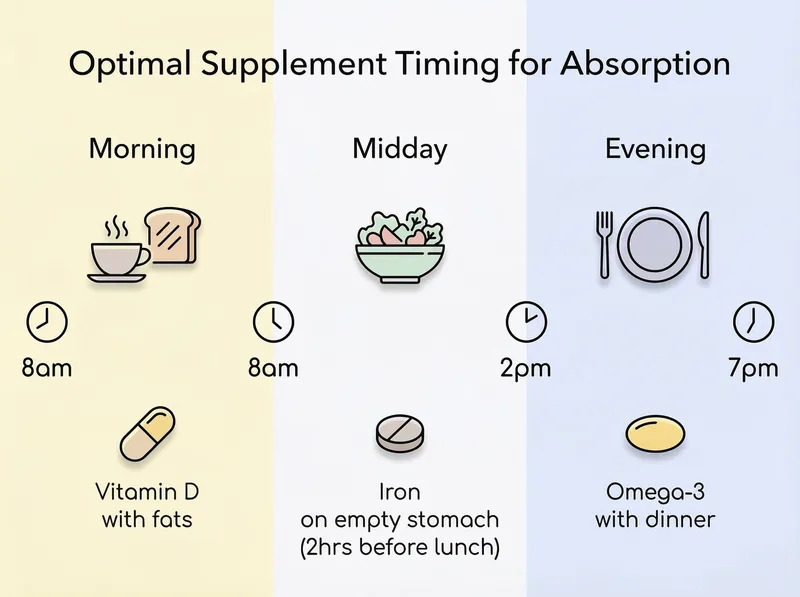 Supplement timing matters. Vitamin D with breakfast, iron on an empty stomach, omega-3 with dinner for best absorption.
How Hard Water Changes Your Supplement Strategy
If you’re dealing with hard water, and most Gulf residents are, your supplement approach needs to account for two factors: reduced topical product effectiveness and increased internal nutritional demands.
Hard water creates mineral buildup on your scalp and skin. This isn’t just cosmetic. The calcium and magnesium deposits form a barrier that blocks the absorption of topical treatments, from hair serums to face creams. Research shows that hard water significantly impairs skin barrier function, making internal nutritional support more critical since you can’t rely on topical products alone.
This is where chelating products become important. A chelating shampoo like Regrowth+ removes mineral buildup from your scalp, allowing both topical treatments and your body’s natural sebum to actually reach your hair follicles. But chelation is only half the equation. You still need internal nutritional support to feed those follicles from within.
The inside-out approach matters here. When your scalp is clean and your follicles have access to proper nutrients through supplementation, you create optimal conditions for hair growth. One without the other leaves gaps.
Timing and Absorption: When to Take What
Supplement timing isn’t just wellness theater. It’s biochemistry. Taking the right supplement at the wrong time can cut absorption by 50% or more.
Vitamin D with breakfast (with fats). Vitamin D is fat-soluble, meaning it needs dietary fat for absorption. Take it with your morning meal that includes eggs, avocado, nuts, or full-fat yogurt. Avoid taking it on an empty stomach or with a fat-free meal. You’re wasting your money.
Iron on an empty stomach (or with vitamin C, away from calcium). Iron absorption is tricky. Calcium blocks it. Coffee blocks it. Tea blocks it. For maximum absorption, take iron first thing in the morning, at least 30 minutes before breakfast, with a glass of orange juice or a vitamin C supplement. If you get nausea, you can take it with a small amount of food, but avoid dairy, coffee, or calcium-rich foods within two hours.
Omega-3 with dinner (with fats). Like vitamin D, omega-3s are fat-soluble. Taking them with your largest meal of the day, which typically contains fats, improves absorption and reduces fishy aftertaste or burps. Evening dosing also aligns with your body’s natural inflammatory regulation cycle during sleep.
Don’t take iron and calcium together. Don’t take vitamin D and omega-3 on an empty stomach. Don’t take any supplements with coffee or tea. These aren’t minor details. They’re the difference between supplementation that works and expensive urine.
What About Biotin, Collagen, and Other Hair Supplements?
Let’s address the supplements that dominate Instagram ads but lack solid evidence for Gulf-specific conditions.
Biotin. Unless you have a diagnosed biotin deficiency, which is extremely rare, supplementing with biotin won’t improve your hair. The American Academy of Dermatology states there’s insufficient evidence that biotin supplements improve hair growth in people without deficiency. It can also interfere with thyroid and cardiac lab tests, giving false results that lead to misdiagnosis.
Collagen. The research is mixed. Some studies show modest improvements in skin hydration and elasticity, but there’s limited evidence for hair growth specifically. If you’re going to supplement with collagen, choose marine collagen (better absorption) and take it with vitamin C to support collagen synthesis. But don’t expect dramatic hair changes.
Multivitamins. Most multivitamins contain doses too low to correct deficiencies and combine nutrients that compete for absorption. You’re better off with targeted supplementation of the nutrients you actually need based on testing. A multivitamin won’t hurt, but it’s not a replacement for addressing specific gaps.
The Gulf environment creates specific deficiencies. Address those first before adding trendy supplements with weak evidence.
Testing Before Supplementing: What to Ask Your Doctor
Supplementing blindly is expensive and potentially harmful. Before you start any supplement regimen, get baseline testing. Here’s what to request:
Vitamin D (25-hydroxyvitamin D). You want levels between 40-60 ng/mL for optimal health. Below 30 is deficient. Between 30-40 is insufficient. Most Gulf-based women test below 25 ng/mL despite sun exposure.
Ferritin (iron storage). This is different from serum iron or hemoglobin. Ferritin shows your iron reserves. For hair health, you want levels between 70-100 ng/mL. Many doctors won’t flag ferritin below 40 because it’s technically “normal,” but it’s too low for optimal hair growth.
Complete blood count (CBC). This checks for anemia and gives you hemoglobin levels. If you’re anemic, you need medical treatment, not just supplements.
Thyroid panel (TSH, Free T3, Free T4). Thyroid dysfunction is common in the Gulf and creates symptoms that overlap with nutritional deficiencies: hair loss, fatigue, skin changes. Rule this out before attributing everything to diet.
Don’t supplement with iron without testing ferritin first. Iron overload is dangerous and can cause organ damage. Test, supplement based on results, retest in three months to confirm you’re moving in the right direction.
The 90-Day Reality Check
Here’s what you can realistically expect if you start a targeted supplement protocol today.
Weeks 1-4. You won’t notice much. Your body is rebuilding depleted stores. Energy might improve slightly if you were severely deficient in vitamin D or iron, but hair and skin changes take longer. This is when most people quit because they don’t see immediate results.
Weeks 5-8. If you were deficient in vitamin D, you might notice improved mood and energy. Skin hydration may improve if you’re consistent with omega-3s. Hair shedding might slow slightly, but you won’t see new growth yet. Hair growth cycles take time.
Weeks 9-12. This is when you start seeing measurable changes. Hair shedding should decrease noticeably. Skin texture improves. Energy stabilizes. New hair growth from corrected deficiencies takes 3-4 months to become visible because hair grows about 1cm per month and needs to emerge from the scalp before you can see it.
Supplements aren’t magic. They correct deficiencies. If you weren’t deficient, you won’t see dramatic changes. If you were deficient, correction takes months, not weeks. Anyone promising faster results is selling you something that doesn’t work.
References
- Iron Loss Through Perspiration in Hot Climates: A Comparative Study - Journal of Environmental Health
- Vitamin D Deficiency Prevalence in GCC Countries Despite Sun Exposure - PubMed Central
- Global Iron Deficiency Guidelines and Regional Variations - World Health Organization
- Omega-3 Supplementation Effects on Hair Density and Growth - ScienceDirect
- Evidence-Based Review of Hair Loss Supplements - American Academy of Dermatology