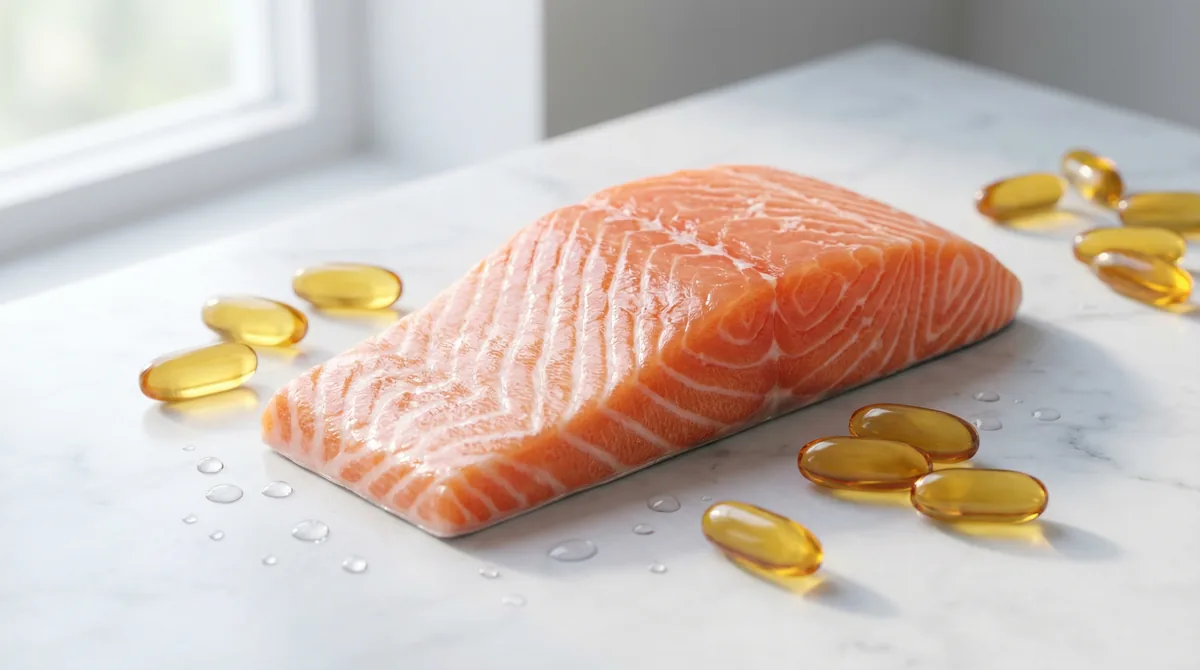
You’ve heard the advice everywhere. Take fish oil for healthier hair. Omega-3 supplements will make your hair thicker, shinier, stronger. The beauty industry loves omega-3 fatty acids, and the supplement aisle is full of promises.
But here’s what you actually want to know: does it work? Not in theory, not in a petri dish, but in real women dealing with real hair concerns in challenging climates where heat, hard water, and environmental stress already put hair under pressure.
The research on omega-3 and hair growth exists, but it’s more nuanced than most supplement marketing suggests. Some studies show genuine benefits. Others show minimal impact. And the difference often comes down to what type of omega-3 you’re taking, how much, and what’s actually causing your hair issues in the first place.
This article contains affiliate links. See our affiliate disclosure for details. Medically reviewed by Dr. Layla Hassan, Trichologist.
What Omega-3 Fatty Acids Actually Do in Your Body
Omega-3 fatty acids are essential fats your body can’t produce on its own. You have to get them from food or supplements. The three main types are EPA (eicosapentaenoic acid), DHA (docosahexaenoic acid), and ALA (alpha-linolenic acid).
EPA and DHA come primarily from fatty fish and marine sources. Your body uses them directly. ALA comes from plant sources like flaxseeds, chia seeds, and walnuts, but your body has to convert it to EPA and DHA first. That conversion process is inefficient, typically only 5-10% gets converted.
Here’s what matters for hair: omega-3 fatty acids are powerful anti-inflammatory compounds. They’re incorporated into cell membranes throughout your body, including the cells in your scalp and hair follicles. Research published in the Journal of Lipid Research shows they influence gene expression, hormone production, and inflammatory pathways.
In the Gulf region where environmental stressors already trigger inflammatory responses in the scalp, this anti-inflammatory property becomes particularly relevant. Chronic low-grade inflammation changes the hair growth cycle. Omega-3s may help counteract that changeion.
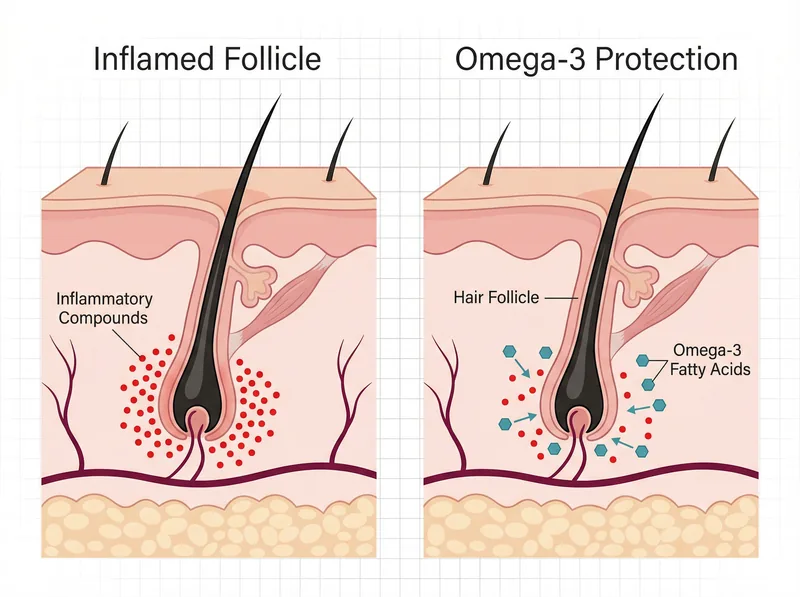 Omega-3 fatty acids work at the cellular level to reduce inflammatory compounds that can change the hair growth cycle.
The Research on Omega-3 and Hair Growth
Let’s look at what clinical studies actually show. A 2015 study published in the Journal of Cosmetic Dermatology examined 120 women with female pattern hair loss. Participants took a supplement containing omega-3, omega-6, and antioxidants for six months. The results showed significant improvement in hair density and diameter compared to placebo.
But here’s the critical detail: the supplement wasn’t just omega-3. It was a combination formula. We can’t isolate omega-3 as the sole factor. That 2015 study showed the combination worked, but it doesn’t prove omega-3 alone drives hair growth.
A 2018 study in mice (published in Scientific Reports) found that fermented fish oil high in DHA promoted hair growth by activating anagen phase (the active growth phase) in hair follicles. The researchers observed increased proliferation of dermal papilla cells, which are crucial for hair follicle function.
The limitation? It was an animal study. Mouse hair follicles don’t perfectly replicate human hair biology. And the dosage used was proportionally higher than what humans typically consume. The findings suggest a mechanism, but they don’t confirm the same effect happens in humans at normal supplementation levels.
A 2018 study examined mackerel-derived fermented fish oil in female participants experiencing hair thinning. After six months, researchers observed improvements in hair thickness and density. That study showed promise, but the sample size was small and there was no long-term follow-up.
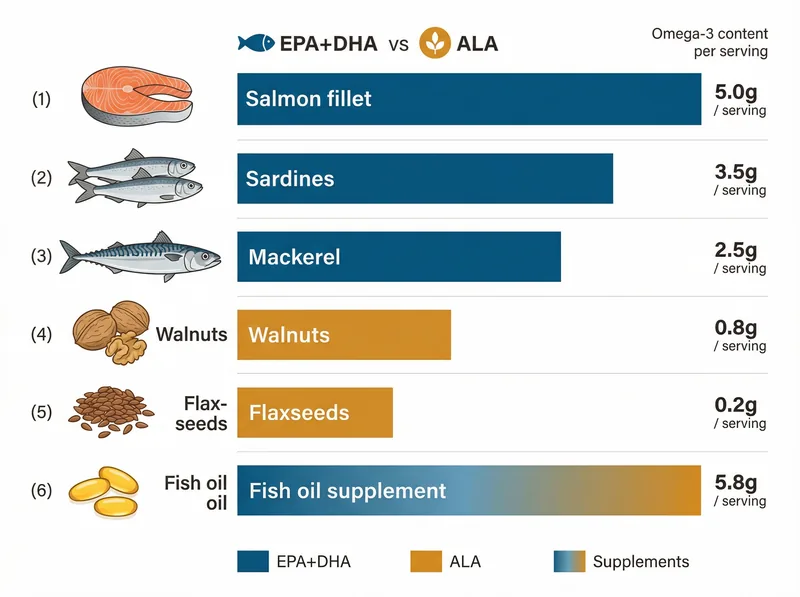 Fatty fish provide the most bioavailable forms of omega-3 (EPA and DHA), while plant sources offer ALA which the body must convert.
How Omega-3 May Support Hair Health
The evidence suggests omega-3 fatty acids support hair health through several interconnected mechanisms, even if we can’t definitively say they directly cause hair to grow faster or thicker.
First, the anti-inflammatory effect. Chronic inflammation in the scalp can shorten the anagen phase and push follicles prematurely into the resting phase. Omega-3s reduce inflammatory cytokines like IL-1 and TNF-alpha. Less inflammation means a more favorable environment for hair follicles to complete their growth cycle.
Second, improved circulation. Omega-3 fatty acids support cardiovascular health and blood flow. Better circulation to the scalp means more nutrients and oxygen reaching hair follicles. This doesn’t create new follicles, but it improves the function of existing ones.
Third, hormone modulation. Omega-3s influence the production and metabolism of hormones, including androgens. While they don’t block DHT (the hormone implicated in pattern hair loss), they may reduce the inflammatory cascade that DHT triggers. That’s relevant for women experiencing androgenic hair thinning.
Fourth, cell membrane health. Hair follicle cells, like all cells, need healthy membranes to function properly. Omega-3s become part of those membranes, improving cellular communication and nutrient transport. In climates where dehydration and mineral-heavy water stress cellular function, this structural support matters.
Omega-3 Deficiency and Hair Loss
Here’s where the evidence gets clearer: omega-3 deficiency can contribute to hair problems. If you’re deficient, supplementation may help. If you’re not deficient, adding more may not produce dramatic changes.
Signs of omega-3 deficiency include dry, brittle hair that breaks easily, a dry and flaky scalp, and overall dullness. These symptoms overlap with hard water damage, which makes diagnosis tricky in the Gulf region. You might attribute everything to environmental factors when nutritional deficiency is part of the picture.
Women living in the Gulf often have lower omega-3 intake than recommended. The traditional diet in many Gulf countries doesn’t emphasize fatty fish consumption. Expats may have shifted away from their home country’s dietary patterns. And the extreme heat reduces appetite for heavier foods like salmon or mackerel.
The World Health Organization recommends 250-500mg of combined EPA and DHA daily for general health. For therapeutic purposes related to inflammation, some studies use 1000-2000mg daily. But most women aren’t tracking their omega-3 intake at all.
Food Sources vs Supplements
You can get omega-3s from food or supplements. Both work, but they’re not identical in how your body processes them.
Fatty fish provide the most bioavailable omega-3s. A 3-ounce serving of salmon contains about 1500-2000mg of EPA and DHA combined. Sardines, mackerel, herring, and anchovies are also excellent sources. These fish also provide protein, B vitamins, selenium, and vitamin D, all of which support hair health independently.
Plant sources like flaxseeds, chia seeds, and walnuts provide ALA, which your body must convert to EPA and DHA. That conversion is inefficient. You’d need to consume significantly more ALA to get the equivalent benefit. A tablespoon of ground flaxseed contains about 1600mg of ALA, but only 80-160mg will convert to EPA/DHA.
Fish oil supplements provide concentrated EPA and DHA without requiring you to eat fish multiple times per week. Quality matters enormously. Look for supplements that list specific EPA and DHA amounts (not just total omega-3), have third-party testing for purity and potency, and use molecular distillation to remove contaminants.
Algae-based omega-3 supplements provide EPA and DHA from marine algae rather than fish. They’re a good option for vegetarians and vegans. The bioavailability is comparable to fish oil. Some women find they cause less digestive upset than fish oil capsules.
Dosage and Timing Considerations
If you decide to supplement with omega-3 for hair health, dosage matters. The studies showing benefits for hair typically used 500-2000mg of combined EPA and DHA daily for at least three to six months.
Start with 1000mg of combined EPA and DHA if you’re not currently consuming fatty fish regularly. Take it with a meal containing fat to improve absorption. Omega-3 supplements are fat-soluble, they need dietary fat present to be properly absorbed.
Consistency matters more than timing. Whether you take your supplement in the morning or evening doesn’t significantly impact results. But taking it daily for months does. Hair growth is slow. You won’t see changes in a few weeks.
If you’re taking other supplements, be aware of interactions. Omega-3 supplements have mild blood-thinning properties. If you’re taking anticoagulant medications or high-dose vitamin E, talk to your doctor before adding fish oil. The combination can increase bleeding risk.
For women in the Gulf dealing with multiple environmental stressors, omega-3 supplementation works best as part of a broader approach. It’s not a standalone solution. You also need adequate protein intake, sufficient hydration, protection from hard water (a chelating shampoo like Regrowth+ helps remove mineral buildup that blocks nutrient absorption in the scalp), and management of heat-related stress.
What Omega-3 Can’t Fix
Let’s be clear about limitations. Omega-3 supplementation won’t reverse genetic hair loss patterns. If you have androgenic alopecia (female pattern hair loss), omega-3s may reduce inflammation and support overall scalp health, but they won’t regrow hair in areas where follicles have miniaturized.
It won’t fix hair loss caused by thyroid dysfunction, iron deficiency, or hormonal imbalances. Those conditions require specific medical treatment. Omega-3 supplementation can complement medical treatment, but it’s not a replacement.
It won’t protect your hair from physical damage. If hard water is coating your hair with minerals, if heat styling is damaging the cuticle, if chemical treatments are weakening the hair shaft, omega-3 supplementation alone won’t solve those problems. You need topical interventions.
And it won’t produce results quickly. Hair grows slowly, about half an inch per month. Even if omega-3 supplementation improves the growth phase, you won’t see visible length changes for months. If you’re expecting rapid transformation, you’ll be disappointed.
Practical Implementation Strategy
If you want to try omega-3 supplementation for hair health, here’s a practical approach. First, assess your current intake. Are you eating fatty fish at least twice a week? If yes, you may already be getting adequate omega-3s and supplementation might not add much benefit.
If you’re not eating fatty fish regularly, consider adding it to your diet before jumping to supplements. Whole food sources provide additional nutrients that work synergistically. Canned sardines and mackerel are affordable, shelf-stable options that work well in Gulf climates where fresh fish can be expensive.
If you choose to supplement, start with a moderate dose (1000mg EPA+DHA combined) and give it at least three months. Track your results. Take photos of your hair, note shedding patterns, observe changes in texture and scalp condition. Subjective assessment is valuable, but documentation helps you see actual changes.
Combine omega-3 supplementation with other evidence-based interventions. Ensure you’re getting adequate protein (hair is made of protein). Address any vitamin deficiencies, particularly vitamin D and iron. Protect your hair from environmental damage with appropriate products and techniques.
If you don’t see improvements after six months of consistent supplementation, omega-3 deficiency probably isn’t your primary issue. That’s useful information. You can redirect your attention and resources to other interventions that might be more effective for your specific situation.
References
- Omega-3 Fatty Acids and Inflammatory Processes: From Molecules to Man - PubMed - Journal of Lipid Research
- Effects of a nutritional supplement on hair loss in women - PubMed - Journal of Cosmetic Dermatology
- Fermented fish oil promotes hair growth through the activation of hair follicle stem cells - PubMed - Scientific Reports
- Healthy Diet Fact Sheet - World Health Organization
- Omega-3 Fatty Acids: Essential Nutrients - Mayo Clinic