You’ve been drinking water all day. The bottle’s never far from your hand. But your skin still feels papery, your hair’s brittle, and by afternoon you’re fighting a headache that won’t quit. When you moved to a region where summer temperatures routinely hit 45°C, nobody mentioned that the hydration rules you grew up with would become dangerously inadequate.
The standard advice, drink eight glasses of water a day, was developed in temperate climates for people living moderate lifestyles. That recommendation collapses in extreme heat. Your body loses fluid through mechanisms you can’t even feel. Sweat evaporates before it beads on your skin. You breathe out moisture with every exhale in the dry air. Meanwhile, your hair follicles and skin cells are screaming for the internal hydration that topical products can’t provide.
This article contains affiliate links. See our affiliate disclosure for details.
The science of hydration in extreme heat isn’t about drinking more water randomly. It’s about understanding how your body’s fluid needs change when environmental conditions push your physiology to its limits. Here’s what research actually shows about staying hydrated when the thermometer climbs past 40°C, and why that matters for everything from your energy levels to the health of your hair and skin.
Key Takeaways
• In 45°C heat, your baseline water needs increase by 50-100% compared to temperate climates, with active individuals requiring 4-6 liters daily versus the standard 2-3 liters.
• Thirst is a late-stage dehydration signal in extreme heat. By the time you feel thirsty, you’ve already lost 1-2% of body weight in fluids, enough to impair cognitive function and physical performance.
• Chronic mild dehydration (even 1-3% fluid loss) directly impacts hair growth cycles and skin barrier function by reducing nutrient delivery to follicles and compromising the skin’s moisture-retention capacity.
• Electrolyte balance matters as much as water volume. Drinking excessive plain water without adequate sodium, potassium, and magnesium can lead to hyponatremia, especially during prolonged heat exposure.
• Research shows that even mild dehydration reduces blood flow to the skin by up to 30%, accelerating visible aging and impairing the scalp’s ability to support healthy hair growth.
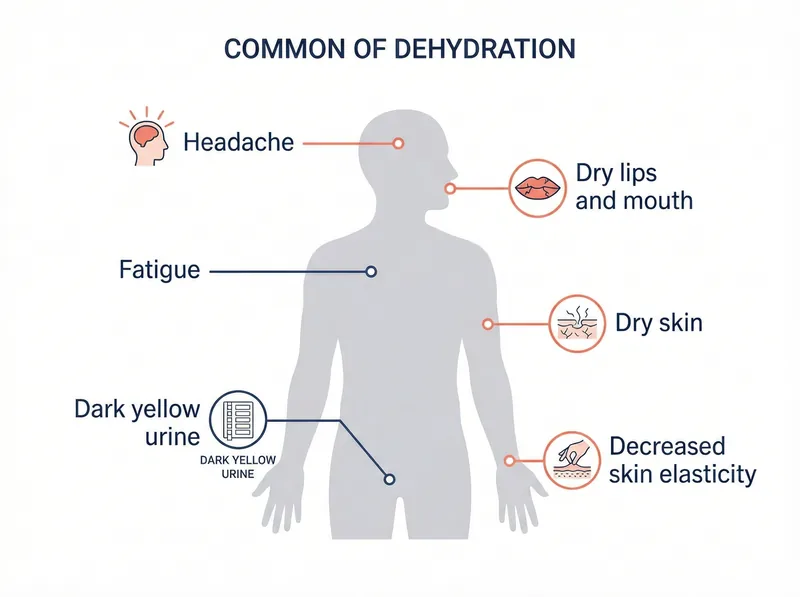 Early dehydration signs often appear before you feel thirsty in extreme heat
Why Standard Hydration Guidelines Fail in Extreme Heat
The eight glasses a day rule originated from a 1945 Food and Nutrition Board recommendation that suggested roughly 2.5 liters of total fluid intake for adults in moderate conditions. That guidance assumed you’d get about 20% of your fluid from food and live in an environment where temperatures rarely exceeded 25°C. Neither assumption holds in Gulf conditions.
When ambient temperature reaches 45°C, your body’s cooling mechanisms shift into overdrive. Studies on heat physiology show that sweat rates can reach 1.5 to 2 liters per hour during moderate activity in extreme heat. Even at rest in air-conditioned spaces, you’re losing significantly more fluid through respiration and insensible perspiration than you would in cooler climates.
The real problem? You can’t feel most of this fluid loss. In low humidity environments common across the Gulf region, sweat evaporates so quickly it never accumulates on your skin. You’re not visibly sweating, so your brain doesn’t register the same urgency to drink. Meanwhile, you’re steadily losing fluid volume that your kidneys, brain, and every cell in your body desperately needs to function.
Your hair and skin bear the brunt of this invisible dehydration. Research published in the Journal of Investigative Dermatology demonstrates that even mild dehydration reduces blood flow to the skin by 30%, limiting nutrient and oxygen delivery to hair follicles and compromising the skin’s ability to maintain its protective barrier.
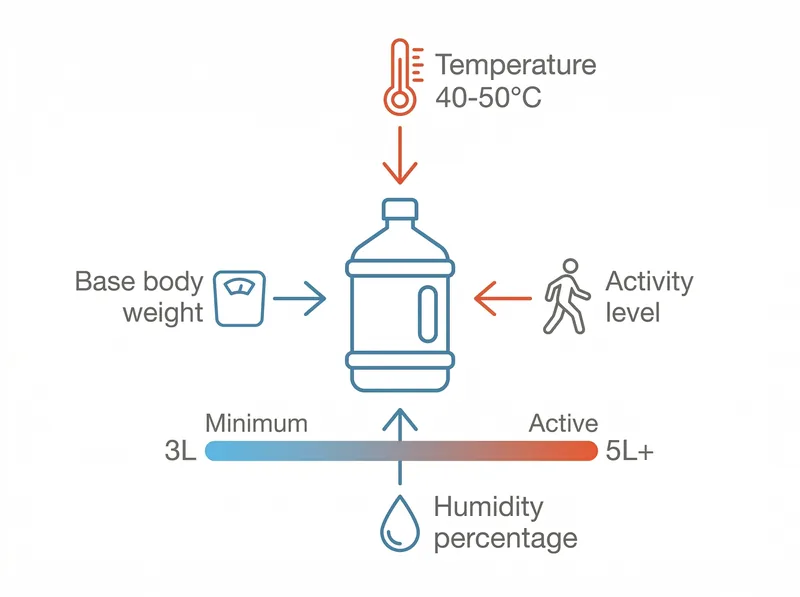 Your actual water needs depend on multiple environmental and activity factors
Calculating Your Actual Water Needs in High Heat
Forget the one-size-fits-all approach. Your hydration needs in extreme heat depend on four primary variables: your body weight, the actual temperature you’re exposed to, your activity level, and the humidity percentage. Here’s how to calculate a realistic baseline.
Start with body weight. The general formula is 30-35ml of water per kilogram of body weight in temperate conditions. For a 70kg woman, that’s 2.1 to 2.45 liters. But that’s your starting point, not your endpoint. In temperatures above 40°C, research indicates you need to increase that baseline by 50-100% depending on heat exposure duration.
Activity multiplies these needs dramatically. A 30-minute outdoor walk in 45°C heat can cost you an additional liter of fluid. An hour at the gym? Add another 1.5 liters minimum. If you’re exercising outdoors during peak heat, you’re looking at fluid losses that can exceed 2 liters per hour. These aren’t theoretical numbers. They’re measured sweat rates from heat physiology studies.
Here’s a practical framework: In Gulf summer conditions, aim for a minimum of 3 liters daily if you’re sedentary and primarily indoors. If you’re moderately active (walking, light exercise, time outdoors), target 4 liters. If you’re training or working outdoors, you need 5-6 liters or more. And critically, spread this intake across the entire day. Chugging a liter at once doesn’t work the same way as consistent sipping.
The Electrolyte Factor Nobody Talks About
Drinking massive amounts of plain water creates a new problem: electrolyte dilution. When you sweat in extreme heat, you’re not just losing water. You’re losing sodium, potassium, magnesium, and chloride. These minerals are essential for nerve function, muscle contraction, and maintaining the fluid balance between your cells and bloodstream.
Hyponatremia, abnormally low blood sodium, is a real risk when you dramatically increase water intake without replacing electrolytes. Symptoms include headache, nausea, confusion, and in severe cases, seizures. A study in Clinical Journal of Sport Medicine found that endurance athletes in hot conditions who drank only water were significantly more likely to develop hyponatremia than those who consumed electrolyte-containing fluids.
Your sodium needs increase proportionally with sweat losses. In extreme heat, you can lose 1-3 grams of sodium per liter of sweat. If you’re drinking 4-5 liters of water daily, you need to replace 4-15 grams of sodium, far more than the typical diet provides. Potassium and magnesium losses are equally significant, though less discussed.
The solution isn’t sports drinks loaded with sugar. It’s strategic electrolyte supplementation. Add a pinch of high-quality sea salt to your water throughout the day. Eat potassium-rich foods like avocados, bananas, and leafy greens. Consider a magnesium supplement, especially if you’re experiencing muscle cramps or persistent fatigue. Our complete supplement guide covers optimal electrolyte strategies for Gulf conditions in detail.
How Dehydration Sabotages Your Hair and Skin
Here’s what happens at the cellular level when you’re chronically under-hydrated in extreme heat. Your blood volume decreases, making your blood more viscous. Your heart has to work harder to pump this thicker blood, so your body prioritizes vital organs. Peripheral circulation, including blood flow to your scalp and skin, gets reduced.
Hair follicles are incredibly metabolically active. They’re among the fastest-growing tissues in your body, which means they need constant nutrient and oxygen delivery through your bloodstream. When circulation to your scalp drops by even 20-30% due to dehydration, follicles can’t maintain optimal growth cycles. Combined with common nutritional deficiencies, this creates the perfect storm for increased shedding and slower regrowth.
Your skin’s barrier function depends on adequate hydration from within. The stratum corneum, your skin’s outermost layer, needs about 20-30% water content to remain flexible and intact. When you’re dehydrated, this water content drops, leading to increased trans-epidermal water loss. Your skin becomes more permeable, more reactive, and less able to defend itself against environmental damage.
No amount of topical hydration can compensate for internal dehydration. You can slather on the most expensive moisturizer, but if your body is rationing water away from your skin to keep your kidneys and brain functioning, those surface treatments are fighting a losing battle. Internal hydration is the foundation. Everything else is supplementary.
Recognizing Dehydration Before It’s Obvious
By the time you feel thirsty in extreme heat, you’re already behind. Thirst is triggered when you’ve lost about 1-2% of your body weight in fluids. At that level, you’re experiencing measurable cognitive impairment, reduced physical performance, and compromised thermoregulation. You need to hydrate before thirst kicks in.
Watch for these earlier warning signs. Your urine should be pale yellow, almost clear. If it’s dark yellow or amber, you’re dehydrated. You should be urinating every 2-3 hours. Less frequent urination is a red flag. Check your skin elasticity: pinch the skin on the back of your hand and release. It should snap back immediately. If it takes a second or two, you need more fluids.
Headaches, especially afternoon headaches, are often dehydration-related in hot climates. So is persistent fatigue that doesn’t improve with rest. Dry mouth and lips, despite using lip balm, indicate insufficient internal hydration. Dizziness when standing up quickly suggests your blood volume is too low.
Your hair and scalp provide signals too. Increased shedding that seems disproportionate to seasonal changes. A scalp that feels tight or itchy despite proper scalp care. Hair that’s lost its elasticity and breaks more easily. These aren’t just external problems. They’re often symptoms of chronic internal dehydration affecting tissue health from the inside out.
Practical Hydration Strategies That Actually Work
Strategy one: front-load your hydration. Drink 500ml of water within 30 minutes of waking, before your first coffee. Your body has been fasting from fluids for 7-8 hours. You’re already mildly dehydrated. Starting your day with significant fluid intake sets a better baseline for the hours ahead.
Strategy two: time-based drinking, not thirst-based. Set hourly reminders to drink 250ml of water. This creates consistent intake patterns that prevent the dehydration-rehydration cycle that stresses your kidneys and cardiovascular system. By the time you feel thirsty, you’re playing catch-up. Consistent small amounts work better than sporadic large amounts.
Strategy three: pair water with electrolytes strategically. Add a pinch of sea salt to your morning water. Have an electrolyte drink mid-afternoon when heat exposure has been highest. Don’t just drink plain water all day and wonder why you still feel depleted. The minerals matter as much as the volume.
Strategy four: eat your water too. Foods with high water content, cucumbers, watermelon, tomatoes, lettuce, contribute to your hydration status while providing nutrients. A salad with plenty of water-rich vegetables gives you fluids plus the fiber that helps your body retain that hydration longer. Nutrient-dense, hydrating foods support both your overall health and your hair growth from within.
If you’re dealing with mineral buildup from hard water, proper internal hydration becomes even more critical. A chelating shampoo like Regrowth+ removes external mineral deposits, but your scalp needs adequate internal hydration to maintain healthy sebum production and optimal follicle function. The two work together.
When to Adjust Your Intake Even Higher
Certain situations demand even more aggressive hydration strategies. If you’re pregnant or breastfeeding in extreme heat, your fluid needs increase by an additional 700-1000ml daily. Your body is supporting another life while managing its own thermoregulation. Don’t underestimate these increased demands.
Illness, especially gastrointestinal issues, depletes fluids rapidly. If you’re experiencing vomiting or diarrhea in hot conditions, you need oral rehydration solutions with proper electrolyte ratios, not just water. The combination of illness and heat can lead to dangerous dehydration levels within hours.
Medications matter too. Diuretics, blood pressure medications, and some antidepressants increase fluid losses or alter how your body retains water. If you’re on any regular medications, ask your doctor how they affect your hydration needs in extreme heat. The answer might surprise you.
Air travel in and out of hot climates creates a double dehydration hit. Aircraft cabin humidity is typically 10-20%, far lower than even the driest desert air. Then you land in 45°C heat. Drink significantly more water the day before, during, and after flights. Your body needs time to rehydrate after that combination of stressors.
References
- Effects of Dehydration on Skin Physiology and Appearance - PubMed - Journal of Investigative Dermatology
- Fluid Balance and Dehydration in Hot Environments - PubMed - Sports Medicine Journal
- Exercise-Associated Hyponatremia: 2017 Consensus Guidelines - PubMed Central - Clinical Journal of Sport Medicine
- Cutaneous Blood Flow and Hydration Status - ScienceDirect - Journal of Investigative Dermatology
- Water, Hydration and Health - PubMed Central - Nutrition Reviews