
You’ve switched to sulfate-free shampoo. You’ve bought the chelating treatment. You’re using a shower filter for your hard water. But what about the water you’re actually drinking? If you’re living in the Gulf region where desalinated water is the norm, you’ve probably wondered whether filtering your drinking water could improve your skin and hair from the inside out.
Here’s the thing. The internet is full of claims about how switching to filtered or alkaline or mineral water will give you glowing skin and thicker hair. Some of it’s based on real science. Most of it isn’t. And almost none of it addresses the specific situation expats face in the GCC, where the municipal water supply is already heavily processed before it reaches your tap.
This article separates the facts from the marketing. We’ll look at what actually happens when you drink water (spoiler: it doesn’t go straight to your skin), which types of filtration make a difference for health, and whether the water you drink has any meaningful impact on how your skin and hair look and feel. Medically reviewed by Dr. Layla Hassan, Trichologist.
How Drinking Water Actually Reaches Your Skin and Hair
Let’s start with basic physiology. When you drink water, it doesn’t travel directly to your skin cells or hair follicles like some kind of internal irrigation system. Water is absorbed in your digestive tract (primarily the small intestine), enters your bloodstream, and is then distributed throughout your body based on physiological priorities and osmotic gradients.
Your vital organs get first access. Brain, heart, kidneys, liver. Skin and hair are non-essential from a survival perspective, so they’re lower on the delivery list. This is why severe dehydration shows up as organ dysfunction long before your skin looks dry.
Once water reaches dermal tissue, it doesn’t just sit there waiting to plump your skin. It’s constantly moving between intracellular and extracellular spaces, regulated by electrolyte balance, cellular membrane permeability, and local hydration gradients. Hair follicles receive hydration through the dermal papilla (the blood vessel-rich structure at the follicle base), but again, this is systemic circulation, not direct delivery.
What does this mean for the filtered-water-for-beauty question? It means the water quality that matters for skin and hair hydration is about systemic hydration status and cellular function, not about whether your drinking water contains trace minerals or has been through reverse osmosis. The pathway is indirect, and the impact is diffuse.
 Water absorbed in the digestive tract reaches skin and hair through systemic circulation, not direct delivery.
What Different Filtration Methods Actually Remove
Not all filtered water is the same. The term covers everything from a basic carbon filter pitcher to a multi-stage reverse osmosis system, and what gets removed varies wildly. Here’s what you need to know about the most common methods in Gulf households.
Carbon filtration (the kind in Brita pitchers and many fridge filters) removes chlorine, some heavy metals, and organic compounds that affect taste and odor. It doesn’t remove dissolved minerals like calcium and magnesium. It doesn’t remove salts. And it doesn’t significantly change the water’s mineral content. What it does do is make water taste better and remove some contaminants that could theoretically cause oxidative stress if consumed long-term in high amounts.
Reverse osmosis (RO) is the heavy-duty option. It removes nearly everything: minerals, salts, heavy metals, bacteria, viruses, dissolved solids. What you’re left with is essentially purified H2O with trace amounts of whatever wasn’t caught by the membrane. Many RO systems add a remineralization stage to put some calcium and magnesium back in, because completely demineralized water tastes flat and may not be ideal for long-term consumption.
Then there’s UV filtration, which kills bacteria and viruses but doesn’t remove anything. And alkaline ionizers, which adjust pH and sometimes add minerals, but don’t remove contaminants. The Gulf-specific issue is that most municipal water here is already desalinated and remineralized, so you’re filtering water that’s already been heavily processed. What you’re removing (or not removing) depends on what your building’s storage tanks and pipes have added back in.
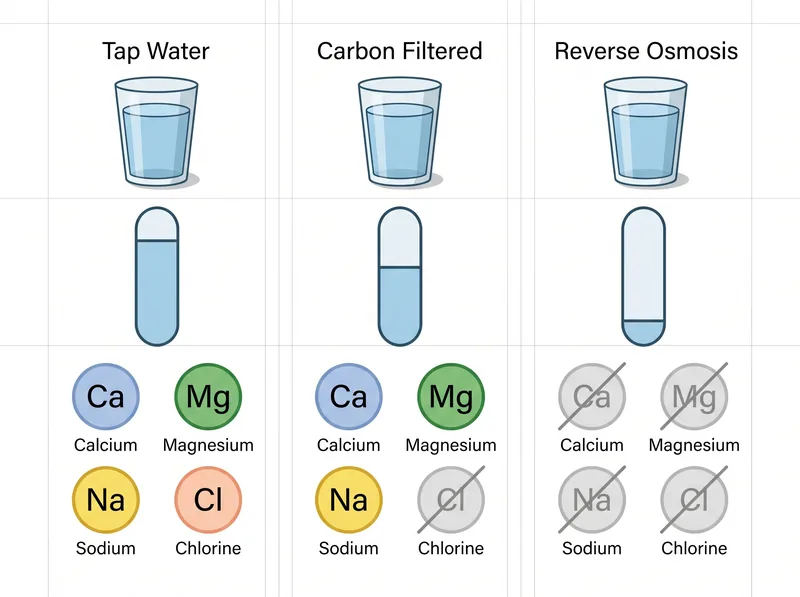 Different filtration methods remove varying amounts of minerals, affecting both water quality and nutritional contribution.
The Mineral Question: Does Drinking Mineral-Rich Water Help Skin and Hair?
One of the biggest claims in the filtered water debate is about minerals. Proponents of mineral water argue that drinking water high in calcium, magnesium, and silica supports skin elasticity and hair strength. Proponents of RO water argue that removing minerals prevents buildup and allows better cellular hydration. Both can’t be right.
Here’s what the research actually shows. Magnesium intake does correlate with skin hydration markers, but the amounts you’d get from drinking water are negligible compared to dietary sources. You’d need to drink liters of high-mineral water daily to match what you get from a serving of spinach or almonds. Same goes for calcium and silica.
The flip side: there’s no evidence that drinking demineralized (RO) water harms skin or hair, as long as you’re getting adequate minerals from food. Your body regulates mineral balance tightly through diet, not through drinking water. The exception is in regions with severe mineral deficiency in both water and food supply, which isn’t the case in the Gulf where diverse food is widely available.
What about the claim that hard water (high in calcium and magnesium) is bad to drink because it causes internal buildup? Not supported. The minerals in drinking water are in dissolved ionic form, which your body processes normally. The issue with hard water is external (what it does when you wash with it), not internal. Drinking hard water doesn’t cause the same kind of mineral film on your skin that washing with it does.
Contaminants That Actually Matter for Skin and Hair Health
If minerals aren’t the main issue, what is? The answer is contaminants that could contribute to systemic inflammation or oxidative stress. Heavy metals, chlorine byproducts, and certain organic compounds fall into this category.
Chlorine and chloramines (used to disinfect water) can form trihalomethanes (THMs) when they react with organic matter. Long-term exposure to high levels of THMs has been linked to oxidative stress and cellular damage. Does this show up as bad skin or hair loss? Not directly, but chronic low-level inflammation affects everything, including skin barrier function and hair growth cycles.
Heavy metals like lead, arsenic, and mercury (which can leach from old pipes or contaminated groundwater) are neurotoxic and can interfere with cellular processes. Again, the connection to skin and hair is indirect, but systemic toxicity doesn’t help anything. Carbon filters remove some of these; RO removes nearly all of them.
The Gulf-specific concern is desalination byproducts. The desalination process itself is clean, but the remineralization stage and building-level storage can introduce variables. If your building has old pipes or poorly maintained tanks, you could be getting rust, bacteria, or biofilm in your drinking water. A good filter (carbon or RO) addresses this. But here’s the key: the impact on skin and hair is still indirect, mediated through overall health, not through some direct beauty pathway.
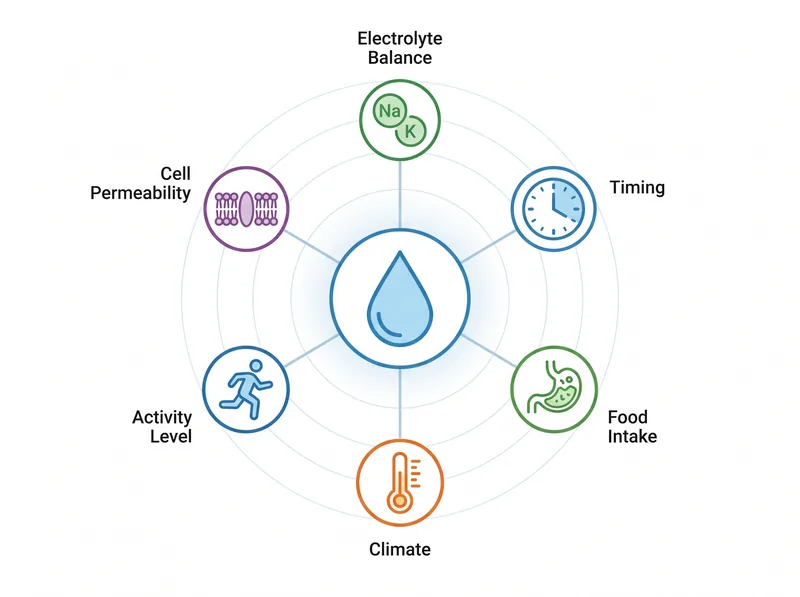 Hydration status depends on multiple factors working together, not just the water source you choose.
Hydration Quality vs. Hydration Quantity: What Actually Matters
The bigger question isn’t whether your water is filtered. It’s whether you’re drinking enough of it, and whether your body can actually use what you’re drinking. In extreme heat climates like the Gulf, fluid needs are dramatically higher than in temperate regions, and most people underestimate how much they need.
Hydration isn’t just about volume. It’s about electrolyte balance. If you’re drinking large amounts of pure RO water without adequate sodium, potassium, and magnesium intake from food or electrolyte supplementation, you can actually dilute your electrolyte levels and impair cellular hydration. This is called hyponatremia, and while rare, it’s more common in hot climates where people are told to drink constantly but aren’t replacing salts lost through sweat.
What does this look like for skin and hair? Chronic mild dehydration (the kind most people in the Gulf experience) shows up as decreased skin elasticity, slower wound healing, and potentially changeed hair growth cycles. But so does electrolyte imbalance, even if you’re drinking plenty of water. The quality that matters isn’t the mineral content of your water. It’s the overall balance of fluids and electrolytes in your system.
If you’re drinking filtered water (especially RO), make sure you’re getting minerals from food. If you’re drinking unfiltered tap water, make sure it’s actually safe and free from contaminants that could cause long-term issues. But don’t expect switching water types to visibly change your skin or hair. The effect, if any, is subtle and long-term.
The External vs. Internal Water Quality Distinction
Here’s where people get confused. Hard water is terrible for skin and hair when you wash with it. The mineral ions bind to proteins in hair and skin, creating buildup, changeing moisture balance, and interfering with product performance. This is well-documented and the reason why chelating shampoos and shower filters make such a visible difference.
But drinking hard water? Completely different mechanism. The minerals you ingest are processed by your digestive system, absorbed as ions, and regulated by your kidneys and cellular transport systems. They don’t create buildup on your skin from the inside. They don’t coat your hair follicles. The pathway is entirely different.
This is why you can have great skin and hair while drinking unfiltered tap water, as long as you’re washing with filtered or softened water. And it’s why filtering your drinking water won’t fix the damage caused by washing in hard water. The two problems require different solutions. One is about external water chemistry. The other is about internal hydration and overall health.
If you’re dealing with skin dryness or hair issues in the Gulf, address the external water quality first. Get a shower filter. Use a chelating shampoo like Regrowth+ weekly to remove mineral buildup. Then look at your internal hydration: are you drinking enough? Are you replacing electrolytes? Are there contaminants in your drinking water that could be addressed with a filter? But don’t expect the drinking water change alone to transform your skin and hair. It’s one small piece of a much larger puzzle.
When Filtering Your Drinking Water Actually Makes Sense
So should you filter your drinking water or not? The answer depends on your specific water source and health priorities, not on beauty outcomes. Here’s when it makes sense.
If your tap water tastes bad (chlorine, metallic, or off flavors), a carbon filter improves palatability and removes the compounds causing the taste. This matters because if water tastes bad, you drink less of it, and chronic mild dehydration is worse for your skin and hair than any trace contaminant.
If you’re concerned about heavy metals or disinfection byproducts (especially if you’re pregnant, have young children, or have compromised immunity), an RO system provides the highest level of contaminant removal. The trade-off is that you need to ensure adequate mineral intake from diet or remineralization.
If your building has old pipes or you’ve noticed sediment or discoloration in your tap water, any filtration is better than none. Even a basic carbon pitcher filter removes particulates and some dissolved metals. For serious contamination concerns, get your water tested (many Gulf cities offer testing services) and choose filtration based on what’s actually present.
But if your water is already clean, tastes fine, and you’re getting adequate minerals from food, there’s no compelling beauty or health reason to filter it further. The impact on skin and hair will be negligible. Your money is better spent on a shower filter, which addresses the external water quality issue that actually affects how your skin and hair look and feel.
References
- Water, Hydration and Health - Nutrition Reviews
- Magnesium Status and Skin Hydration - Journal of the American College of Nutrition
- Drinking Water Regulations and Contaminants - US Environmental Protection Agency
- Health Risks from Drinking Demineralised Water - World Health Organization
- Desalination and Water Quality - US Geological Survey