
You’ve seen the Instagram posts. Influencers crediting collagen powder for their glowing skin and thick hair. Your colleague swears her fine lines softened after three months of daily collagen. The supplements aisle is packed with options, and the claims are bold.
But when you look at the price tags and the sheer volume of contradictory information online, it’s hard to know what’s real. Does collagen actually absorb through your digestive system? Can it reach your hair follicles? Or is this just another expensive trend that’ll fade in two years?
Here’s what the research actually shows. Some studies suggest collagen peptides may improve skin elasticity and hydration, particularly in women over 35. Others show minimal effects. The truth is more nuanced than the marketing, and whether it’s worth it depends on your specific situation, your age, and what you’re trying to fix.
This article contains affiliate links. See our affiliate disclosure for details. Medically reviewed by Dr. Layla Hassan, Trichologist.
What Collagen Supplements Actually Are
Collagen is the most abundant protein in your body. It’s the structural scaffolding for your skin, hair, nails, bones, and connective tissue. Think of it as the framework that keeps everything tight and resilient.
Your body makes collagen naturally by combining amino acids from the protein you eat. But production peaks in your twenties and declines steadily after that. By age 40, you’re producing significantly less. By 60, the drop is dramatic.
Collagen supplements are hydrolyzed collagen, meaning the protein has been broken down into smaller peptides that are easier to digest and absorb. Most come from bovine (cow) or marine (fish) sources. The idea is that consuming these peptides gives your body the building blocks to produce more collagen where it’s needed.
The catch? Your body doesn’t just shuttle ingested collagen straight to your skin or hair. It breaks it down into amino acids first, then decides where those amino acids go based on priority. Your vital organs get first dibs. Research published in the Journal of Cosmetic Dermatology suggests that some collagen peptides may signal your body to produce more collagen in skin tissue, but the mechanisms aren’t fully understood yet.
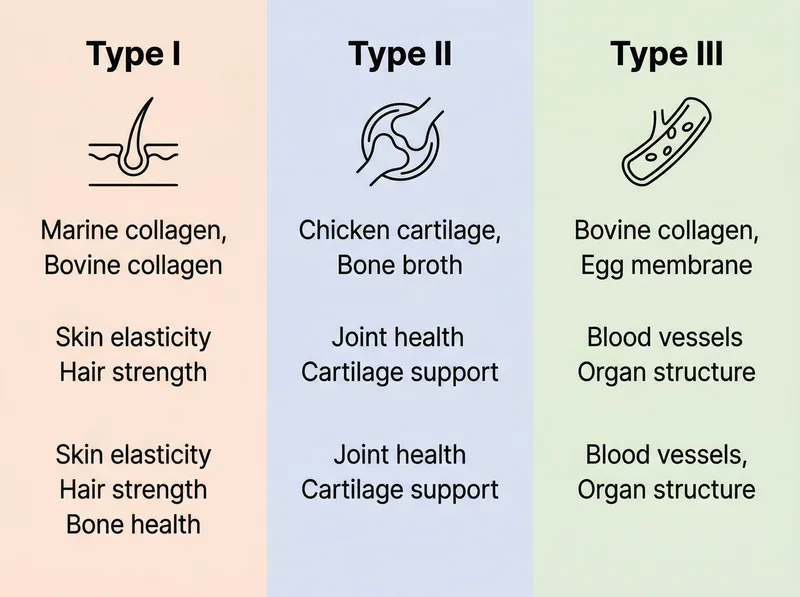 Different collagen types serve different functions in the body. Type I is most relevant for skin and hair.
The Evidence for Skin Benefits
The strongest evidence for collagen supplementation is in skin health, particularly for women over 35. A 2013 study in Skin Pharmacology and Physiology found that women who took 2.5-5 grams of collagen peptides daily for eight weeks showed improved skin elasticity compared to placebo.
Another trial published in the Journal of Medical Nutrition and Nutraceuticals tracked 114 women aged 45-65 who took collagen peptides for eight weeks. The results showed measurable improvements in skin hydration and a reduction in wrinkle depth. Not dramatic, but statistically significant.
Here’s what matters: most positive studies used hydrolyzed collagen peptides (not whole collagen), taken consistently for at least eight weeks, at doses between 2.5-10 grams daily. One-off doses or sporadic use didn’t show benefits. And the improvements were modest, not transformative.
The mechanism may involve collagen peptides stimulating fibroblasts (the cells that produce collagen) in your skin. Some research suggests they also support hyaluronic acid production, which helps skin retain moisture. But we don’t have long-term data on whether these effects last or diminish over time.
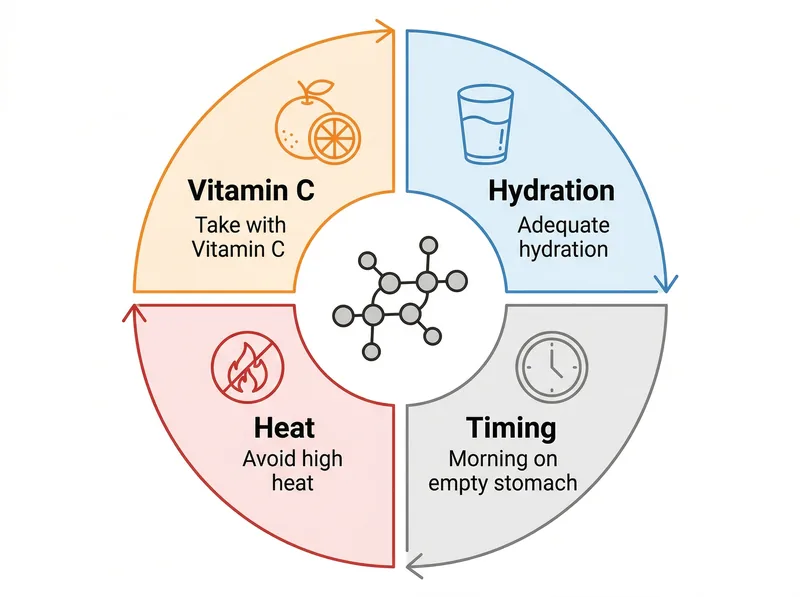 Collagen absorption depends on several factors you can control through diet and timing.
The Evidence for Hair Growth and Strength
The research on collagen for hair is thinner. Most of the claims are extrapolated from skin studies or based on the fact that hair follicles sit in the dermal layer of skin, which is rich in collagen.
One small study found that women with thinning hair who took a marine collagen supplement for 90 days experienced increased hair diameter and density. But the study was funded by the supplement manufacturer, and the sample size was small. Independent replication is lacking.
What we do know: collagen contains the amino acids proline, glycine, and hydroxyproline, which are building blocks for keratin, the protein that makes up your hair shaft. In theory, providing those amino acids could support hair structure. But you can also get them from eating protein-rich foods like chicken, fish, eggs, and bone broth.
If you’re dealing with hair loss from iron deficiency or hormonal changes, collagen alone won’t fix it. It’s not a replacement for addressing the root cause. But it may support overall hair health as part of a broader approach, especially if your protein intake is low.
Types of Collagen and What to Look For
Not all collagen supplements are the same. There are at least 28 types of collagen in the human body, but supplements typically contain Type I, Type II, or Type III.
Type I is what you want for skin and hair. It’s the most abundant type in your body and the primary structural protein in skin, hair, nails, and bones. Marine collagen (from fish) is almost entirely Type I. Bovine collagen (from cows) contains both Type I and Type III.
Type II collagen is found in cartilage and is marketed for joint health, not skin or hair. If you’re buying a collagen supplement for beauty benefits, check the label. You want hydrolyzed Type I collagen peptides.
Hydrolyzed (or hydrolysed) means the collagen has been broken down into smaller peptides for better absorption. Look for products that specify ‘collagen peptides’ or ‘hydrolyzed collagen.’ Whole collagen protein is harder for your body to use.
Absorption and Bioavailability
Here’s the skeptic’s question: can collagen even survive digestion? Your stomach acid breaks down proteins. How does collagen make it to your skin intact?
It doesn’t. And it doesn’t need to. Hydrolyzed collagen peptides are small enough to be absorbed in your small intestine. Studies using radioactive tracers have shown that ingested collagen peptides do appear in the bloodstream and accumulate in skin tissue.
The peptides seem to act as signaling molecules, telling your fibroblasts to ramp up collagen production. They don’t just get deposited as-is. Your body recognizes them and responds.
That said, absorption varies. Taking collagen with vitamin C improves synthesis because vitamin C is required for collagen production. Research suggests pairing collagen with at least 50mg of vitamin C enhances effectiveness. Many people take their collagen powder with orange juice or a vitamin C supplement for this reason.
Environmental Factors That Affect Collagen
If you’re living in a hot, dry climate with hard water, your skin and hair are already under environmental stress. UV exposure accelerates collagen breakdown in skin. Chronic dehydration impairs your body’s ability to produce collagen efficiently.
Hard water doesn’t directly affect collagen levels, but it does damage your skin barrier and hair cuticle, making both more vulnerable to oxidative stress. When your skin barrier is compromised, moisture loss increases, and that exacerbates the appearance of fine lines and dullness.
A chelating shampoo like Regrowth+ removes the mineral buildup that hard water leaves on your scalp and hair, which helps maintain a healthier environment for hair growth. But it won’t boost collagen production on its own.
If you’re taking collagen supplements, you also need to address the external factors breaking it down. That means daily sunscreen (non-negotiable), adequate hydration (at least 2.5-3 liters of water daily in extreme heat), and protecting your skin barrier with a good moisturizer. Supplementation works best when your environment isn’t actively sabotaging your efforts.
Dosage, Timing, and Realistic Expectations
Most studies showing benefits used 2.5-10 grams of collagen peptides daily. Lower doses (under 2 grams) didn’t show significant effects. Higher doses (over 15 grams) didn’t show additional benefits, so there’s no point in megadosing.
Timing matters less than consistency. Some people take collagen first thing in the morning on an empty stomach for better absorption. Others mix it into coffee or smoothies. The key is taking it daily for at least 8-12 weeks before evaluating results.
Set realistic expectations. You won’t see dramatic changes overnight. If you do see benefits, they’ll be subtle: slightly firmer skin, fewer fine lines, maybe stronger nails. Your hair might feel thicker or break less easily. But collagen isn’t going to reverse severe photoaging or regrow hair lost to androgenetic alopecia.
If you’re over 35, dealing with early signs of aging, and eating a relatively low-protein diet, collagen supplementation may offer modest benefits. If you’re under 30 with no visible signs of collagen loss, you probably don’t need it yet. Your body is still producing plenty on its own.
Who Should Skip Collagen Supplements
Collagen supplements aren’t for everyone. If you have a fish or shellfish allergy, avoid marine collagen. If you avoid animal products, standard collagen supplements won’t work for you (though vegan collagen boosters that support your body’s own production are an option).
People with kidney disease should consult a doctor before taking collagen, as high protein intake can strain kidney function. Same goes if you’re on a medically prescribed low-protein diet.
If you’re already eating a high-protein diet with plenty of bone broth, chicken skin, and fish, you’re likely getting enough collagen precursors from food. Adding a supplement may not provide additional benefits.
And if you’re dealing with a specific medical condition like postpartum hair loss or autoimmune-related skin issues, collagen won’t address the underlying cause. It’s a supportive nutrient, not a treatment.
References
- Oral supplementation of specific collagen peptides has beneficial effects on human skin physiology: a double-blind, placebo-controlled study - Skin Pharmacology and Physiology
- Oral Collagen Supplementation: A Systematic Review of Dermatological Applications - Journal of Drugs in Dermatology
- Collagen peptide supplementation in combination with resistance training improves body composition and increases muscle strength in elderly sarcopenic men - British Journal of Nutrition
- The effect of oral collagen peptide supplementation on skin moisture and the dermal collagen network - Journal of Medical Nutrition and Nutraceuticals
- Vitamin C and Immune Function - Nutrients (MDPI)