You’ve probably seen the promises. Biotin supplements for longer, stronger, faster-growing hair. The before-and-after photos. The testimonials from influencers with enviable hair. And you’ve wondered: does it actually work, or is this just another expensive placebo?
Here’s what most supplement marketing won’t tell you. The evidence for biotin and hair growth is far more limited than the billion-dollar industry suggests. And for most women experiencing hair concerns in challenging climates, biotin deficiency isn’t the problem. This article contains affiliate links. See our affiliate disclosure for details.
Medically reviewed by Dr. Layla Hassan, Trichologist. What follows is a careful look at what research actually shows, who might benefit, and what’s likely causing your hair issues if you’re living in the Gulf region or other hard water environments.
Key Takeaways
• True biotin deficiency is extremely rare, affecting less than 0.01% of healthy adults eating a normal diet
• Clinical evidence for biotin improving hair growth in non-deficient individuals is weak and limited to low-quality studies
• Most hair loss in Gulf climates is caused by environmental factors like hard water mineral buildup, not nutritional deficiency
• High-dose biotin supplements (5,000-10,000 mcg) can interfere with common lab tests, including thyroid panels and troponin assays
• If you’re experiencing hair thinning or excessive shedding, environmental factors and iron status are more likely culprits than biotin levels
What Biotin Actually Does in Your Body
Biotin, also called vitamin B7, is a water-soluble vitamin that plays a role in converting food into energy. It’s involved in the metabolism of fats, carbohydrates, and amino acids. Your body uses it to help produce keratin, the structural protein in hair, skin, and nails.
That last part is where the hair growth claims come from. Because biotin is involved in keratin production, the supplement industry has built an entire narrative around the idea that more biotin equals more keratin equals better hair. But biology doesn’t work that way.
Your body can’t stockpile excess biotin. It’s water-soluble, meaning you excrete what you don’t need through urine. Taking 10,000 mcg when your body only needs 30 mcg doesn’t give you ‘extra’ keratin production. It just gives you expensive urine.
According to research published in the Journal of the American Academy of Dermatology, there’s no evidence that biotin supplementation improves hair growth in individuals who aren’t biotin-deficient. The mechanism simply doesn’t support the marketing claims.
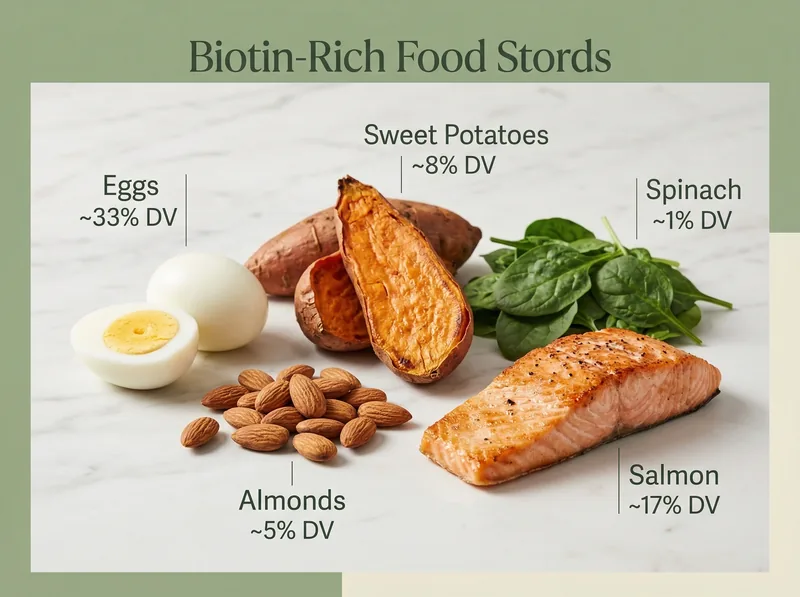 True biotin deficiency is extremely rare in healthy adults consuming a normal diet, affecting less than 0.01% of the general population.
The Evidence for Biotin and Hair Growth
Let’s look at what clinical trials actually show. The evidence base is surprisingly thin.
A 2015 review in Skin Appendage Disorders found only 18 reported cases of biotin use for hair and nail changes. Of those, 18 cases involved individuals with underlying pathology causing poor hair or nail growth. In other words, people who were already deficient or had a specific medical condition.
There are virtually no randomized controlled trials showing biotin improves hair growth in healthy women without deficiency. The studies that do exist are small, poorly designed, often funded by supplement companies, and lack proper control groups.
One frequently cited study involved women with self-perceived thinning hair who took a marine protein supplement that happened to contain biotin along with other ingredients. Hair growth improved. But was it the biotin? The protein? The other vitamins? The placebo effect? The study design makes it impossible to know.
Compare this to the evidence for iron supplementation in iron-deficient women with hair loss, where multiple well-designed trials show clear improvement. The difference in evidence quality is stark.
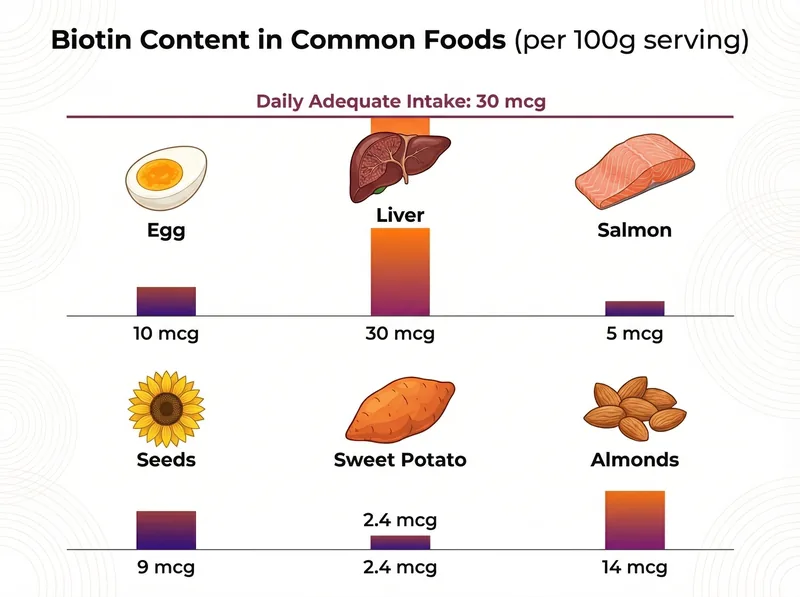 Most people get adequate biotin from food alone. A varied diet typically provides 30-100 mcg daily, well above the 30 mcg adequate intake level.
Who Actually Has Biotin Deficiency
True biotin deficiency is rare. Your gut bacteria produce some biotin, and it’s present in many common foods. Most people eating a reasonably varied diet get plenty.
According to the National Institutes of Health, the adequate intake level for biotin is just 30 micrograms daily for adults. You can get that from a single egg (10 mcg) plus a handful of almonds (14 mcg). Yet supplements typically contain 5,000 to 10,000 mcg, more than 150 times the adequate intake.
The groups genuinely at risk for deficiency are limited. Pregnant and breastfeeding women have slightly increased needs. People with genetic disorders affecting biotin metabolism. Individuals on long-term anticonvulsant medications or those with severe malabsorption conditions.
If you’re experiencing hair loss and you don’t fall into one of those categories, biotin deficiency is almost certainly not your problem. Especially if you’re living in the Gulf region, where hard water mineral buildup is a far more common cause of hair damage and breakage.
The Real Problem: Environmental Damage, Not Deficiency
Here’s what actually happens to your hair in hard water climates. The high mineral content in Gulf water, particularly calcium and magnesium, binds to your hair shaft. Over time, this creates a coating that makes hair feel rough, look dull, and break more easily.
This isn’t a vitamin deficiency. It’s mechanical damage. No amount of biotin will remove mineral deposits from your hair or protect against the ongoing buildup from every shower.
Women in these environments often notice their hair feels different within months of moving here. It becomes drier, more brittle, harder to style. They assume it’s stress, or diet, or hormones. They start taking supplements. But the problem is external, not internal.
The solution isn’t supplementation. It’s chelation. A chelating shampoo like Regrowth+ uses ingredients that bind to and remove mineral deposits, restoring hair’s natural texture and reducing breakage. That’s addressing the actual cause, not just hoping a vitamin will somehow compensate for environmental damage.
The Lab Test Interference Problem
Here’s something most supplement companies won’t mention. High-dose biotin interferes with common lab tests.
The FDA issued a safety communication in 2019 warning that biotin can cause falsely high or falsely low results in numerous lab tests. This includes thyroid function tests, troponin (used to diagnose heart attacks), vitamin D levels, and hormone panels.
If you’re taking 5,000 or 10,000 mcg of biotin daily and you get lab work done, you need to tell your doctor. Better yet, stop taking it for at least 72 hours before testing. A false-negative troponin result could delay diagnosis of a heart attack. That’s not a theoretical risk. It’s happened.
For a supplement with questionable evidence of benefit, that’s a significant downside most people don’t know about until it causes a problem.
What to Focus on Instead
If you’re experiencing hair thinning, shedding, or texture changes, here’s what actually deserves your attention.
First, rule out iron deficiency. It’s incredibly common in women, often overlooked, and directly impacts hair growth. Get your ferritin checked, not just hemoglobin. You want ferritin above 40 ng/mL for optimal hair growth, though many labs consider anything above 15 ‘normal.’
Second, address environmental factors. If you live in a hard water area, mineral buildup is likely contributing to breakage and dullness. Use a chelating treatment regularly. Protect your hair from heat and sun exposure. These aren’t glamorous solutions, but they work.
Third, look at overall nutrition. Adequate protein intake matters far more than biotin. Most women need 0.8 to 1 gram of protein per kilogram of body weight daily. If you’re undereating or restricting, that affects hair before any vitamin deficiency would.
And if you’re dealing with chronic stress or sleep changeion, particularly common among expats adjusting to new environments, that impacts hair cycles more than any supplement can compensate for.
The Bottom Line on Biotin
Biotin is essential. You need it. But you’re almost certainly getting enough from food unless you have a rare genetic condition or specific medical situation causing deficiency.
The supplement industry has built a massive market on the idea that more is better, that megadoses of biotin will somehow force your hair to grow faster or thicker. The evidence doesn’t support it. What it does support is that biotin deficiency causes hair loss, and correcting that deficiency helps. But that’s not the same thing as supplementation improving normal hair.
If you’re convinced you want to try biotin anyway, at least choose a reasonable dose. There’s no benefit to 10,000 mcg over 300 mcg, and the higher dose increases your risk of lab test interference. And remember to stop taking it before any medical testing.
But honestly? Your money is better spent on addressing the environmental factors actually damaging your hair, ensuring adequate iron and protein intake, and managing stress. Those have evidence behind them. Biotin supplementation in non-deficient individuals? That’s mostly hope and marketing.
References
- Biotin in the Treatment of Hair and Nail Disorders: A Review - Journal of the American Academy of Dermatology
- Biotin for Hair and Nail Growth: A Review of the Literature - Skin Appendage Disorders
- The Role of Iron in Hair Loss - PubMed Central
- Biotin - Health Professional Fact Sheet - National Institutes of Health
- FDA Warns that Biotin May Interfere with Lab Tests - U.S. Food and Drug Administration