Your hair is doing something strange. Maybe it’s suddenly thicker and shinier than it’s ever been, or maybe it feels like straw despite the same products you’ve always used. You’re pregnant, and everyone warned you about postpartum hair loss, but nobody mentioned that your hair would start changing now, in ways that feel completely unpredictable.
Here’s what’s actually happening: pregnancy doesn’t just flip one hormonal switch. It’s a trimester-by-trimester cascade of changes that affect every hair follicle on your head. And if you’re living in a hard water climate, those changes interact with mineral buildup in ways that make the whole experience more confusing. This article contains affiliate links. See our affiliate disclosure for details.
The good news? These changes are temporary, predictable, and manageable. Once you understand what’s happening each trimester and why hard water makes it worse, you can adjust your routine safely without resorting to harsh treatments or questionable ingredients.
First Trimester: The Adjustment Period Nobody Warns You About
The first trimester is hormonal chaos. Your body is flooding with progesterone and estrogen, but it hasn’t reached the stable, improved levels that create the famous pregnancy hair glow. Instead, you’re in transition, and your hair often reflects that instability.
Many women notice their hair feels greasier than usual. That’s progesterone increasing sebum production while your scalp tries to recalibrate. Others experience the opposite: sudden dryness and brittleness, especially if morning sickness is causing dehydration. Research on pregnancy hormones and skin physiology shows that sebaceous gland activity can swing dramatically in early pregnancy before stabilizing.
If you’re in a hard water area, mineral deposits amplify both problems. Calcium and magnesium bind to excess sebum, creating a waxy buildup that makes hair feel simultaneously greasy and dry. It’s a confusing combination that makes you question whether you’re overwashing or underwashing.
What helps: gentle clarification. You can safely use a mild chelating shampoo like Regrowth+ once a week to remove mineral buildup without stripping your scalp during this sensitive period. Avoid sulfates and stick to lukewarm water. Your hair will stabilize as you move into the second trimester.
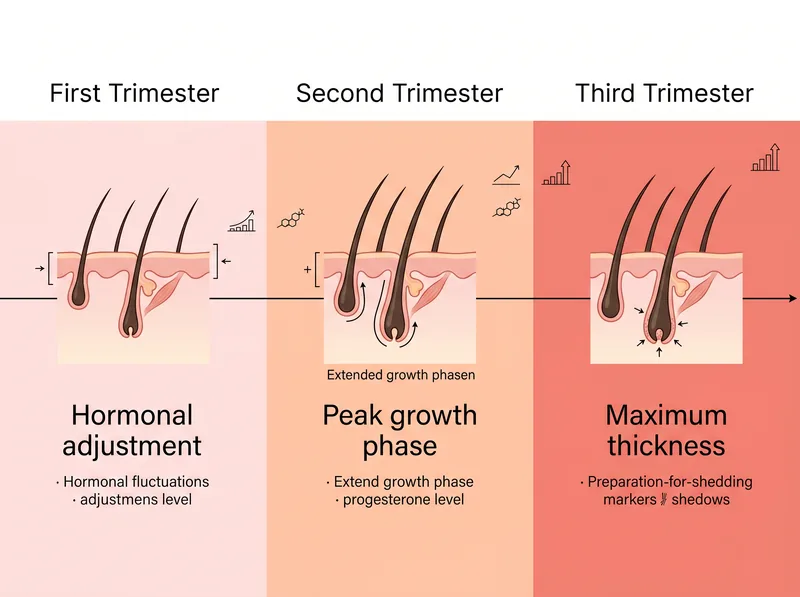 How pregnancy hormones affect hair growth and texture across each trimester, from early changes through third trimester preparation.
Second Trimester: Peak Growth and the Pregnancy Hair Glow
This is when the magic happens. By week 14, estrogen levels have risen significantly and stabilized. That estrogen extends the anagen phase of your hair growth cycle, meaning more follicles stay in active growth instead of transitioning to the resting phase. The result? Visibly thicker, fuller hair.
You’re not actually growing more hair follicles. You’re just keeping more of the ones you have in the growth phase simultaneously. Studies on hair cycle dynamics during pregnancy show that up to 95% of follicles can be in anagen phase during the second trimester, compared to the normal 85-90%.
This is also when many women notice their hair texture changing. Straight hair might develop a slight wave. Curly hair might loosen or tighten. These changes are temporary and driven by the same hormones that are altering water retention and collagen structure throughout your body.
Hard water can dull this glow. Mineral deposits coat the hair shaft, preventing light reflection and making even thick, healthy hair look lifeless. If your hair feels heavy or looks dull despite obvious growth, buildup is likely the culprit. A clarifying wash every 10-14 days keeps the shaft clean without changeing your scalp’s new hormonal balance.
Third Trimester: Maximum Thickness and Preparing for the Shed
By the third trimester, you’re at peak hair retention. This is the thickest your hair will ever be, and for many women, it’s a genuinely enjoyable side effect of pregnancy. But your body is already preparing for what comes next: the postpartum shed.
Hormonally, nothing has changed yet. Estrogen is still improved, follicles are still in extended anagen. But as you approach delivery, your body begins subtle preparations for the hormonal crash that will trigger telogen effluvium within three months postpartum. You won’t feel this preparation, but it’s happening at the follicle level.
What you might notice: your hair feels heavier, harder to style, and more prone to tangling. That’s not hormonal. That’s the sheer volume of hair you’re now carrying. If you’re in a hard water area, the weight of mineral buildup adds to the problem, making hair feel unmanageable even when it’s objectively healthy.
This is not the time to experiment with new products or treatments. Your hair is in a good place hormonally. Focus on mechanical care: gentle detangling, protective styles that don’t strain the scalp, and consistent mineral removal. What happens after delivery is inevitable, but you can minimize the damage by keeping your scalp and hair shaft clean now.
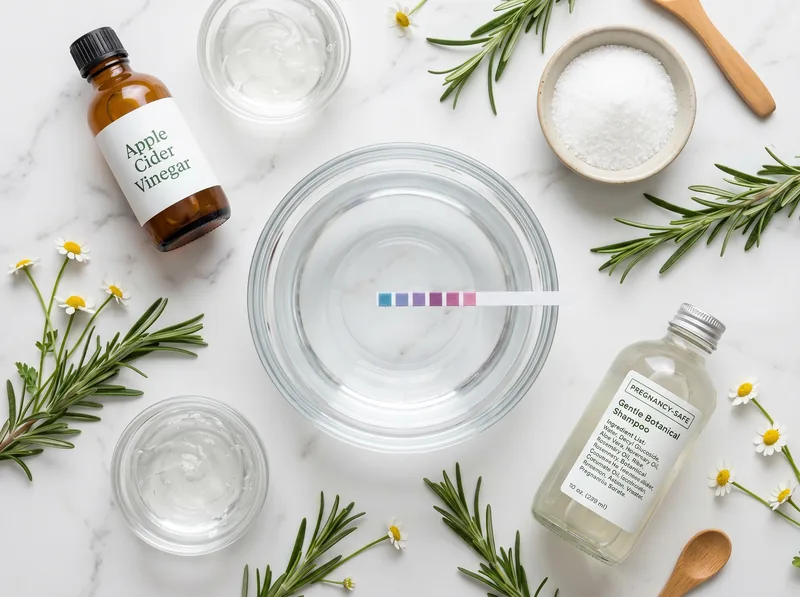 Pregnancy-safe approaches to managing hard water damage without harsh treatments or questionable ingredients.
What’s Safe and What’s Not: Pregnancy Hair Care in Hard Water
Pregnancy changes the safety profile of everything you put on your body, and hair care is no exception. The good news: most concerns about hair products during pregnancy are overblown. The bad news: hard water makes you want to reach for stronger treatments, and some of those aren’t safe.
Chelating shampoos are safe. The active ingredients in most formulations (EDTA, citric acid, sodium gluconate) work on the hair shaft, not the scalp, and aren’t absorbed systemically. You can use them throughout pregnancy without concern. What you should avoid: keratin treatments (formaldehyde exposure), chemical relaxers (lye or no-lye), and any product containing retinoids or high-dose salicylic acid.
The American College of Obstetricians and Gynecologists confirms that topical hair treatments are generally safe, but recommends avoiding anything that requires prolonged heat application or chemical processing. That rules out Brazilian blowouts and most salon smoothing treatments, but leaves cleansing and conditioning products in the safe zone.
For hard water specifically: install a shower filter if possible, but don’t expect it to solve the problem completely. Filters reduce chlorine and some sediment, but they don’t remove dissolved calcium and magnesium. You’ll still need periodic chelation. The safest approach is gentle, frequent clarification rather than aggressive monthly treatments.
Why Your Pregnancy Hair Feels Different in the Gulf
If you’re pregnant in a hard water region like the Gulf, Arizona, or parts of Australia, you’re dealing with a compounding problem. Pregnancy hormones are changing your hair from the inside. Hard water is coating it from the outside. The interaction creates issues you wouldn’t experience in either situation alone.
The most common complaint: hair that’s simultaneously thick and limp. Hormonally, you have more hair in active growth, which should create volume. But mineral deposits weigh each strand down, flattening the roots and eliminating any natural lift. The result feels paradoxical and frustrating.
Second issue: color changes. Some women notice their hair looks darker or more brassy during pregnancy. That’s partially hormonal (melanin production can increase), but it’s also mineral staining. Copper and iron in hard water oxidize on the hair shaft, creating a dull, slightly greenish or orange cast that’s especially visible on lighter hair.
Hard water affects your skin barrier too, which matters because scalp health directly impacts hair health. If your scalp is dry, irritated, or producing excess sebum to compensate for mineral damage, your hair will reflect that stress regardless of how well pregnancy hormones are supporting follicle growth.
The Postpartum Connection: What’s Coming and How to Prepare
Everyone talks about postpartum hair loss, but nobody explains that it’s not actually loss. It’s shedding. All those follicles that stayed in anagen phase during pregnancy will transition to telogen (resting phase) within 1-3 months after delivery. Then they’ll shed. It’s not a malfunction. It’s your hair cycle catching up.
The timing is predictable: most women notice increased shedding between 8-16 weeks postpartum. The severity varies based on how much extra hair you retained during pregnancy. If you had dramatic thickening in the second trimester, you’ll have more dramatic shedding postpartum. If your pregnancy hair changes were subtle, so will the shed.
Hard water makes the postpartum period worse. Mineral buildup weakens the hair shaft, so when those telogen hairs shed, they’re more likely to break rather than release cleanly from the follicle. That creates the appearance of more loss and leaves broken ends that tangle and mat. Nutritional support matters too, especially if you’re breastfeeding in a hot climate with high water needs.
What you can do now: keep your scalp clean, minimize mechanical damage (tight hairstyles, rough towel-drying, heat styling), and mentally prepare for the fact that postpartum shedding is temporary. Your hair will return to its pre-pregnancy density by 12-18 months postpartum. The follicles aren’t damaged. They’re just resetting.
References
- Physiological skin changes in pregnancy - National Center for Biotechnology Information
- Hair growth during pregnancy and the postpartum period - PubMed
- Skin Conditions During Pregnancy - American College of Obstetricians and Gynecologists
- Postpartum telogen effluvium: prevalence and associated factors - PubMed