
You’re three months postpartum, exclusively breastfeeding, and your hair is coming out in handfuls. You’re also exhausted, constantly thirsty, and can’t remember the last time you ate a meal that wasn’t leftovers standing at the kitchen counter. Here’s what no one tells you: breastfeeding in a hot climate isn’t just demanding, it’s nutritionally extreme. Your body is producing 700 to 900 milliliters of milk daily while simultaneously trying to cool itself in 45-degree heat. The caloric deficit, the dehydration, and the micronutrient depletion all converge on your hair follicles.
Medically reviewed by Dr. Layla Hassan, Trichologist. This article contains affiliate links. See our affiliate disclosure for details.
The standard breastfeeding nutrition advice assumes a temperate climate and doesn’t account for the Gulf’s environmental load. What works in London or Toronto falls short here. You’re not failing at postpartum recovery, you’re operating in conditions that demand a completely different nutritional baseline. The hair loss you’re seeing isn’t just hormonal, it’s a visible signal that your body is running on fumes. And while postpartum hair loss in the Gulf has multiple environmental triggers, the nutritional component is the one you can control from the inside out.
Key Takeaways
• Breastfeeding mothers in the Gulf need 500-650 extra calories daily, not the standard 300-400, due to combined heat exposure and milk production demands.
• Hydration needs reach 3.5-4.5 liters per day in hot climates, nearly double the standard recommendation, to support both milk supply and thermoregulation.
• Postpartum hair loss is compounded by iron, zinc, and B-vitamin depletion, which accelerates in breastfeeding mothers who aren’t meeting improved nutritional needs.
• Protein intake should reach 80-100g daily to support milk production and hair follicle repair, with emphasis on bioavailable sources like fish, eggs, and legumes.
• Chelating shampoo like Regrowth+ addresses the external mineral buildup from hard water while internal nutrition rebuilds hair from the follicle level.
 Breastfeeding mothers in the Gulf need 3.5-4.5 liters of water daily, significantly more than standard recommendations due to heat and milk production.
Why Breastfeeding in Hot Climates Demands More Calories
The standard advice says breastfeeding mothers need an extra 300 to 500 calories per day. That’s based on research conducted in moderate climates where your body isn’t also working overtime to maintain core temperature. In the Gulf, where outdoor temperatures regularly exceed 45 degrees Celsius and indoor air conditioning creates constant thermal transitions, your metabolic baseline is higher before you even factor in milk production.
Research published in the American Journal of Clinical Nutrition found that lactating women in hot climates have significantly improved energy expenditure compared to those in temperate zones. Your body is producing milk and simultaneously cooling itself through increased perspiration, both of which require substantial caloric input. If you’re exclusively breastfeeding and living in the Gulf, you’re looking at 500 to 650 extra calories daily, minimum.
That’s not a license to eat anything. It’s a requirement for nutrient-dense foods that deliver vitamins, minerals, and macronutrients your body can actually use. Empty calories from processed foods won’t support milk production or hair recovery. You need protein, healthy fats, complex carbohydrates, and micronutrients in forms your body recognizes and absorbs.
What does 600 extra calories look like in practice? A palm-sized portion of grilled salmon, a cup of cooked quinoa, half an avocado, and a handful of almonds. That’s one substantial meal or two large snacks spread across the day. If you’re skipping meals or relying on quick carbohydrates because you’re too exhausted to cook, you’re running a deficit that shows up first in your energy levels and then in your hair.
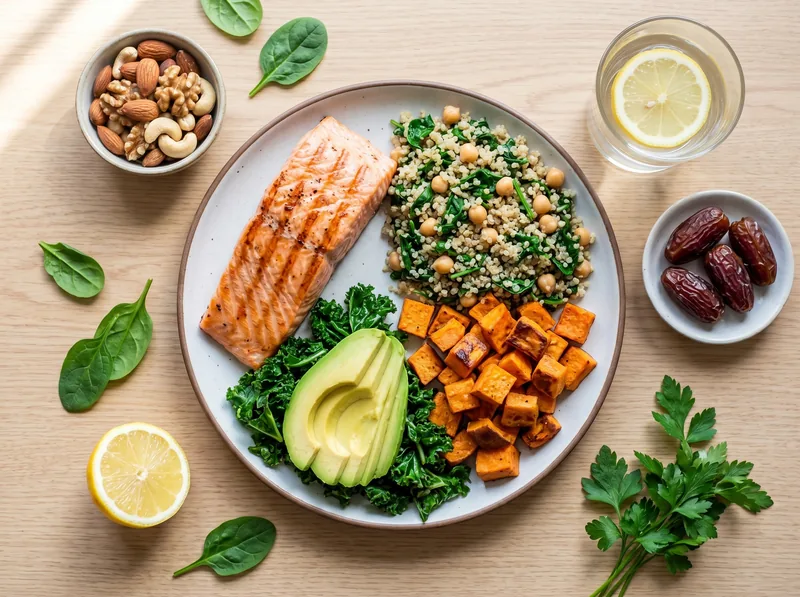 A single nutrient-dense meal providing iron, protein, omega-3s, and complex carbohydrates that support both milk production and postpartum hair recovery.
Hydration Beyond Water: What Breastfeeding Mothers Actually Need
You’ve heard ‘drink to thirst,’ but in the Gulf, thirst is a lagging indicator. By the time you feel thirsty while breastfeeding in extreme heat, you’re already mildly dehydrated. The World Health Organization recommends 2.7 liters of total water intake for non-lactating women in temperate climates. For breastfeeding mothers in hot environments, that number climbs to 3.5 to 4.5 liters daily.
That’s not just about milk supply, though dehydration absolutely impacts production. It’s about the fact that your body prioritizes survival over cosmetic functions like hair growth. When you’re chronically under-hydrated, your body shunts resources away from hair follicles, skin repair, and other non-essential processes. The result is accelerated shedding, brittle hair texture, and slower regrowth once the telogen effluvium phase ends.
Hydration science in extreme heat shows that electrolyte balance matters as much as volume. Drinking plain water alone can dilute sodium levels if you’re sweating heavily and breastfeeding simultaneously. You need sodium, potassium, and magnesium to retain the water you’re consuming. Coconut water, homemade oral rehydration solutions with a pinch of salt and honey, or electrolyte-enhanced water are more effective than plain water alone.
A practical approach: keep a 1.5-liter bottle with you during every nursing session. Aim to finish it twice daily, plus additional fluids with meals. If your urine is darker than pale straw, you’re not drinking enough. If you’re experiencing dizziness, headaches, or reduced milk output, dehydration is likely contributing.
The Micronutrients Breastfeeding Depletes and Hair Requires
Breastfeeding transfers substantial amounts of iron, zinc, calcium, B vitamins, and vitamin D from your body to your infant. If you’re not actively replenishing these through diet or supplementation, you’re operating at a deficit. Iron deficiency and hair loss in women is one of the most common and overlooked causes of persistent shedding, and breastfeeding mothers are at particularly high risk.
A study in the Journal of the American Dietetic Association found that up to 40% of lactating women develop iron deficiency within the first six months postpartum, especially if they experienced blood loss during delivery or had low iron stores before pregnancy. Iron is essential for hair follicle function. Without it, follicles enter telogen phase prematurely, leading to diffuse shedding that compounds the hormonal postpartum hair loss most women already experience.
Zinc is equally critical. It supports immune function, wound healing, and protein synthesis, all of which are essential for hair growth. Breastfeeding mothers lose approximately 2-3mg of zinc daily through milk. If your dietary intake isn’t covering that plus your own baseline needs (8-11mg daily), deficiency develops quickly. Zinc-rich foods include oysters, beef, pumpkin seeds, and chickpeas, but absorption is impaired by phytates in grains and legumes unless properly prepared.
B vitamins, particularly B12 and folate, support red blood cell production and cellular energy metabolism. Deficiency manifests as fatigue, brain fog, and hair thinning. If you’re plant-based or vegetarian, B12 supplementation isn’t optional during breastfeeding, it’s essential. The RDA for lactating women is 2.8 micrograms daily, and food sources alone often fall short without animal products.
Protein Needs for Milk Production and Hair Follicle Repair
Hair is structurally protein. Keratin, the primary component of hair strands, requires a steady supply of amino acids to form properly. Breastfeeding increases your protein needs to approximately 1.3 grams per kilogram of body weight, or 80 to 100 grams daily for most women. That’s significantly higher than the standard recommendation for non-lactating adults.
If you’re not hitting that target, your body will prioritize milk production over hair growth. The amino acids available will go to your infant, not to rebuilding the hair follicles damaged by hormonal shifts and environmental stress. This is why many breastfeeding mothers notice their hair doesn’t just shed, it also grows back thinner and weaker than before pregnancy.
Quality matters as much as quantity. Complete proteins (those containing all nine essential amino acids) are found in animal products like eggs, fish, poultry, and dairy, as well as in quinoa and soy. If you’re plant-based, combining legumes with grains (lentils and rice, chickpeas and bulgur) ensures you’re getting the full amino acid profile. Collagen peptides, while popular, are not complete proteins and shouldn’t be your primary source.
Practical intake: a three-egg omelet with cheese (21g), a cup of Greek yogurt (20g), a palm-sized chicken breast (30g), and a cup of cooked lentils (18g) gets you to 89 grams. If you’re struggling to eat full meals due to time constraints or appetite suppression, protein smoothies with Greek yogurt, nut butter, and a scoop of unflavored whey or pea protein can bridge the gap.
Omega-3 Fatty Acids: The Anti-Inflammatory Lever for Scalp Health
Chronic low-grade inflammation is common in the postpartum period, driven by sleep deprivation, stress, and the physical recovery process. Inflammation at the scalp level changes the hair growth cycle, prolonging the telogen phase and delaying the anagen phase. Omega-3 and hair growth research consistently shows that EPA and DHA, the active forms found in fatty fish, have anti-inflammatory effects that support follicle health.
Breastfeeding mothers transfer 50-80mg of DHA to their infants daily through milk. If you’re not consuming omega-3-rich foods, your own levels drop, which impacts both your cognitive function and your hair. The WHO recommends 200-300mg of DHA daily for lactating women, which translates to two servings of fatty fish per week or a high-quality algae-based supplement if you don’t eat fish.
Salmon, sardines, mackerel, and anchovies are the richest sources. If you’re concerned about mercury, smaller fish like sardines and anchovies accumulate less heavy metal while still providing substantial omega-3 content. Flaxseeds and walnuts provide ALA, a precursor to EPA and DHA, but conversion rates are low (less than 10%), so they shouldn’t be your sole source.
Supplementation is an option, but quality varies dramatically. Look for third-party tested fish oil or algae oil with at least 500mg combined EPA and DHA per serving. Avoid supplements with added vitamin A during breastfeeding, as excess retinol can transfer to milk and pose risks to infants.
Adapting Gulf Cuisine to Meet Nutritional Demands
Traditional Gulf cuisine offers nutrient-dense options if you know what to prioritize. Dates are rich in iron, magnesium, and quick energy. A handful of dates with almonds or walnuts provides a balanced snack that supports milk production and blood sugar stability. Lentil and chickpea dishes like daal or hummus deliver protein, fiber, and B vitamins. Grilled fish, a staple in coastal areas, provides high-quality protein and omega-3s without the preparation complexity of red meat.
Iron-rich meals adapted to Gulf cuisine can be built around ingredients already familiar in the region. Lamb liver, while not universally appealing, is one of the most bioavailable sources of iron and B12. Spinach and other leafy greens, when cooked with a source of vitamin C like lemon or tomato, improve iron absorption. Combining these with whole grains like freekeh or bulgur creates meals that are both culturally appropriate and nutritionally complete.
The challenge is often time and energy, not knowledge. Batch cooking on weekends, enlisting help from family or hired support, and keeping pre-portioned snacks accessible makes adherence realistic. A tray of boiled eggs, pre-washed vegetables with hummus, and containers of cooked quinoa in the fridge means you can assemble a nutrient-dense meal in under five minutes.
Avoid the trap of relying on refined carbohydrates for quick energy. White rice, pastries, and sugary snacks spike blood sugar and crash it just as fast, leaving you more fatigued and doing nothing to support hair recovery. Complex carbohydrates like oats, sweet potatoes, and whole grains provide sustained energy and the B vitamins your body needs.
When Nutrition Isn’t Enough: The External Mineral Buildup Problem
You can improve your internal nutrition perfectly and still struggle with hair health if you’re not addressing the external environmental load. Hard water in the Gulf deposits calcium and magnesium onto your scalp with every wash, creating a barrier that prevents nutrients from reaching the follicle and traps sebum and dead skin cells.
This is where a chelating shampoo like Regrowth+ becomes essential. Chelating agents bind to mineral deposits and remove them, restoring your scalp to a clean baseline. For breastfeeding mothers dealing with both hormonal shedding and environmental buildup, this is the topical intervention that allows your improved nutrition to actually reach the follicles.
Use a chelating shampoo once weekly if you’re washing your hair two to three times per week. More frequent use can strip natural oils, which is counterproductive when your scalp is already stressed. Follow with a nourishing conditioner focused on the mid-lengths and ends, avoiding the scalp to prevent additional buildup.
The combination approach, internal nutrition plus external cleansing, addresses both sides of the problem. Nutrition rebuilds from the follicle level. Chelation removes the environmental barrier preventing that nutrition from being effective. Neither works optimally without the other in hard water conditions.
References
- Energy requirements during lactation in hot climates - American Journal of Clinical Nutrition
- Hydration recommendations for lactating women - World Health Organization
- Iron deficiency in lactating women: prevalence and risk factors - Journal of the American Dietetic Association
- Omega-3 fatty acid requirements during lactation - National Institutes of Health
- Protein requirements for lactating women - Mayo Clinic