If bath time has become a battle of tears and scalp scratching, you’re not imagining things. Your toddler’s sensitive scalp is reacting to something real: the mineral-heavy water coming out of your tap. In hard water regions like the Gulf, mineral concentrations can be 10 to 15 times higher than what most children’s shampoos are formulated to handle. What works beautifully in soft water areas can leave your little one’s scalp irritated, dry, and coated with buildup that no amount of rinsing seems to wash away.
The problem isn’t your parenting or your child’s sensitivity. It’s chemistry. Hard water creates a film on hair and scalp that traps dirt, prevents proper cleansing, and can trigger inflammatory responses in delicate toddler skin. Regular baby shampoos, even the gentlest ones, aren’t designed to break through this mineral barrier. They’re formulated for soft water conditions where a simple surfactant does the job.
Here’s what actually works when you’re washing a toddler’s hair in hard water: chelating ingredients that bind to minerals, ultra-gentle cleansers that won’t strip natural oils, and formulations that rinse completely clean despite high mineral content. This isn’t about finding the most expensive boutique brand. It’s about understanding what your water is doing to standard formulas and choosing products that are chemically equipped to handle it.
This article contains affiliate links. See our affiliate disclosure for details.
Why Standard Baby Shampoos Fail in Hard Water
Most baby shampoos are formulated with one assumption: you’re washing with relatively soft water. They use mild surfactants like cocamidopropyl betaine or decyl glucoside that work beautifully when mineral content is low. But introduce calcium and magnesium ions at 200+ ppm (parts per million), and these gentle cleansers start forming insoluble compounds. That white, waxy film you see on your toddler’s hair after bath time? That’s soap scum: the chemical reaction between your shampoo and your water.
The result is a scalp that never feels truly clean. Minerals bond to hair shafts and skin, creating a rough texture that traps bacteria and irritants. Your toddler’s scalp becomes itchy and inflamed, not because the shampoo is harsh, but because it’s leaving residue behind. You rinse and rinse, but the minerals in the rinse water are part of the problem. It’s a cycle that standard formulations simply can’t break.
Research on hard water and skin barrier function shows that prolonged exposure to high mineral content changes the skin’s protective layer, particularly in children whose barrier function is still developing. For toddlers, whose scalp skin is thinner and more permeable than adult scalp, this changeion happens faster and with more visible symptoms: redness, flaking, persistent dryness, and sometimes small bumps or rashes along the hairline.
You need a shampoo that does two things simultaneously: chelate (bind and remove) the minerals already on your child’s scalp and hair, and cleanse without creating new mineral-soap complexes. That’s a specific formulation requirement that most mainstream baby shampoo brands don’t address because they’re not marketing to hard water regions.
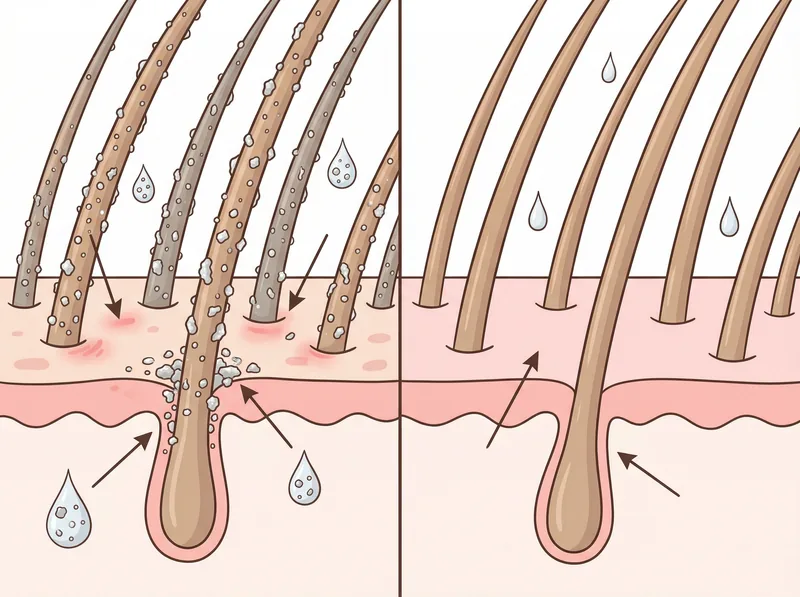 How hard water minerals create buildup on your toddler’s sensitive scalp, leading to irritation and dryness
What to Look for in a Toddler Shampoo for Hard Water
The ingredient list is where you’ll find the answers. Look for chelating agents: ingredients specifically designed to bind to mineral ions and prevent them from depositing on hair and scalp. EDTA (ethylenediaminetetraacetic acid) and its derivatives are the most common and effective. Citric acid also has mild chelating properties and is gentler for very young children. Sodium gluconate is another option that’s both effective and considered very safe for sensitive skin.
You also want surfactants that resist forming soap scum. Sodium cocoyl isethionate and sodium lauryl sulfoacetate are sulfate-free cleansers that perform well in hard water. They create a rich lather even in high mineral content and rinse away more completely than traditional baby shampoo surfactants. Despite the similar names, these are much gentler than sodium lauryl sulfate (SLS), which you should avoid in toddler products regardless of your water type.
Humectants and emollients matter too. A healthy scalp needs moisture retention, and hard water is naturally drying. Look for glycerin, panthenol (pro-vitamin B5), and aloe vera in the formula. These ingredients help the scalp retain water and recover from the drying effects of mineral exposure. Avoid heavy oils and butters in the shampoo itself: they can combine with minerals to create even more buildup.
Fragrance is a common irritant for sensitive toddler scalps, and in hard water conditions, synthetic fragrances can bind to mineral deposits and become more concentrated on the skin. Choose fragrance-free formulations or those scented only with essential oils at very low concentrations. The fewer ingredients overall, the better: a short, focused ingredient list means fewer potential irritants and a formula that’s easier for your child’s developing system to tolerate.
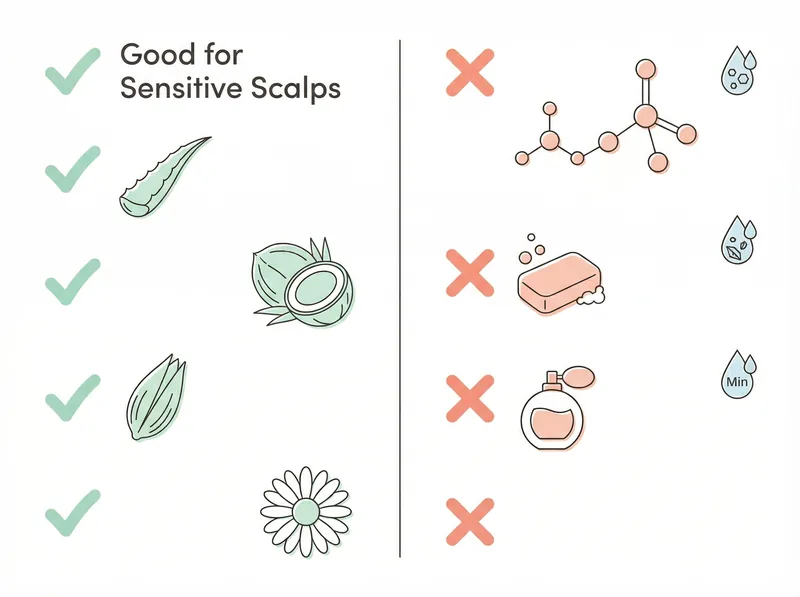 What to look for and what to avoid when choosing a toddler shampoo for hard water conditions
Top Chelating Shampoos Safe for Toddlers
For families dealing with hard water, a chelating shampoo isn’t optional, it’s necessary. The challenge is finding one gentle enough for toddler use. Most chelating formulas are designed for adults and contain ingredients too harsh for children under three. But a few products bridge this gap effectively.
A chelating shampoo like Regrowth+ uses a combination of EDTA and gentle plant-based surfactants that can work for older toddlers (age 2+) when diluted. The key is using it once or twice weekly as a clarifying treatment, not as your daily shampoo. Mix one part chelating shampoo with two parts water, apply to wet hair, massage gently for 30 seconds, and rinse thoroughly. This removes the mineral buildup that accumulates between washes without over-stripping your child’s scalp.
For daily washing, you need something even gentler. Look for baby shampoos that specifically mention hard water compatibility or mineral removal on the label. Brands formulated in regions with naturally hard water (parts of the UK, Australia, and the southwestern US) tend to include chelating ingredients as standard. Check for citric acid or sodium gluconate in the top half of the ingredient list.
If you can’t find a toddler-specific chelating formula locally, you can create a DIY apple cider vinegar rinse as a weekly treatment. Mix one tablespoon of raw apple cider vinegar with one cup of filtered water (if available) or boiled and cooled tap water. After shampooing, pour this mixture over your toddler’s hair, let it sit for 30 seconds, then rinse thoroughly. The acetic acid helps dissolve mineral deposits. Don’t use this more than once a week, and never apply it to broken skin or active rashes.
Gentle Daily Shampoos That Work in Mineral-Heavy Water
Between chelating treatments, you need a daily or every-other-day shampoo that cleanses without adding to the mineral problem. The best options use modern sulfate-free surfactant technology designed for hard water performance. Sodium cocoyl isethionate-based shampoos are your best bet: they’re derived from coconut oil, they lather well in hard water, and they’re gentle enough for daily toddler use.
Look for formulas that list water as the first ingredient (obviously) and sodium cocoyl isethionate or sodium lauryl sulfoacetate in the top five ingredients. These should be followed by humectants like glycerin or panthenol and soothing agents like chamomile or calendula extract. Reading ingredient labels becomes second nature once you know what you’re looking for.
Avoid anything with sodium lauryl sulfate, sodium laureth sulfate, or ammonium lauryl sulfate in the top half of the ingredient list. In hard water, these create excessive soap scum and can be drying even in formulas marketed as gentle or moisturizing. Also skip products with heavy conditioning agents like dimethicone or other silicones: these create buildup in hard water that’s nearly impossible to remove from toddler hair without harsh clarifying.
A good daily shampoo should leave your toddler’s hair feeling soft and slightly slippery when wet, but not coated or filmy. After drying, the hair should be soft and easy to comb, and the scalp should look clear and feel comfortable. If you’re seeing flaking, redness, or your child is scratching within hours of washing, the formula isn’t working with your water chemistry.
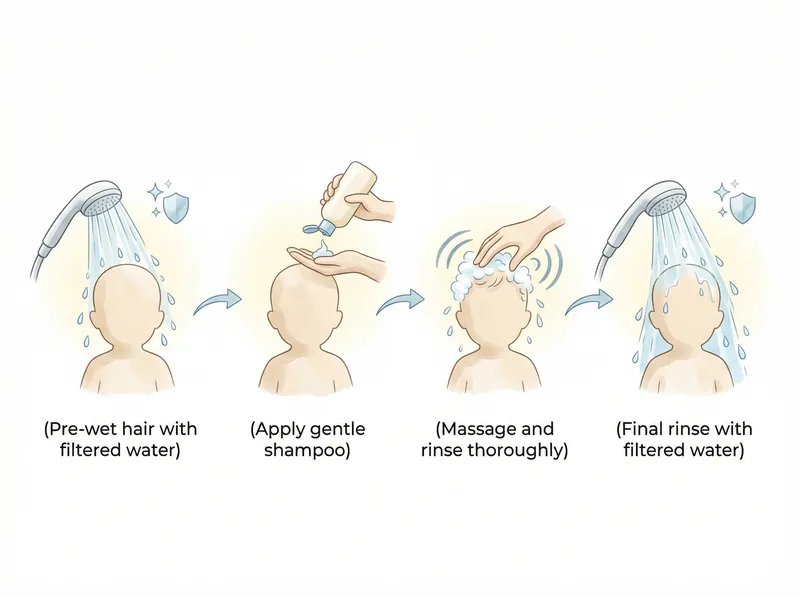 A gentle bath time sequence that protects your toddler’s scalp from hard water damage
Bath Time Strategies to Reduce Hard Water Damage
Even the best shampoo needs support from your washing technique. Hard water damage is cumulative, so every step you take to minimize mineral contact helps. If possible, do a final rinse with filtered or bottled water. Fill a large cup with filtered water before bath time, and use it for the last rinse after shampooing. This removes the mineral-laden tap water from your child’s hair and scalp before it can dry and deposit.
Water temperature matters more than you think. Hot water opens the hair cuticle and allows more minerals to penetrate and deposit. Keep bath water lukewarm to warm, never hot. For the final rinse, use cool water if your toddler will tolerate it. Cool water closes the cuticle and helps seal out minerals that are still present in the rinse water.
Don’t over-wash. Toddler scalps don’t produce as much oil as adult scalps, and in hard water conditions, frequent washing means frequent mineral exposure. Unless your child is visibly dirty or has been in a pool, washing hair two to three times per week is sufficient. On non-wash days, you can rinse with plain water or use a very diluted shampoo solution (one part shampoo to four parts water) just on areas that need spot cleaning.
Protecting young skin from hard water extends beyond hair care. After bath time, pat your toddler’s scalp and hair gently with a soft towel rather than rubbing vigorously. Rubbing can irritate a scalp that’s already sensitive from mineral exposure. Apply a small amount of lightweight, water-based moisturizer to the scalp if you see dryness, but avoid heavy oils that can trap minerals.
When to See a Pediatrician or Dermatologist
Sometimes what looks like hard water irritation is actually a scalp condition that needs medical attention. If your toddler’s scalp symptoms don’t improve after two weeks of using appropriate hard water shampoos and techniques, it’s time to consult a healthcare professional. Persistent redness, especially if it’s spreading or accompanied by oozing or crusting, could indicate seborrheic dermatitis, eczema, or a fungal infection that requires prescription treatment.
Severe itching that interferes with sleep or causes your child to scratch until bleeding occurs needs immediate evaluation. While hard water can cause discomfort, it shouldn’t cause this level of distress. Your pediatrician can rule out conditions like psoriasis, contact dermatitis from other products, or allergic reactions that might be compounding the hard water issue.
Hair loss in toddlers is rare and should always be evaluated by a doctor. If you’re noticing bald patches, broken hairs, or significant thinning, this goes beyond hard water effects. It could indicate alopecia areata, a nutritional deficiency, or a response to an underlying health condition. The American Academy of Dermatology notes that while some hair loss in young children is normal, patchy or rapid loss requires medical assessment.
When you do see a healthcare provider, bring the shampoos you’ve been using and be prepared to describe your water quality. If you have a water test report showing mineral content, bring that too. Understanding that you’re dealing with hard water helps your doctor differentiate between environmental irritation and a condition that needs medical treatment. Many pediatricians in hard water regions are familiar with these issues and can recommend specific products or prescribe medicated shampoos if needed.
References
- Hard Water and Skin Barrier Function: A Review - PubMed Central
- Hair Loss in Children: Common Causes - American Academy of Dermatology
- Pediatric Scalp Dermatitis and Environmental Factors - Journal of Pediatric Dermatology
- Water Quality and Infant Skin Health - World Health Organization