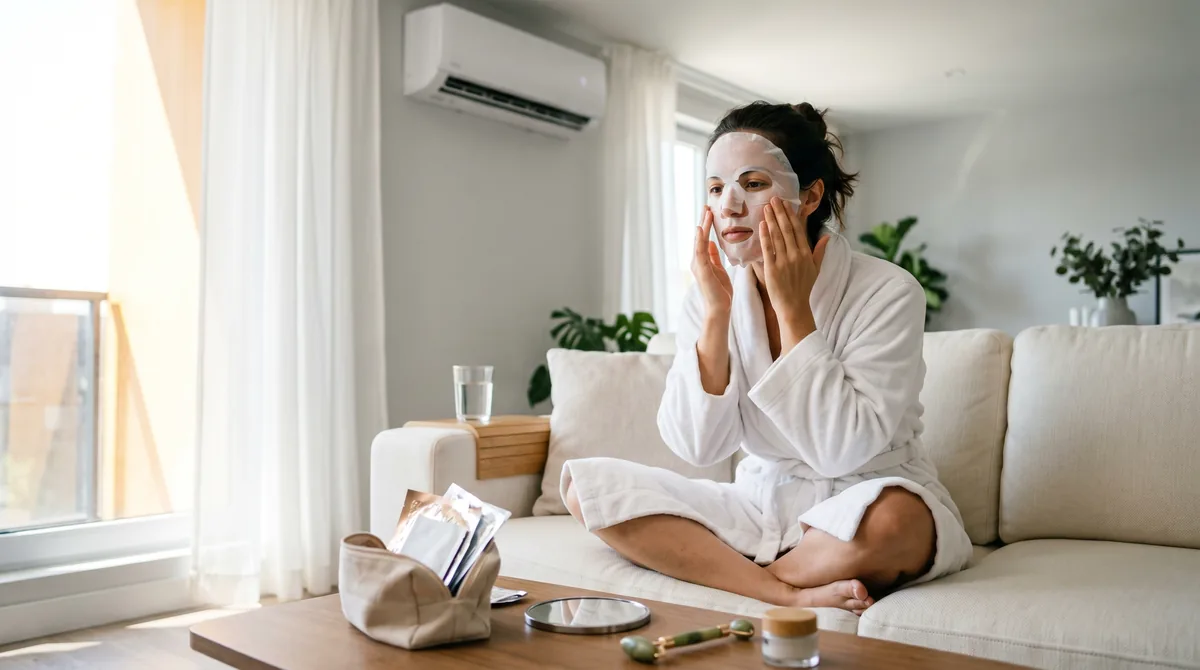
If you’ve watched a sheet mask slide off your face in Gulf heat, you know the frustration. The masks that work beautifully in Seoul’s temperate climate turn into slippery, ineffective messes when you’re dealing with 45-degree outdoor temps, aggressive AC indoors, and desalinated water that strips your skin barrier twice daily.
We tested 15 hydrating sheet masks over three months in real Gulf conditions. Not in a temperature-controlled lab. In actual apartments with AC set to arctic, after showers in mineral-heavy water, during the kind of heat that makes your moisturizer feel like it evaporated before it absorbed. Here’s what actually worked, what failed spectacularly, and why the ingredients matter more than the brand hype when you’re fighting environmental extremes.
This article contains affiliate links. See our affiliate disclosure for details.
Why Standard Sheet Mask Advice Fails in Dry Climates
Most sheet mask guides assume you’re working with normal humidity and reasonably soft water. They don’t account for what happens when you’re cycling between 45-degree heat and 18-degree AC six times a day, or when your tap water contains calcium and magnesium levels that interfere with how humectants bind to your skin.
The typical advice to use sheet masks after cleansing sounds simple until you realize hard water leaves a film that blocks absorption. Your expensive essence can’t penetrate when there’s a mineral barrier sitting on your skin. And that refreshing cooling sensation everyone raves about? In Gulf conditions, it often means the mask is drying out too fast, pulling moisture from your skin instead of delivering it.
We needed masks that could handle environmental chaos. Formulas thick enough to stay saturated in low humidity. Ingredients that work despite hard water interference. Fit secure enough that you’re not chasing a sliding mask around your face every two minutes. The Korean beauty brands everyone recommends weren’t designed for this, and it shows.
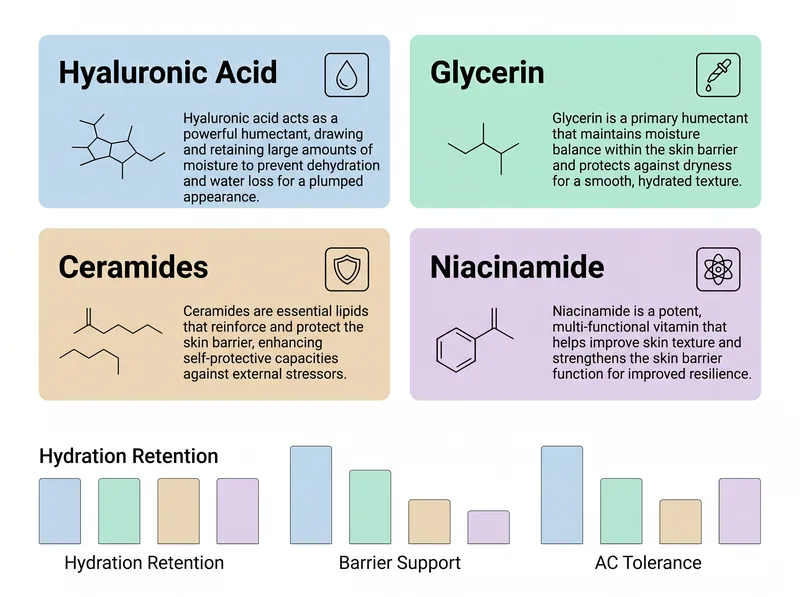 Key hydrating ingredients that perform differently in extreme heat and low humidity conditions
The Ingredient Hierarchy That Actually Matters Here
Not all hydrating ingredients survive Gulf conditions equally. Hyaluronic acid can backfire in low humidity, pulling water from deeper skin layers when there’s not enough moisture in the air to draw from. We learned this the hard way when several HA-heavy masks left our skin feeling tighter an hour after removal.
What worked: multi-molecular-weight hyaluronic acid combined with occlusive ingredients that seal in what the HA attracts. Glycerin performed better than expected because it’s less humidity-dependent. Ceramides and cholesterol rebuilt the barrier damage from constant environmental assault. Niacinamide reduced the inflammation that comes from temperature shock.
The masks that failed shared a pattern. Thin serums that evaporated quickly. Single-molecule hyaluronic acid without backup hydration. Fragrance-heavy formulas that irritated already stressed skin. Essence so watery it couldn’t stay in the mask fabric long enough to do anything useful. In this climate, viscosity matters. Thickness isn’t a luxury, it’s functional.
Top Performers: What Survived Real Testing
Dr. Jart+ Ceramidin Mask topped our list for barrier repair. The thick, milky essence stayed saturated for the full 20 minutes even with AC running. The ceramide concentration is high enough that we saw visible plumping after one use, and the effect lasted through the next morning’s hard water shower. It’s not cheap, but for weekly intensive treatment, it delivered.
Mediheal N.M.F Intensive Hydrating Mask became our midweek staple. The essence has that perfect viscosity where it’s thick enough to stay put but light enough to absorb fully. The natural moisturizing factor blend worked well with our compromised barriers. We used these twice weekly and saw consistent improvement in how our skin handled the AC-to-heat transitions.
Torriden Dive-In Low Molecular Hyaluronic Acid Mask surprised us. Despite the HA focus, the multi-weight formula combined with panthenol meant it didn’t backfire in low humidity. The mask fit was secure enough for the full 15 minutes without slipping. Best for morning use before makeup, when you need hydration that absorbs completely.
For budget-conscious testing, Cosrx Hydrium Watery Toner Mask performed above its price point. The essence is thinner than premium options, so we refrigerated these and used them for 10 minutes max. They’re not intensive treatment, but for maintenance between deeper masks, they worked. Just don’t expect miracles.
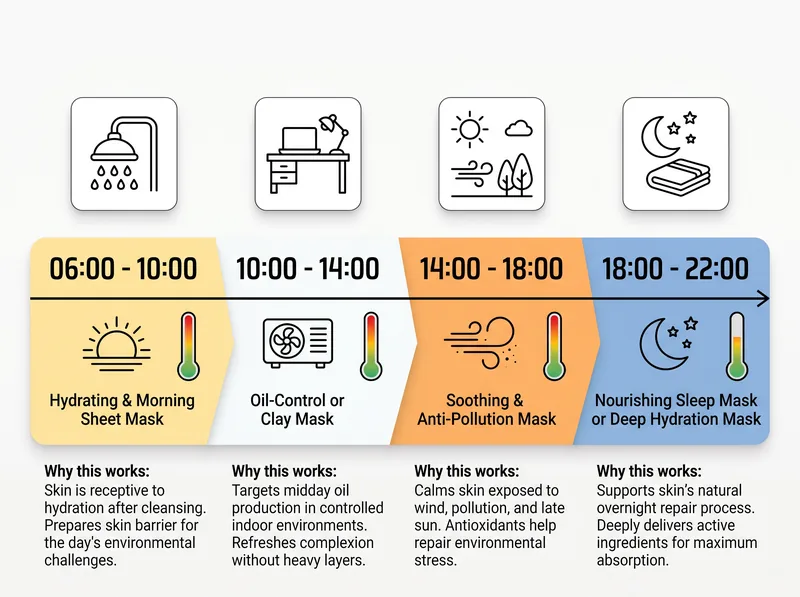 When to use different mask types based on your daily environmental exposure patterns
Application Protocol for Maximum Effectiveness
Timing matters more here than in temperate climates. We got best results using masks right after showering, while skin is still damp, before the AC has a chance to start dehydrating. If you wait until your skin feels tight, you’ve already lost ground. The mask is playing catch-up instead of building on existing hydration.
The hard water problem requires a workaround. We started using a chelating cleanser like Regrowth+ before masking to remove mineral buildup. For face-specific prep, a pH-adjusting toner helped. The difference in absorption was visible. Masks that previously sat on the surface actually penetrated when we addressed the mineral barrier first.
Duration needs adjustment too. The standard 20-minute recommendation assumes normal humidity. In Gulf conditions, check your mask at 15 minutes. If the edges are starting to dry or pull away from your skin, remove it immediately. A drying mask reverses your progress. Better to remove at 12 minutes while it’s still saturated than push to 20 and end up with tighter skin than you started with.
Post-mask sealing is non-negotiable. The essence alone won’t hold up to environmental stress. We layered a ceramide cream within 60 seconds of removing the mask, then added a thin occlusive (squalane or a light facial oil) to lock everything in. Without this sealing step, the hydration boost lasted maybe two hours. With it, we saw effects through the next morning.
What Didn’t Work and Why
Brightening masks with high vitamin C concentrations failed consistently. The ascorbic acid seemed to irritate skin that was already inflamed from environmental stress. We’d remove the mask to find redness instead of glow. Vitamin C stability in heat is already questionable, and sheet mask format doesn’t protect it well enough.
Cooling and soothing masks backfired. The menthol and alcohol that create that refreshing sensation accelerated evaporation. We’d feel great for five minutes, then notice our skin felt drier than before masking. The temporary cooling wasn’t worth the rebound dehydration. In Gulf heat, you don’t need cooling, you need serious moisture retention.
Bio-cellulose masks, despite the premium price and supposed superior adherence, performed worse than cotton or hydrogel. The material dried out faster in low humidity, and once it started drying, it pulled moisture from our skin aggressively. The fit was better, but that didn’t matter when the mask became a liability halfway through application.
Anything with fragrance was a mistake. Our skin was already dealing with hard water irritation, temperature shock, and barrier compromise. Adding synthetic fragrance or essential oils just triggered more inflammation. The unscented versions of the same masks performed noticeably better. Save the aromatherapy for climates where your skin isn’t already fighting for survival.
Frequency and Integration with Your Routine
Daily masking sounds appealing but proved counterproductive. Our skin responded better to 2-3 intensive masks per week rather than daily lighter ones. The recovery time between masks mattered. Overdoing it left our skin feeling sensitized and reactive, probably because we were changeing the barrier repair process before it could complete.
We found a rhythm that worked: one intensive barrier-repair mask (ceramide-heavy) on Sunday evening, two hydrating maintenance masks (HA and glycerin focus) on Tuesday and Thursday evenings, with targeted treatment masks (niacinamide or panthenol) as needed when skin looked particularly stressed. This cadence gave us consistent improvement without overload.
Integration with active ingredients required careful timing. We never masked on the same night as retinol or exfoliating acids. The increased absorption from masking would make actives too strong. Instead, we used masks the night before actives to prep skin, or the night after to soothe. This buffer approach prevented the irritation we saw when we tried to combine them.
Morning versus evening made a difference. Evening masks worked better for intensive treatment because we could layer properly and let everything absorb overnight without environmental interference. Morning masks needed to be lighter and faster-absorbing, focused on hydration that would play well under makeup and survive the commute from AC to outdoor heat.
Storage and Shelf Life in Extreme Heat
Room temperature storage is not an option here. We learned this when masks stored in a bathroom cabinet started separating, with the essence becoming watery and less effective. The heat degrades the formulation faster than the expiration date suggests. Everything now lives in the fridge, and the cooling bonus actually helps with morning puffiness.
Refrigeration changed performance. The cold essence caused temporary vasoconstriction that reduced facial swelling. The cooler temperature slowed evaporation during application, giving us an extra few minutes of effective mask time. And the sensory experience was more pleasant. Pulling a cold mask from the fridge felt like actual skincare luxury rather than just going through motions.
Foil packet integrity matters more in heat. We had several masks where the seal had weakened from temperature fluctuations during shipping or storage before we bought them. The essence had partially evaporated, leaving the mask fabric barely damp. Now we check packets before purchasing and squeeze gently to confirm they’re still fully saturated. A compromised seal means a useless mask.
Expiration dates need adjustment. The typical 2-3 year shelf life assumes temperate storage. In Gulf heat, we’re treating expiration dates as maximums and using masks within 18 months of purchase, sooner if we notice any changes in texture or scent. The active ingredients degrade faster here, and using expired masks risks irritation without benefit.
References
- Hyaluronic Acid: A Key Molecule in Skin Aging - National Center for Biotechnology Information
- Dermatologists’ Top Tips for Relieving Dry Skin - American Academy of Dermatology
- Effects of Hard Water on Skin Barrier Function - Journal of Investigative Dermatology
- Ceramides in the Skin Barrier - International Journal of Molecular Sciences