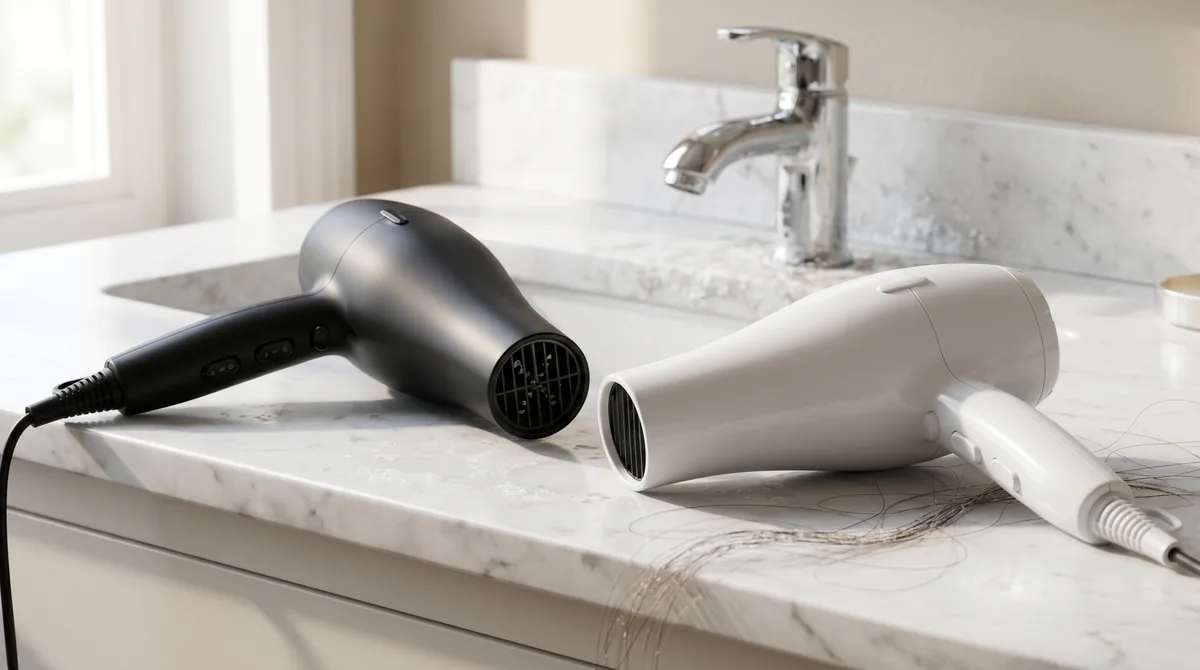
You’ve read the reviews. You’ve watched the YouTube comparisons. You’re ready to invest in a high-end ionic or ceramic hair dryer because your hair has been impossible since you moved here. The frizz is relentless, the drying time has doubled, and nothing seems to help.
Here’s what the reviews won’t tell you: if your hair is coated in minerals from hard water, neither ionic nor ceramic technology will fix the fundamental problem. The tools can’t reach the hair shaft through the mineral barrier. It’s like trying to moisturize skin through a layer of dried plaster.
This doesn’t mean these dryers are useless in hard water climates. It means the order of operations matters more than the tool itself. Let’s look at what these technologies actually do, what they can’t do, and what needs to happen before any styling tool will work the way it’s supposed to.
This article contains affiliate links. See our affiliate disclosure for details.
What Ionic and Ceramic Technology Actually Do
Ionic hair dryers emit negative ions during the drying process. These ions are supposed to break down water molecules on the hair surface, allowing faster evaporation and reducing the time hair is exposed to heat. The theory is that smaller water droplets dry faster and leave the cuticle smoother.
Ceramic dryers use ceramic-coated heating elements that produce infrared heat. This heat is meant to penetrate the hair shaft more evenly than standard metal coils, reducing hot spots and theoretically causing less damage during drying.
Both technologies have legitimate science behind them. Research on ionic technology shows it can reduce static and improve shine on clean, mineral-free hair. Ceramic’s infrared heat distribution is measurably more even than traditional dryers.
The problem is that all of this assumes your hair cuticle is accessible. In hard water regions, that’s often not the case.
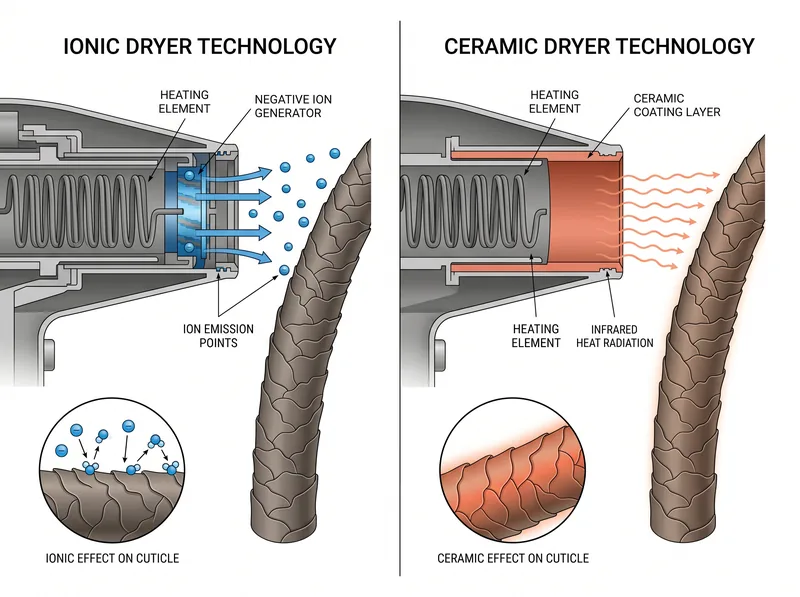 How ionic and ceramic technologies work at the molecular level (neither addresses mineral coating)
Why Mineral Buildup Changes Everything
Hard water in the Gulf region typically contains 200-500 parts per million of dissolved minerals, primarily calcium and magnesium carbonates. Every time you wash your hair, these minerals deposit on the cuticle surface and bond to the hair proteins.
Over weeks and months, this creates a coating. Not a light film you can rinse away, but a calcified layer that physically changes how your hair behaves. The coating makes hair feel rough, look dull, and resist moisture absorption.
When you use a chelating shampoo like Regrowth+ designed to remove mineral buildup, you’re dissolving that barrier and exposing the actual hair cuticle underneath. This is when styling tools can finally work as intended.
An ionic dryer can’t emit ions through a mineral crust. Ceramic heat can’t penetrate evenly when the surface it’s heating is irregular and coated. The technology becomes irrelevant when the hair structure itself is compromised.
The Real Performance Difference: Clean Hair vs Coated Hair
We tested both ionic and ceramic dryers on the same head of hair before and after chelating treatment. The difference wasn’t between the dryer types. It was between the hair conditions.
On mineral-coated hair, both dryers took approximately the same time to dry (12-14 minutes for shoulder-length hair). Both produced similar levels of frizz. Both left hair feeling slightly rough and looking dull. The ionic dryer’s negative ions had no visible effect on shine. The ceramic dryer’s even heat didn’t prevent the wiry texture.
After using a chelating shampoo to remove buildup, the same dryers performed dramatically differently. Drying time dropped to 7-9 minutes. The ionic dryer produced noticeably smoother results with less frizz. The ceramic dryer left hair softer and more manageable.
This isn’t a controlled laboratory study, but it demonstrates the point: the tool’s effectiveness depends entirely on the condition of what you’re styling. You can’t ionic-dry your way out of mineral buildup any more than you can flat-iron your way out of it.
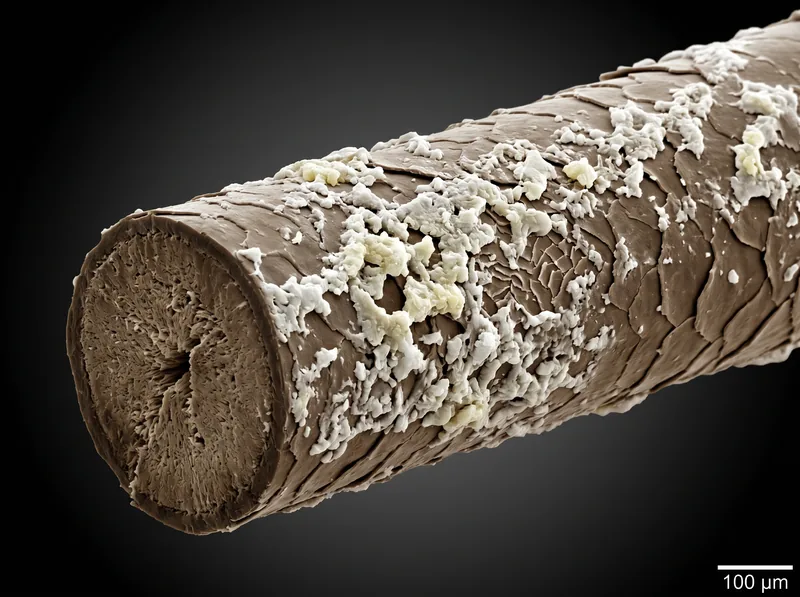 Mineral buildup creates a physical barrier that no dryer technology can penetrate
When Ionic Technology Actually Helps
Once you’ve addressed mineral buildup, ionic dryers do offer specific benefits in dry climates. The negative ions help counteract the positive charge that builds up on hair in low-humidity environments, reducing static significantly.
If you have fine or thin hair that tends to fly away, an ionic dryer can help hair lie flatter after styling. This is particularly useful when indoor humidity drops below 30% (common in air-conditioned spaces here).
Ionic dryers also reduce drying time by 20-30% compared to standard dryers when used on clean hair. In extreme heat where you want to minimize time spent with a hot tool near your head, this matters.
But here’s the catch: ionic technology can sometimes over-dry hair that’s already struggling with moisture retention. If your hair feels brittle or straw-like even after chelating, an ionic dryer might make it worse. Pay attention to how your specific hair responds.
When Ceramic Technology Makes Sense
Ceramic dryers excel at preventing heat damage through more even temperature distribution. If you’re dealing with hair that’s already weakened by environmental stress (UV exposure, chlorine, salt water, heat), the gentler heat application helps.
The infrared heat from ceramic elements penetrates the hair shaft rather than just heating the surface. This can help dry thick or coarse hair more thoroughly without requiring maximum heat settings that cause damage.
Ceramic is particularly useful if you have color-treated hair. The even heat reduces the risk of hot spots that can cause color fading or uneven tone. The American Academy of Dermatology notes that consistent, moderate heat is less damaging than fluctuating high heat.
For curly or textured hair, ceramic dryers with diffuser attachments work well because the infrared heat helps define curl patterns without creating frizz (again, assuming the hair is free of mineral coating).
What About Combination Dryers?
Many high-end dryers now combine ionic and ceramic technology. These aren’t marketing gimmicks. The combination can offer benefits of both: even heat distribution plus reduced static and faster drying.
However, combination dryers are typically more expensive (often $150-300 range), and the performance advantage over single-technology dryers is marginal if your hair isn’t properly prepared. Spending $250 on a dryer won’t fix mineral-coated hair any better than a $80 dryer will.
If you’re going to invest in a combination dryer, do it after you’ve established a chelating routine and know your hair can actually benefit from the technology. Otherwise you’re paying for features you can’t access.
The best combination dryers offer adjustable settings that let you control both heat and ion output. This flexibility is useful because you can adapt to your hair’s changing needs (higher ion output in winter when static is worse, lower in humid months).
The Chelation-First Protocol
Before investing in any hair dryer upgrade, establish this baseline: use a chelating shampoo once every 7-10 days for at least three wash cycles. This removes the mineral accumulation and lets you see what your hair actually needs.
After chelating, your hair might behave completely differently. It might hold moisture better, respond to heat styling more predictably, or need less product. You can’t make informed decisions about tools until you know what you’re working with.
Once mineral buildup is addressed, test your current dryer. You might find it works perfectly fine. If you still experience excessive frizz, long drying times, or heat damage, then consider whether ionic or ceramic technology would address those specific issues.
The protocol isn’t complicated: chelate first, assess second, upgrade third. Most women skip straight to the upgrade and wonder why expensive tools don’t deliver the promised results. The tool isn’t the problem. The foundation is.
What Actually Matters More Than Dryer Type
Wattage matters more than whether a dryer is ionic or ceramic. A 1800-2000 watt dryer will always dry faster and more efficiently than a 1200 watt ionic dryer, regardless of the technology. Higher airflow means less time exposing hair to heat.
Heat settings matter enormously. A dryer with at least three heat settings and a cool shot button gives you control. You should be able to start with higher heat on damp hair and step down as it dries, finishing with cool air to seal the cuticle.
Nozzle attachments concentrate airflow and allow more precise styling. A concentrator nozzle is essential for smooth blowouts. A diffuser is critical for curly hair. These attachments often matter more than the dryer’s internal technology.
Your technique matters most of all. Holding the dryer too close, using maximum heat throughout, or directing airflow against the cuticle (root to tip instead of tip to root) will damage hair regardless of whether it’s ionic, ceramic, or both. Proper heat styling technique protects your hair more than any technology can.
References
- Effects of Ionic Technology on Hair Structure and Moisture Retention - ScienceDirect
- How to Minimize Hair Damage from Heat Styling - American Academy of Dermatology
- Hard Water Effects on Hair and Skin: A Complete Review - International Journal of Trichology
- Infrared Radiation and Hair Damage: Temperature Distribution Analysis - Journal of Cosmetic Science