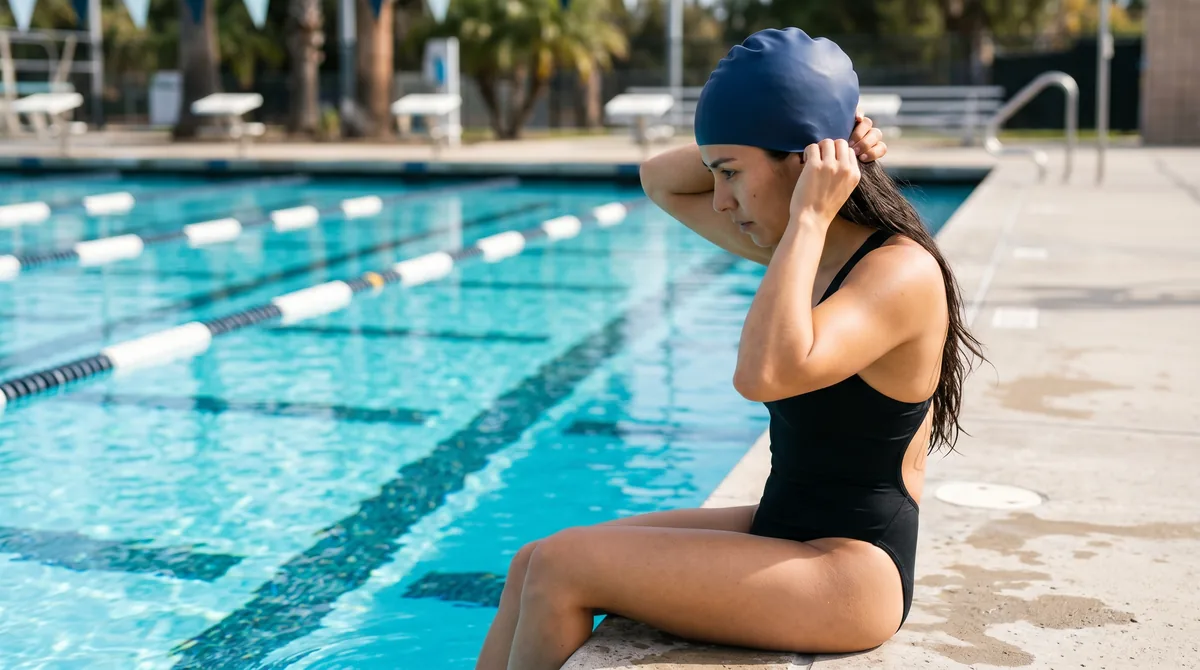
If you swim daily, you’ve watched your hair transform. It’s not in your head. The texture changed, the ends split faster, and that weird greenish tint appeared despite your best efforts. You’re doing everything right with your routine, but the pool is winning.
Here’s what’s happening: chlorine doesn’t just sit on your hair. It bonds to the protein structure, breaking down the protective cuticle layer with every lap you swim. Add the minerals in the pool water (calcium, copper, magnesium), and you’ve created a chemical cocktail that degrades hair faster than almost any other environmental exposure. This is compounded in regions with hard water, where the pool itself is filled with mineral-heavy water that concentrates as it evaporates and gets topped up.
The standard advice (rinse before, rinse after, use a swim cap) isn’t wrong. It’s incomplete. A swim cap alone doesn’t create a watertight seal. Rinsing helps but doesn’t remove what’s already bonded. And most swimmers don’t realize they need a chelating shampoo specifically designed to break the chemical bonds chlorine and minerals form with hair proteins.
This article covers the full protective system for daily swimmers: how to prep your hair before you swim, which swim caps actually provide meaningful protection, and the post-swim wash protocol that prevents cumulative damage. We tested the leading swim cap designs and identified the chelating wash that addresses both chlorine and mineral buildup, the dual threat most swimmers don’t account for.
Why Swim Caps Don’t Fully Protect Hair (And What They Do Accomplish)
Let’s clear this up immediately: no swim cap keeps your hair completely dry. Not silicone, not latex, not the expensive neoprene models. Water seeps in around the edges, through the seams if present, and via the inevitable gaps that form when you move your head. If you’re swimming laps, your hair will get wet.
But that doesn’t mean swim caps are useless. A properly fitted cap reduces water contact by roughly 70-80%, which dramatically lowers chlorine exposure. The cap also compresses your hair, minimizing surface area exposed to pool water and reducing the mechanical friction that causes breakage when hair swirls freely in the water.
The protection level depends entirely on cap material and fit. Silicone caps offer the best water resistance due to their thickness and flexibility, creating a tighter seal around your hairline. Latex caps are thinner and less durable but still provide moderate protection. Lycra or fabric caps are comfortable but offer minimal water resistance (they’re designed for comfort and style, not protection). Neoprene caps, typically used in open water swimming, provide insulation but aren’t meaningfully better than silicone for chlorine protection in pool conditions.
For daily swimmers, the goal isn’t perfect dryness. It’s damage reduction. A good silicone cap combined with pre-swim prep and post-swim chelating wash creates a system that allows you to swim frequently without destroying your hair. The cap is one component, not the entire solution.
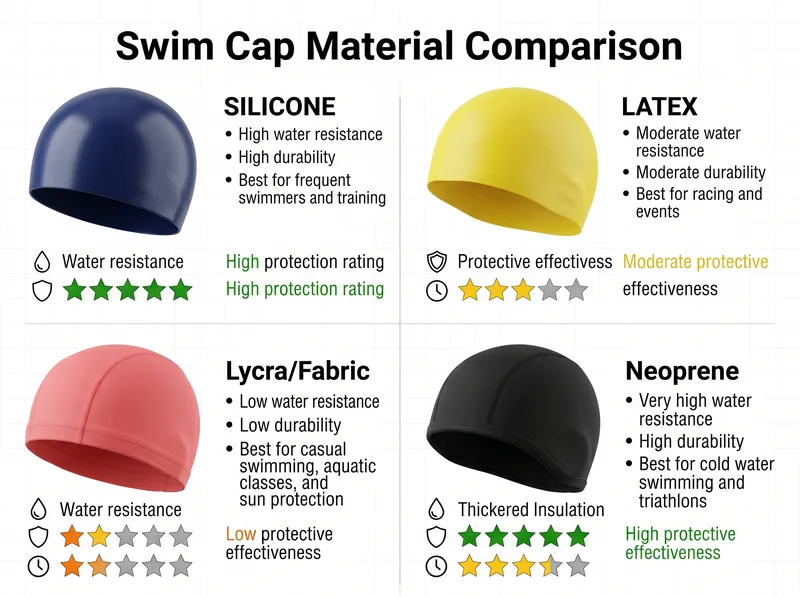 Different swim cap materials offer varying levels of water resistance and hair protection for daily swimmers.
Pre-Swim Hair Preparation: The Protective Barrier Most Swimmers Skip
Your hair is like a sponge. When it’s dry, it absorbs whatever liquid it encounters first. If that’s chlorinated pool water loaded with minerals, you’ve just saturated your hair with the exact chemicals you’re trying to avoid. This is why the pre-swim rinse matters, but most swimmers stop there.
The complete pre-swim protocol has three steps. First, saturate your hair completely with fresh water before you enter the pool. Use the shower, a water bottle, or even your bathroom sink. The goal is to fill your hair’s absorption capacity with clean water so it can’t take in as much pool water. This alone reduces chlorine uptake by approximately 50%, according to research on swimmer hair damage.
Second, apply a protective oil or leave-in conditioner to wet hair. Coconut oil, argan oil, or a silicone-based leave-in creates a hydrophobic barrier that repels water. The oil fills the gaps between cuticle layers and coats the hair shaft, making it harder for chlorine to penetrate. You don’t need much, just enough to lightly coat the hair without making it greasy. Focus on mid-lengths and ends, which are more porous and vulnerable than hair closer to the scalp.
Third, tuck all your hair into the swim cap carefully. This is where technique matters. Flip your head forward, gather your hair at the nape, twist it loosely, and tuck it up into the cap before pulling the cap down over your hairline. For long hair, you may need to coil it inside the cap rather than letting it bunch. The tighter and more compressed your hair is inside the cap, the less it will move and absorb water during your swim. This three-step prep takes less than two minutes and cuts your chlorine exposure by more than half before you even touch the pool.
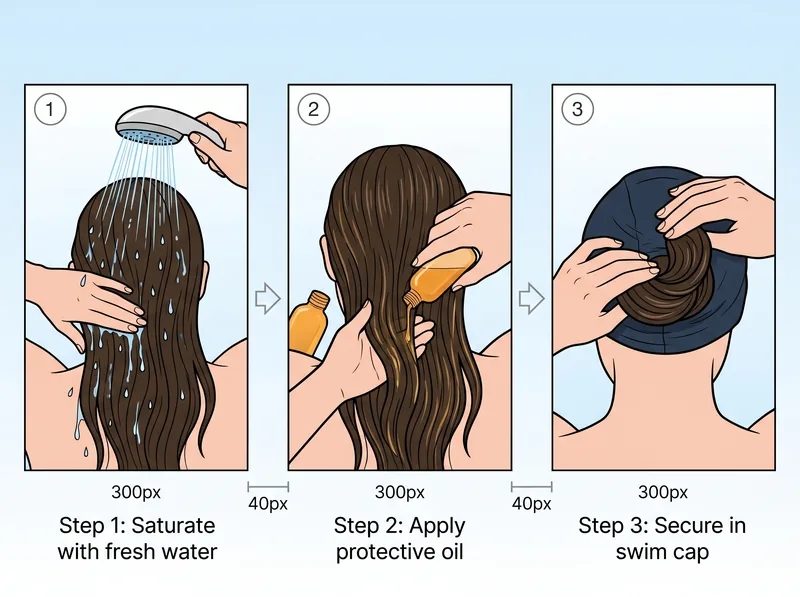 Proper pre-swim preparation creates a protective barrier that significantly reduces chlorine and mineral absorption.
Best Swim Cap Designs for Long Hair and Daily Use
Not all swim caps are created equal, and the wrong choice will frustrate you every time you swim. Here’s what actually works for daily swimmers, particularly women with long or thick hair who need both protection and practicality.
Silicone caps are the gold standard for chlorine protection. They’re thicker than latex (typically 0.4-0.6mm compared to latex’s 0.2mm), more durable, and create a better seal around your hairline and ears. Brands like Speedo, TYR, and Arena make reliable silicone caps that last 6-12 months with daily use. The main drawback is they can feel tight and cause headaches if you’re not used to the compression. Look for caps marketed as ‘long hair’ or ‘large’ if you have thick or voluminous hair, they provide extra interior space without compromising the seal.
Latex caps are cheaper and lighter but tear more easily and degrade faster with chlorine exposure. If you’re swimming daily, you’ll replace a latex cap every 2-3 months compared to twice a year for silicone. They also tend to pull hair more during removal, which causes breakage over time. Latex works if you’re budget-constrained or swimming infrequently, but it’s not the best choice for serious swimmers.
Lycra or fabric caps are comfortable and easy to put on, but they offer almost no chlorine protection. Water saturates them immediately. These are fine for recreational swimming or water aerobics where you’re not submerging your head repeatedly, but they won’t protect hair during lap swimming. Some swimmers wear a lycra cap over a silicone cap for added security and comfort, which works but feels bulky.
Neoprene caps are designed for cold water swimming and provide thermal insulation. They’re thicker than silicone but don’t seal as tightly around the hairline, so water still gets in. Unless you’re swimming in open water below 15°C, neoprene doesn’t offer advantages over silicone for pool swimming. The extra thickness also makes them harder to pack and dry.
For daily pool swimmers with long hair, the best choice is a large silicone cap with a contoured shape that accommodates volume without creating gaps. The mechanical stress of swim cap compression is minimal compared to the chemical damage from chlorine exposure, so prioritize water resistance over comfort if you’re swimming frequently.
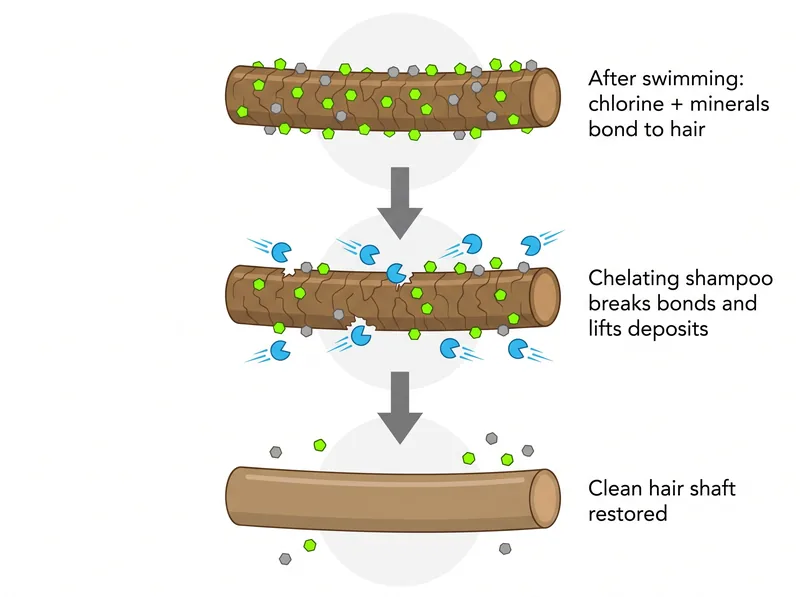 A chelating shampoo immediately after swimming removes both chlorine compounds and mineral deposits before they bond to hair.
Post-Swim Wash Protocol: Why Regular Shampoo Isn’t Enough
You’ve finished your swim. Your hair is wet with pool water, which means it’s coated in chlorine compounds, calcium deposits, copper ions, and whatever other minerals are in your local water supply. Rinsing with fresh water helps, but it doesn’t remove what’s already bonded to your hair. This is where most swimmers make a critical mistake: they use regular shampoo and assume it’s sufficient.
Regular shampoo is designed to remove oils and dirt. It’s not formulated to break the chemical bonds that chlorine and minerals form with keratin proteins. Chlorine doesn’t just sit on your hair surface, it oxidizes the disulfide bonds that give hair its structure and strength. Minerals like calcium and copper deposit as microscopic crystals that accumulate with each swim, creating a rough, porous texture that makes hair more vulnerable to further damage. You need a chelating shampoo that specifically targets these bonds.
A chelating shampoo contains ingredients like EDTA (ethylenediaminetetraacetic acid) or citric acid that bind to metal ions and chlorine residues, pulling them off the hair shaft so they can be rinsed away. This is the same technology used to remove hard water mineral buildup, which is why chelating shampoos work so well for swimmers in regions with mineral-heavy pool water. The shampoo essentially reverses the chemical bonding process, restoring hair to its pre-swim state.
The post-swim protocol is straightforward: rinse your hair thoroughly with fresh water immediately after swimming (while still at the pool if possible), then wash with a chelating shampoo like Regrowth+ as soon as you can. The sooner you chelate, the less time chlorine and minerals have to penetrate deeper into the hair shaft. Follow with a moisturizing conditioner to restore hydration, since chelating shampoos can be slightly drying. If you swim in the morning and can’t wash immediately, at least rinse thoroughly and tie your hair up to prevent the pool water from sitting on your hair for hours.
For daily swimmers, chelating after every swim is ideal but not always practical. At minimum, chelate 2-3 times per week and use a gentle, sulfate-free shampoo on other days. You’ll notice the difference within a week: less brittleness, better texture, and no more green tint.
Chlorine Hair Damage in Hard Water Regions: The Compounding Effect
If you’re swimming in a region with hard water (most of the Gulf, parts of the southwestern US, Australia, and southern Europe), you’re dealing with a compounding problem. The pool water itself starts with high mineral content, which concentrates as the pool evaporates and gets refilled. Chlorine is added on top of that mineral base, creating a more aggressive chemical environment than pools filled with soft water.
This explains why swimmers in hard water regions often experience faster hair degradation than swimmers elsewhere. The calcium and magnesium in the water create a rough surface on the hair shaft, which allows chlorine to penetrate more easily. Copper, often present in pool water from algaecides or corroded pipes, is what causes the green tint in blonde or light-colored hair. It’s not the chlorine turning your hair green, it’s copper oxidation, and it only happens when minerals are present in sufficient concentration.
The solution is the same chelating wash protocol, but you may need to chelate more frequently. Daily swimmers in hard water areas should aim for chelating washes 3-4 times per week rather than 2-3. You can also consider installing a shower filter at home to reduce mineral exposure during your post-swim rinse, though the pool water itself will still be the primary source of damage.
Some swimmers in hard water regions report that even with proper protection, their hair feels different after moving to the area. That’s not surprising. The cumulative exposure to minerals, combined with heat and low humidity, creates a harsher environment for hair. But the protective system (pre-swim prep, silicone cap, immediate chelating wash) still works. It just requires consistency.
Long-Term Hair Health for Competitive and Masters Swimmers
If you’re swimming 5-7 days a week for training or competition, hair damage is inevitable without a rigorous protective routine. The good news: it’s manageable. The swimmers who maintain healthy hair long-term are the ones who treat protection as part of their training discipline, not an optional extra.
Beyond the daily protocol, consider these additional strategies. First, deep condition weekly with a protein treatment or intensive moisture mask. Chlorine breaks down keratin, and while you can’t fully replace it, you can temporarily reinforce the hair structure with protein-based treatments. Look for products containing hydrolyzed keratin, wheat protein, or silk amino acids. Apply after your chelating wash, leave on for 10-15 minutes, then rinse.
Second, trim your hair every 6-8 weeks. Split ends are unavoidable with daily pool exposure, and they travel up the hair shaft if left uncut. Regular trims keep the damage from progressing and make your hair look healthier overall. If you’re growing your hair out, accept that the growth rate will be slower than it would be without swimming, you’re trimming off damage as fast as you’re gaining length.
Third, consider protective hairstyles that minimize hair movement and friction. Braids, buns, or twists keep hair contained inside the swim cap and reduce tangling. Loose hair swirls and knots during swimming, which causes mechanical breakage on top of the chemical damage. The more you can compress and secure your hair, the better.
Finally, monitor your hair’s condition and adjust your routine as needed. If you notice increased dryness, add an extra conditioning step. If you see breakage, increase your chelating frequency. If your hair feels coated or heavy, you may be over-conditioning and need to scale back. Hair responds to consistent care, and the swimmers with the healthiest hair are the ones who pay attention and adapt their routine to what their hair is telling them.
References
- Effects of Chlorinated Water on Hair and Skin in Swimmers - Journal of Dermatology
- Mechanical Damage to Hair: A Complete Review - PubMed Central
- Chelating Agents in Cosmetic Formulations: Functions and Safety - Personal Care Products Council
- Water Quality and Hair Health: Mineral Content Effects - American Academy of Dermatology