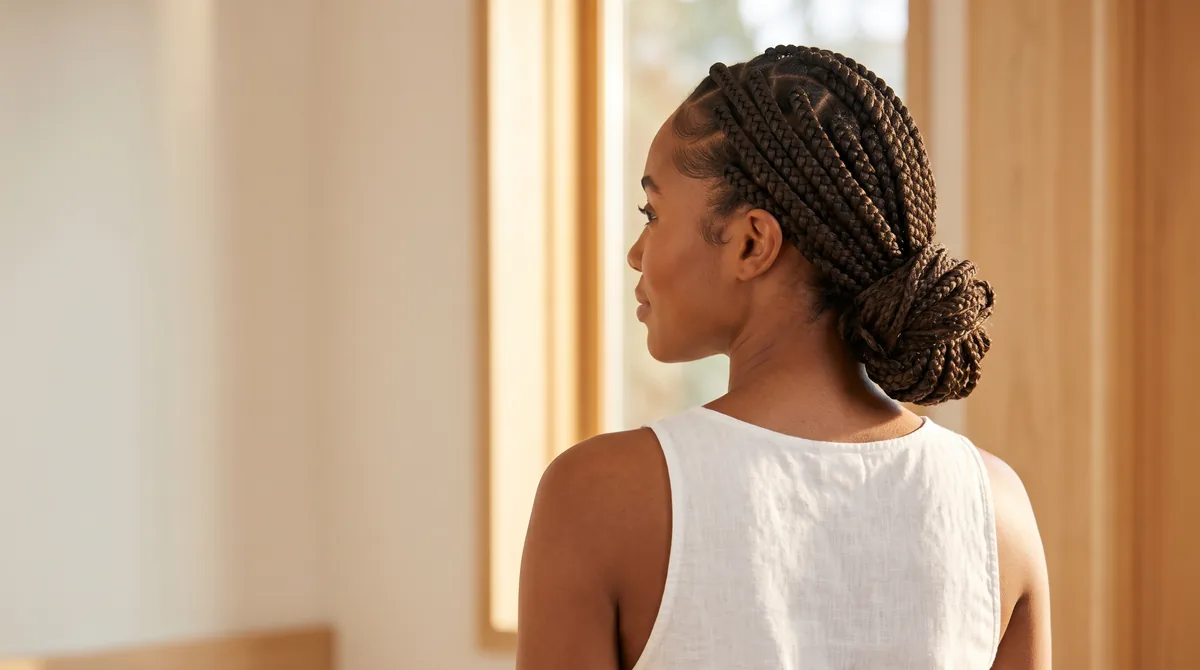
You’ve been told protective styles are the answer to managing your hair in Gulf heat. Low manipulation, less breakage, more time between wash days. But here’s what the tutorials don’t mention: tight braids plus hard water buildup create a friction problem that can wreck your edges faster than leaving your hair loose ever would.
This article contains affiliate links. See our affiliate disclosure for details.
The issue isn’t the style itself. It’s the combination of tension, mineral deposits, and the environmental stressors specific to this region. When you braid or twist hair that’s coated in calcium and magnesium from Gulf tap water, you’re essentially locking abrasive particles against your scalp for weeks. Add the constant pull of a tight style, and you’ve created the perfect conditions for traction alopecia.
The fix isn’t avoiding protective styles. It’s changing your prep routine and choosing styles that account for the climate you’re actually living in. Here’s what holds without causing damage, and what you need to do before you ever pick up a comb.
Why Hard Water Makes Protective Styles Riskier
Hard water leaves a film. You know this already if you’ve lived here more than a month. What you might not know is that this film doesn’t just sit on top of your hair, it bonds to the cuticle and creates a rough, sandpaper-like texture that becomes a problem the moment you add tension.
When hair is braided or twisted, the strands are held in close contact with each other and with the scalp for extended periods. If those strands are coated in mineral deposits, every movement creates friction. Over time, this friction weakens the hair shaft and irritates the scalp. The follicles at your hairline and temples, already the most fragile, bear the brunt of this stress.
Research on traction alopecia shows that sustained tension is the primary cause, but friction and inflammation accelerate the damage. Hard water buildup adds both. The minerals create a rough surface, and the scalp irritation from the deposits triggers low-grade inflammation that weakens the follicle anchor.
This is why women in the Gulf often report more breakage and edge loss from protective styles than they experienced in their home countries. It’s not your technique. It’s the water chemistry interacting with the styling method.
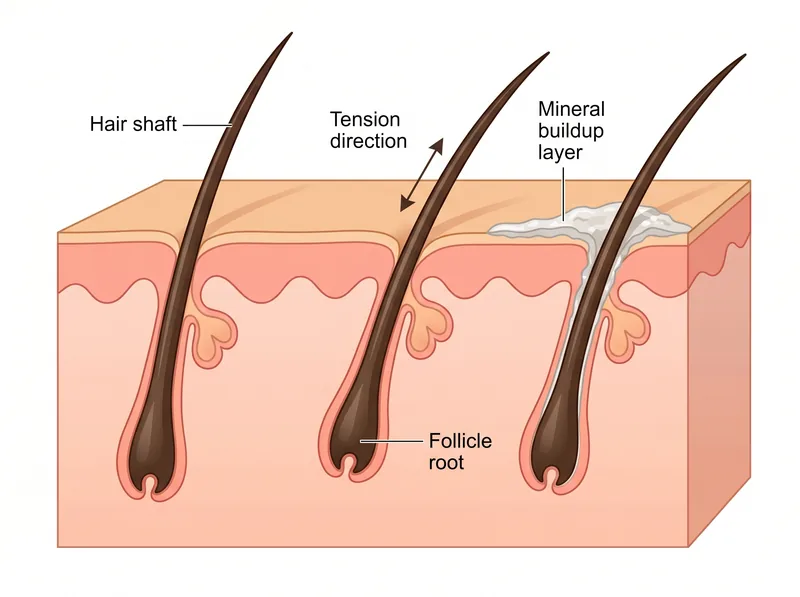 Tight styles plus mineral buildup create a double stress on follicles, raising traction alopecia risk.
The Chelating Prep Step You Can’t Skip
Before you install any protective style, you need to remove the mineral buildup. This isn’t optional. A regular clarifying shampoo won’t do it, you need a chelating formula that specifically targets calcium and magnesium deposits.
A chelating shampoo like Regrowth+ Hair Protection & Growth Booster Shampoo uses EDTA or citric acid to break the ionic bonds between minerals and your hair cuticle. The result is clean, smooth hair that won’t create friction when styled. This single step reduces breakage risk significantly.
How to chelate before styling: Wet your hair thoroughly with warm water. Apply the chelating shampoo directly to your scalp in sections, not just to the length of your hair. Massage for two to three minutes to allow the chelating agents time to work. Rinse completely. You’ll feel the difference immediately, your hair will feel softer and less coated.
Follow with a deep conditioning treatment to restore moisture. Protective styles can be drying in this climate, and you want to start with well-hydrated hair. Let the conditioner sit for at least 15 minutes before rinsing. Your hair should feel smooth, not slippery or coated.
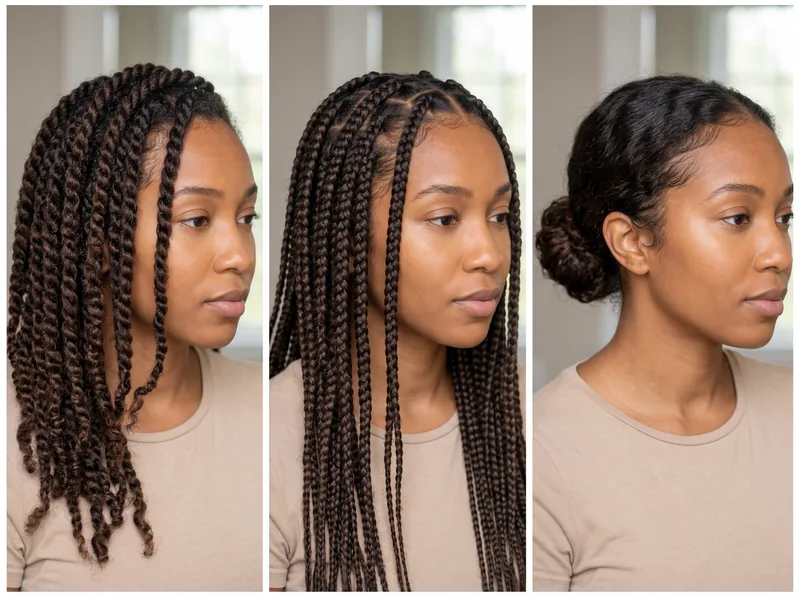 Low-tension styles that work in heat: loose twists, medium braids, and gathered styles that don’t pull at the hairline.
Which Styles Hold Without Damaging Your Edges
Not all protective styles are created equal in terms of tension. The goal is to secure your hair without pulling at the follicles. Here’s what works in Gulf heat without causing traction damage.
Loose box braids (medium to large): These hold well in humidity without the tension of micro braids. The key is leaving space at the root, your braids shouldn’t start tight against your scalp. If you can’t fit a finger between the braid base and your scalp, it’s too tight. Medium-sized braids also dry faster after swimming or sweating, which matters in this climate.
Two-strand twists (loose, not rope twists): These are lower tension than braids and easier to take down without breakage. They work well for natural and relaxed hair. The twists should be smooth but not pulled taut. If your scalp feels sore the next day, the style was installed too tightly.
Low buns and gathered styles: Pulling your hair into a low bun or ponytail at the nape of your neck keeps it off your face and neck in the heat without stressing your hairline. Use a soft scrunchie or fabric-covered elastic, never a tight rubber band. The style should feel secure but not painful. You should be able to move your eyebrows freely without feeling scalp tension.
Flat twists along the scalp: These lie flat and distribute tension more evenly than cornrows. They’re cooler in extreme heat because they don’t add bulk. The trick is keeping them loose at the root and not pulling the hair back at a sharp angle.
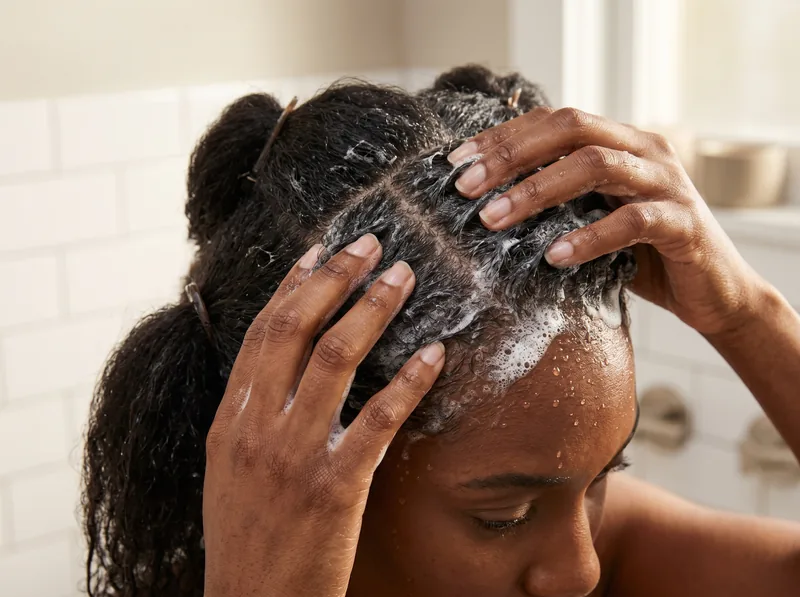 Pre-style chelating wash removes the mineral substrate that causes friction and breakage under tension.
What to Avoid: High-Risk Styles in This Climate
Some styles that work beautifully in moderate climates become problematic in Gulf conditions. Here’s what raises your risk of damage.
Micro braids and extremely tight cornrows: The smaller the braid, the more tension per follicle. Micro braids also trap sweat and sebum against the scalp, creating a breeding ground for irritation and buildup. In high humidity, they don’t dry properly, which leads to odor and potential fungal issues. If you love the look, size up to small or medium braids instead.
High ponytails and top knots: Pulling your hair up and back creates tension at the hairline and crown, the areas most vulnerable to traction alopecia. Dermatologists warn that repeated high ponytails are a leading cause of frontal hair loss in women. In the Gulf, where you’re tempted to pull your hair off your neck constantly, this becomes a daily habit that compounds the damage.
Sew-in weaves with tight braided bases: The cornrow base for a sew-in is often installed very tightly to ensure the weave lays flat. This creates sustained tension for weeks. Add the weight of the weave hair, and you’re putting significant stress on your follicles. If you want a weave, ask your stylist for a looser braid base and lighter weave hair.
Styles that require daily re-tightening: Any style that needs to be pulled tighter each morning (slick edges, tight buns) is causing cumulative damage. The constant manipulation and tension don’t give your follicles time to recover.
Maintenance: Keeping Your Scalp Healthy While Styled
A protective style isn’t a ‘set it and forget it’ solution. Your scalp still needs care, especially in this climate where sweat and mineral-rich water are constant factors.
Cleanse your scalp weekly: You can’t skip wash days just because your hair is braided. Sweat, sebum, and environmental dust accumulate on your scalp and create buildup that leads to itching and inflammation. Use a diluted chelating shampoo in a spray bottle to cleanse your scalp without disturbing the style. Focus on the roots, not the braids themselves.
Moisturize your scalp, not just your hair: A light oil or water-based scalp spray prevents dryness and flaking. Avoid heavy butters and creams, they don’t absorb in this humidity and will just sit on your scalp, attracting dust. Jojoba oil, grapeseed oil, or a lightweight leave-in conditioner work better. Apply every two to three days.
Don’t keep styles in longer than four to six weeks: The longer a protective style stays in, the more buildup accumulates and the more tension your follicles endure. In Gulf conditions, four weeks is the reasonable maximum for braids or twists. After that, the risk of matting, breakage, and traction damage increases sharply.
Protect your style at night: Sleep on a satin or silk pillowcase, or wear a satin bonnet. Cotton pillowcases absorb moisture from your hair and create friction. In the dry indoor air from AC, this leads to breakage at the points where your hair rubs against the pillow.
Signs Your Style Is Causing Damage
Your body will tell you when a style is too tight or causing harm. Don’t ignore these signals.
Immediate soreness or headache after installation: If your scalp hurts the day your braids or twists are installed, the style is too tight. This isn’t something you ‘get used to’, it’s a sign of excessive tension. Ask your stylist to redo the sections that hurt, or take the style out and start over with less tension.
Visible bumps or pimples along your hairline: These are often a sign of folliculitis, inflammation or infection of the hair follicles caused by tension, trapped sweat, or bacteria. If you develop scalp bumps while wearing a protective style, cleanse your scalp immediately with a diluted chelating shampoo and consider removing the style if the bumps don’t resolve within a few days.
Thinning or recession at your temples or edges: If you notice your hairline receding or your edges looking thinner after removing a protective style, you’ve experienced traction alopecia. This can be reversible if caught early, but it requires stopping the damaging behavior immediately. Switch to lower-tension styles and give your hairline a break for at least three months.
Excessive shedding or breakage when taking down the style: Some shedding is normal, you naturally shed 50 to 100 hairs per day, and when your hair is braided, those shed hairs stay trapped in the style. But if you’re seeing clumps of hair coming out, or if the hair is breaking mid-shaft rather than shedding from the root, the style caused damage. This is often due to friction from mineral buildup or excessive tension during installation.
Adapting Your Routine to Gulf Conditions
Protective styling in the Gulf requires adjustments you wouldn’t need in a temperate climate. The heat, humidity, and water quality all affect how your hair behaves in a protective style.
Account for sweat: You will sweat more here, and that sweat will accumulate on your scalp under braids or twists. This isn’t a hygiene issue, it’s a physiological reality of living in extreme heat. Plan for more frequent scalp cleansing than you did in your home country. A weekly scalp wash is non-negotiable.
Adjust for indoor AC: The extreme temperature swings between outdoor heat and indoor AC create a drying effect on your hair and scalp. Your hair loses moisture in the AC, which makes it more brittle and prone to breakage under tension. Compensate by using a leave-in conditioner or light oil more frequently than you think you need.
Factor in pool and beach exposure: Chlorine and salt water both interact badly with hard water buildup. If you swim regularly, you need to rinse your hair immediately after exposure and do a chelating wash at least once a week. Don’t let chlorine or salt sit in your braids overnight, it will dry out your hair and scalp significantly.
Choose styles that allow access to your scalp: In this climate, you need to be able to cleanse and moisturize your scalp easily. Styles that are too intricate or that cover your entire scalp make maintenance difficult. Opt for styles with visible parts or sections that allow you to apply products directly to your scalp.
References
- Traction Alopecia: A Neglected Entity in 2020 - PubMed
- Traction Alopecia: Prevention and Treatment - American Academy of Dermatology
- Central Centrifugal Cicatricial Alopecia and Traction Alopecia - PubMed Central
- Folliculitis: Causes, Symptoms, and Treatment - Mayo Clinic
- Hair Cosmetics: An Overview - PubMed Central