
You know the feeling. Hair that’s stiff and tangled after an hour in the pool. Skin that feels tight and stripped, no matter how much lotion you slather on afterward. If you’re swimming regularly in the Gulf region, you’re dealing with a double assault: chlorine that strips everything, and hard water that leaves mineral deposits behind.
Chlorine oxidizes the natural oils in your hair and changes your skin’s lipid barrier. Hard water adds calcium and magnesium buildup on top of that. The combination leaves your hair brittle and your skin dehydrated. But here’s what most pool-goers don’t know: the damage happens fast, and most of it’s preventable if you apply the right products before you get in.
This article contains affiliate links. See our affiliate disclosure for details.
This protocol works whether you’re swimming once a week or daily. It’s built around barrier protection before exposure and strategic repair after. You’ll need about five minutes of prep before you swim and ten minutes of recovery work when you’re done.
What Chlorine Actually Does to Hair and Skin
Chlorine is a powerful oxidizing agent. That’s why it kills bacteria in pool water. But it doesn’t discriminate. It also oxidizes the proteins in your hair (keratin) and the lipids in your skin’s protective barrier. Research published in the Journal of Dermatology found that regular chlorine exposure significantly reduces skin hydration levels and increases transepidermal water loss.
Your hair is particularly vulnerable because it’s porous. Chlorine penetrates the hair shaft and breaks down the protein structure from the inside. If your hair is already compromised by hard water mineral buildup, the chlorine damage accelerates. The cuticle layer lifts, the cortex weakens, and you end up with that straw-like texture that no conditioner seems to fix.
Your skin’s lipid barrier is made of ceramides, cholesterol, and fatty acids. Chlorine changes this structure, leaving microscopic gaps that allow water to escape. That’s why your skin feels tight and dry even when you’re standing in water. The tightness you feel after swimming isn’t just dryness. It’s barrier damage.
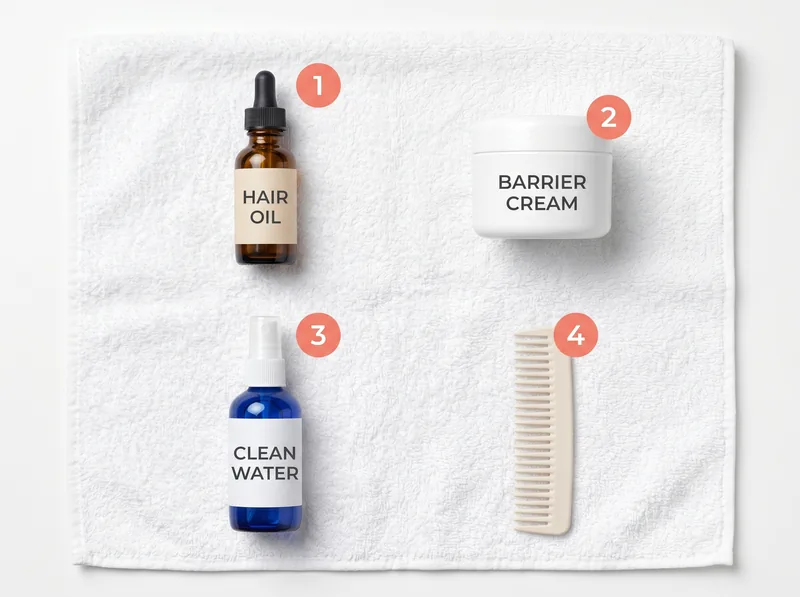 Essential pre-swim protection: oil for hair, barrier cream for skin, and clean water rinse
Pre-Swim Protection: The Four-Step Barrier System
Protection starts before you touch the water. Your goal is to create a physical barrier that prevents chlorine from penetrating your hair shaft and skin surface. This takes about five minutes and makes the difference between manageable hair and a week of damage control.
Step one: saturate your hair with clean water. Wet hair absorbs less chlorinated water because the shaft is already full. Use a spray bottle filled with filtered or bottled water if you don’t trust the pool shower. Soak your hair completely, from roots to ends. This is non-negotiable.
Step two: apply a protective oil or leave-in conditioner while your hair is still wet. You want something with a high oil content that creates a coating. Coconut oil, argan oil, or a silicone-based leave-in all work. The oil fills the cuticle gaps and prevents chlorine from getting inside the hair shaft. Use more than you think you need. Work it through every section, especially the ends.
Step three: tie your hair up or tuck it into a swim cap. If you’re using a cap, make sure it’s silicone (not latex), and tuck every strand inside. A proper swim cap reduces chlorine exposure by about 70%. If you’re not using a cap, secure your hair in a bun or braid at the crown of your head to minimize the amount of hair that goes underwater.
Step four: apply a barrier cream to your face, neck, and any exposed skin. You want a thick, occlusive product. Something with petrolatum, shea butter, or dimethicone. The goal is to create a waterproof layer that chlorine can’t penetrate. Don’t use your regular moisturizer. It’ll wash off in seconds. You need something that stays put.
In-Pool Habits That Minimize Damage
How you swim matters. If you’re doing laps, keep your head above water as much as possible. Breaststroke is better than freestyle for hair protection. If you’re just cooling off, float instead of diving. Every time you submerge your head, you’re re-exposing your hair to chlorinated water.
If you’re swimming for more than 30 minutes, reapply your barrier products halfway through. Get out, reapply the oil to your hair, and add more barrier cream to your face. This sounds excessive, but chlorine exposure is cumulative. The longer you’re in the water, the more protection you need.
After you finish swimming, rinse off immediately. Don’t wait until you get home. The longer chlorine sits on your hair and skin, the more damage it does. Use the pool shower if it’s available. If the pool shower runs on the same hard water as the pool, use your spray bottle of clean water instead. Rinse your hair for at least two minutes.
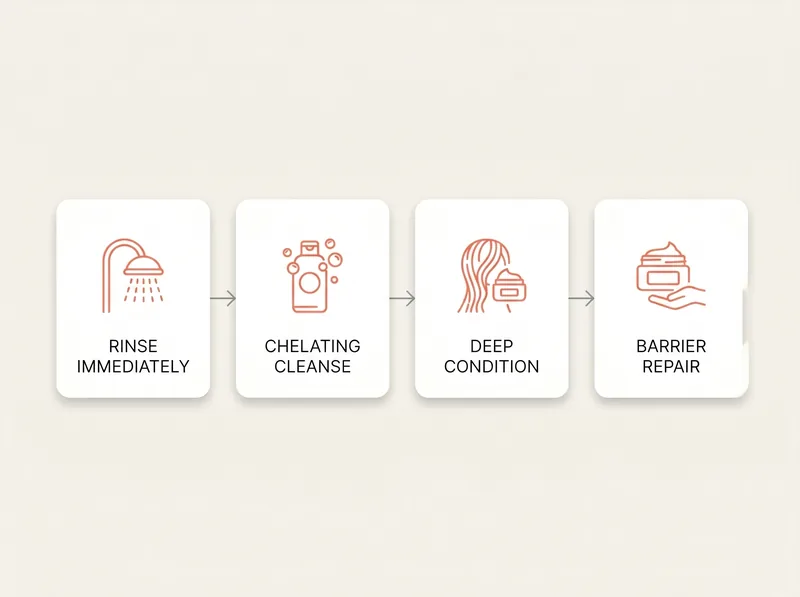 Post-pool recovery sequence: immediate rinse, chelating cleanse, deep condition, barrier repair
Post-Swim Recovery Protocol
The real work happens after you get out. You need to remove the chlorine, remove any mineral buildup, restore moisture, and repair your barrier. This takes about ten minutes in the shower and another five minutes after you dry off.
Start with a chelating shampoo. Regular shampoo won’t cut it if you’re swimming in hard water pools. You need something that removes both chlorine and mineral deposits. A chelating shampoo like Regrowth+ uses ingredients like EDTA or citric acid to bind to minerals and lift them off your hair shaft. Use it every time you swim. If you’re swimming daily, alternate with a gentler clarifying shampoo every other day.
After chelating, follow with a deep conditioner. Not your regular conditioner. Something thick and protein-rich. Leave it on for at least five minutes. If your hair is particularly damaged, use a plastic cap to trap heat and help the conditioner penetrate. The American Academy of Dermatology recommends weekly deep conditioning treatments for anyone who swims regularly.
For your skin, cleanse with a gentle, pH-balanced cleanser to remove chlorine residue. Then apply a barrier repair moisturizer while your skin is still damp. Look for products with ceramides, niacinamide, or hyaluronic acid. These ingredients help rebuild the lipid barrier that chlorine changeed. Don’t skip this step. If you let your skin air-dry without moisturizing, you’ll lose even more water through the damaged barrier.
Weekly Maintenance for Regular Swimmers
If you’re swimming more than twice a week, you need a weekly reset routine. This is separate from your post-swim protocol. It’s deeper repair work that addresses cumulative damage.
Once a week, do a clarifying treatment followed by a protein mask. The clarifying treatment removes any buildup your regular chelating shampoo missed. The protein mask temporarily fills in the gaps in your hair’s keratin structure. Leave the mask on for 20 minutes under a shower cap. Some swimmers do this overnight.
For your skin, do a weekly exfoliation to remove dead cells that chlorine exposure has accelerated. Use a gentle chemical exfoliant (lactic acid or mandelic acid) rather than a physical scrub. Follow with a thick overnight moisturizer. Your skin barrier needs this weekly reset to stay intact.
Consider adding a targeted supplement protocol if you’re swimming daily. Chlorine exposure increases oxidative stress, and regular swimmers often show lower levels of vitamins C and E. A basic antioxidant supplement can help your body manage the internal effects of chlorine exposure.
When to See a Professional
Some damage requires professional intervention. If your hair has turned green from copper oxidation, a salon clarifying treatment is more effective than home remedies. If you’re experiencing significant hair breakage or thinning that doesn’t improve with the protocol above, see a trichologist. Telogen effluvium can be triggered by the stress of repeated chemical exposure.
For skin, persistent dryness that doesn’t respond to barrier repair moisturizers might indicate chlorine-induced dermatitis. If you’re developing rashes, itching, or flaking that lasts more than 48 hours after swimming, see a dermatologist. Chronic chlorine exposure can trigger or worsen conditions like eczema and psoriasis.
If you’re pregnant or breastfeeding, talk to your healthcare provider about swimming frequency. The World Health Organization considers chlorine exposure from swimming pools safe during pregnancy, but individual sensitivity varies.
References
- Effects of chlorinated water on skin barrier function - Journal of Dermatology
- Healthy hair tips for swimmers - American Academy of Dermatology
- Chlorine in drinking water: WHO fact sheet - World Health Organization
- Hair damage and protection in swimming pools - International Journal of Trichology