
You shower after every workout. You use good shampoo. But your hair feels heavy, looks dull, and your scalp itches by Wednesday. If you’re working out in a hard water climate, you’re dealing with a buildup problem that regular shampooing can’t touch.
Sweat contains sodium, potassium, and urea. When it dries on your hair and you rinse it with mineral-heavy water, those compounds bond. The result is a crystalline layer that accumulates with every gym session, every hot yoga class, every outdoor run in 40-degree heat. Your hair isn’t dirty. It’s chemically altered.
This article breaks down what’s happening to active women’s hair in hard water regions and provides a realistic recovery routine that fits a training schedule. This article contains affiliate links. See our affiliate disclosure for details.
What Sweat Actually Does to Your Hair
Sweat is acidic, with a pH between 4.5 and 7.0 depending on your fitness level and hydration status. When it saturates your hair during a workout, it temporarily softens the cuticle layer, making your hair more porous and vulnerable to damage.
But the real issue isn’t the sweat itself. It’s what happens when that sweat-soaked hair meets hard water in the shower. Research published in the International Journal of Trichology shows that minerals in hard water bind to negatively charged hair proteins, and sweat salts accelerate this process.
The sodium chloride in your sweat acts as a bonding agent. Calcium and magnesium from the water attach to it, creating a compound deposit that’s harder to remove than either substance alone. This is why your hair can feel clean immediately after washing but turn straw-like by the next morning.
Women who work out daily in Gulf climates often report a texture change that happens gradually. Hair that was once soft becomes coarse. Curls lose definition. Color-treated hair fades faster. These aren’t separate problems. They’re all symptoms of the same mineral-salt buildup pattern.
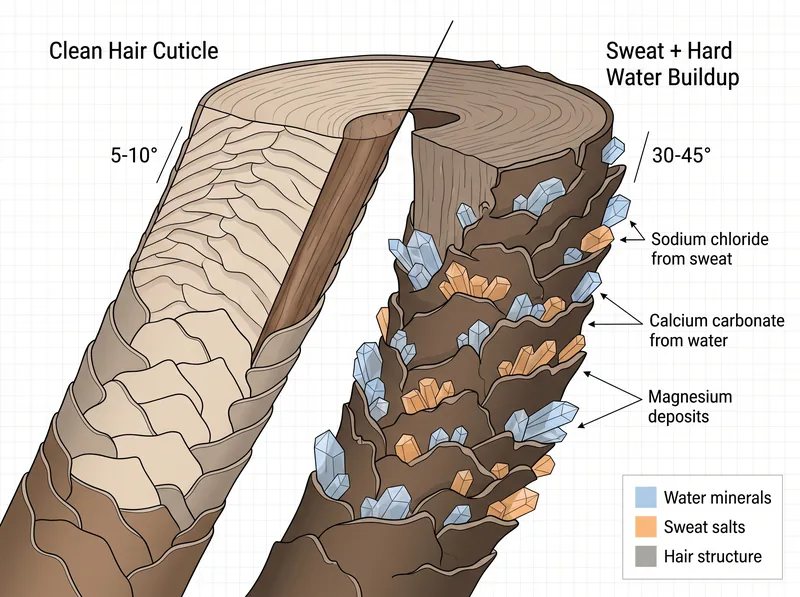 Sweat salts bond with hard water minerals, creating a compound buildup that regular shampoo can’t remove.
The Helmet and Hot Yoga Problem
If you cycle, ride horses, or do any activity requiring a helmet, you’re compressing sweat directly against your scalp for 45 to 90 minutes at a time. The occlusion prevents evaporation, so the salt concentration on your roots intensifies.
Hot yoga presents a different but equally damaging scenario. The heat makes you sweat profusely, but the humidity in the room prevents that sweat from evaporating. It just sits on your hair, saturating every strand from root to tip. By the time you leave class, your hair has been marinating in salt water for an hour.
Both situations create what dermatologists call an ‘occlusive environment.’ Your scalp’s natural oils can’t regulate properly, and the sweat-salt mixture creates an ideal breeding ground for scalp irritation. Many women notice increased dandruff or scalp sensitivity after starting a regular cycling or hot yoga routine. The connection isn’t coincidental.
Why Your Current Routine Isn’t Working
Most women follow one of two approaches: wash after every workout, or skip washes and use dry shampoo. Both strategies fail in hard water climates for different reasons.
Daily washing with regular shampoo removes surface sweat but doesn’t chelate the mineral deposits. You’re essentially rinsing with more mineral water, adding to the buildup each time. The hair feels clean for a few hours, then the coating reasserts itself.
The dry shampoo approach delays the problem but makes it worse when you finally do wash. The powder absorbs oil but not minerals. When you eventually shampoo, you’re trying to remove days of accumulated salt-mineral compounds in one session. Regular shampoo can’t do it, so the buildup remains, hidden under a layer of conditioner.
What active women in hard water areas need isn’t more frequent washing or less frequent washing. It’s a mid-week reset that actually removes the compound buildup before it becomes permanent damage. That requires a chelating shampoo, not a clarifying one.
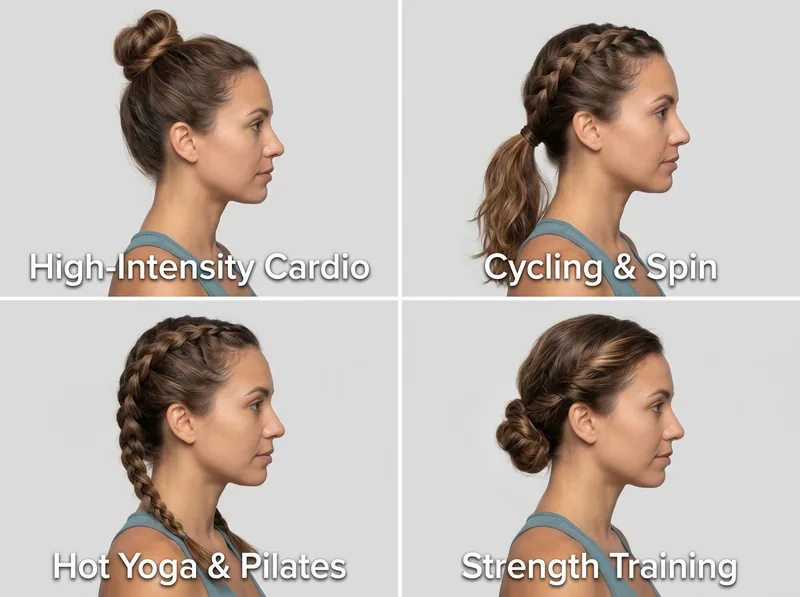 Protective styles that minimize sweat contact with hair length while securing strands during movement.
The Protective Style Strategy
How you wear your hair during workouts directly impacts how much sweat contacts your hair length versus your scalp. The goal is to minimize saturation of your mid-lengths and ends while keeping your style secure enough to survive high-intensity movement.
For cardio and running, a high bun keeps the bulk of your hair off your neck and away from the sweat zone. The key is to twist the hair before pinning it, which creates a tighter coil that resists moisture penetration better than a loose bun.
Cyclists and spin class regulars need styles that work under helmets without creating pressure points. A Dutch braid pulled into a low ponytail distributes weight evenly and keeps hair flat against the scalp, preventing the ponytail bump that causes breakage where the helmet sits.
Hot yoga demands maximum scalp exposure for heat regulation. Two French braids starting at the temples keep hair secured while allowing air circulation at the crown. The braids should be loose enough to avoid tension headaches but tight enough to survive inversions and floor work.
For strength training, where you’re moving through different planes and positions, a low twisted bun at the nape with front sections clipped back prevents hair from falling into your face during planks or bench work. The low position means it won’t interfere with lying on your back.
The Post-Workout Rinse Decision
Should you rinse immediately after a workout or wait until your regular wash day? The answer depends on your hair type and the intensity of your session.
If you’ve done hot yoga or any workout that left your hair completely saturated, rinse with cool water only. No shampoo, no conditioner. The goal is to remove the salt before it dries and crystallizes. Let your hair air-dry in a loose braid or bun.
For moderate workouts where only your scalp and roots are damp, skip the rinse entirely. Use a clean towel to blot your hairline and part, then let your hair air-dry completely before putting it up. The salt concentration isn’t high enough to cause immediate damage, and you’ll avoid over-wetting your hair between wash days.
The mistake most women make is doing a full shampoo and condition after every workout. In hard water, this means 5-7 exposures to mineral water per week. Even with a good chelating routine, that’s too much cumulative buildup. Save the full wash for your scheduled wash days and use water-only rinses when necessary.
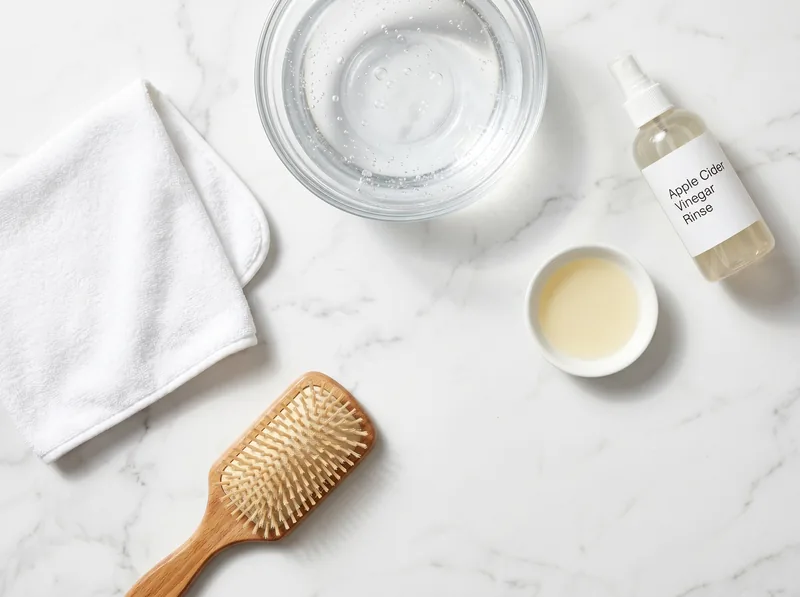 A mid-week chelating reset removes the compound buildup that forms when sweat meets hard water minerals.
The Mid-Week Chelating Reset
Active women in hard water climates need a chelating treatment mid-week, regardless of their normal wash schedule. This isn’t about cleanliness. It’s about removing the mineral-salt compounds before they bond permanently to your hair shaft.
Wednesday or Thursday works for most training schedules. You’ve accumulated three to four workouts’ worth of sweat and mineral exposure, but you haven’t reached the point where the buildup has caused visible damage. A chelating shampoo like Regrowth+ contains EDTA or citric acid, which breaks the ionic bonds between minerals and hair proteins.
The process is simple but non-negotiable. Wet your hair thoroughly with the hottest water you can tolerate (heat helps open the cuticle). Apply the chelating shampoo to your scalp and roots first, where buildup is heaviest. Massage for a full two minutes. The contact time matters more than the amount of product.
Rinse completely, then apply a second round of chelating shampoo to your mid-lengths and ends. This second wash targets the length where sweat drips during workouts. Rinse again, then follow with a protein-free conditioner. Protein can bond to the chelating agents and create new buildup.
This mid-week reset isn’t a replacement for your regular shampoo routine. It’s an additional step that prevents the cumulative damage that happens when you’re working out multiple times per week in a hard water climate. Think of it as maintenance, not treatment.
The Apple Cider Vinegar Rinse Protocol
An apple cider vinegar rinse after your chelating treatment helps rebalance your hair’s pH and seal the cuticle layer. The acetic acid in vinegar neutralizes any remaining alkaline residue from the chelating shampoo and smooths the cuticle scales flat.
Mix one part raw apple cider vinegar with four parts filtered water in a spray bottle. After your final conditioner rinse, spray the mixture onto your hair, focusing on the mid-lengths and ends. Let it sit for 60 seconds, then rinse with cool water. The smell dissipates as your hair dries.
This step is optional but beneficial for women with color-treated or chemically processed hair. The vinegar rinse adds shine and reduces tangling, both of which are compromised by mineral buildup. It also helps reset your scalp’s pH, which can reduce irritation and flaking.
Don’t use the vinegar rinse on the same day as a clarifying treatment or if you have any open cuts or scalp sensitivity. The acidity can sting broken skin. If you have very dry hair, reduce the frequency to once every two weeks rather than after every chelating session.
Adjusting for Training Cycles
Your hair care routine should flex with your training intensity. If you’re in a heavy training block or preparing for an event, you might need to chelate twice per week instead of once. If you’re in a recovery week with lighter workouts, you can extend it to every 10 days.
Pay attention to how your hair feels on day three after washing. If it’s already heavy and dull, you need more frequent chelating. If it still feels clean and moves normally, your current schedule is working. Your hair will tell you what it needs if you’re paying attention.
Women training for marathons, triathlons, or other endurance events often report accelerated hair damage during peak training weeks. This isn’t just the increased sweat volume. It’s also the stress hormones, the improved core temperature, and the cumulative exposure to outdoor elements. A chelating treatment before your long training sessions and again mid-week can prevent the worst of the damage.
If you’re doing two-a-day workouts, consider a quick cool water rinse after your morning session and save your full wash for after your evening session. This removes the morning sweat before it has time to dry and bond with minerals, without forcing you into multiple full washes per day.
References
- Effect of Hard Water on Hair - International Journal of Trichology
- Chemical and Physical Behavior of Human Hair - PubMed Central
- Sweat Composition and Dermal Effects - ScienceDirect
- Scalp Conditions and Care - American Academy of Dermatology