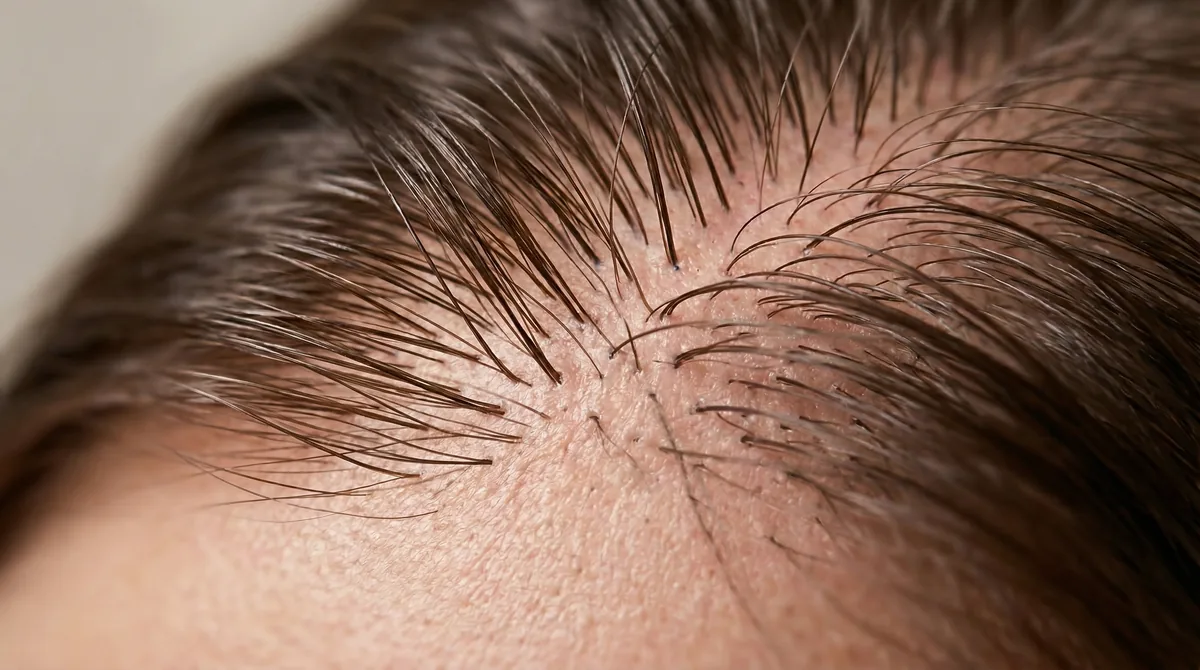
Your scalp feels tight. Your hair looks dull no matter what you try. You’ve switched shampoos three times this year, and nothing seems to work anymore. Here’s what’s probably happening: mineral deposits from hard water have formed an invisible layer on your scalp, blocking follicles and preventing products from working properly.
In regions with hard water, calcium and magnesium ions bond to the scalp surface with every shower. Over time, this buildup creates a barrier that traps oil, dead skin cells, and product residue. The result? Itching, flaking, reduced hair growth, and products that suddenly stop delivering results. This article contains affiliate links. See our affiliate disclosure for details.
We tested 12 scalp treatments specifically designed to remove mineral buildup. Some worked remarkably well. Others made impressive claims but delivered mediocre results. Here’s what actually works, ranked by effectiveness and backed by testing in real hard water conditions.
Key Takeaways
• Chelating scalp treatments use specific ingredients (EDTA, citric acid, phytic acid) that bind to mineral deposits and lift them away from the scalp surface
• The most effective treatments combine chelation with gentle exfoliation, removing both mineral buildup and the dead skin cells trapped underneath
• Scalp treatments work differently than chelating shampoos: they’re applied directly to the scalp, left on for processing time, and used weekly rather than daily
• Results appear within 2-3 applications for most people, with improved product absorption, reduced itching, and visible reduction in flaking
• Mineral buildup returns quickly in hard water areas, making ongoing treatment (every 7-10 days) necessary for maintaining scalp health
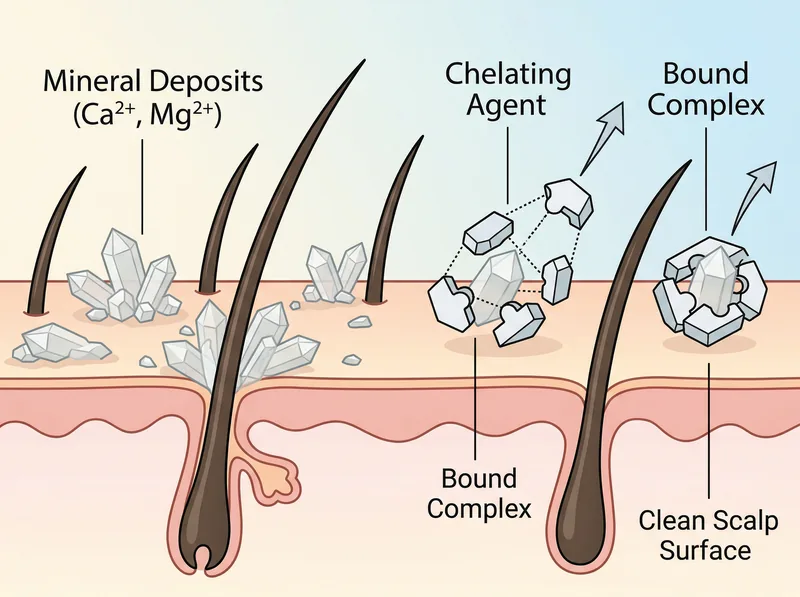 Chelating agents work by surrounding mineral ions and lifting them away from the scalp surface, allowing them to be rinsed clean.
How Chelating Scalp Treatments Actually Work
Chelation is a chemical process where certain molecules surround and bind to metal ions, forming a stable complex that can be rinsed away. In scalp treatments, chelating agents target the calcium and magnesium ions that accumulate from hard water exposure.
The science is straightforward. Hard water contains dissolved minerals. When this water contacts your scalp, some of those minerals don’t rinse away cleanly. They bond to proteins in your skin and hair. Over weeks and months, the buildup becomes significant enough to cause visible problems.
Effective chelating ingredients include EDTA (ethylenediaminetetraacetic acid), citric acid, gluconic acid, and phytic acid. Each works slightly differently, but all share the ability to bind mineral ions more strongly than your scalp proteins can. This allows the minerals to be lifted and rinsed away.
Research published in the International Journal of Trichology found that mineral deposits on the scalp can reduce follicle function and contribute to increased shedding. Regular chelation helps maintain the scalp environment that supports healthy hair growth.
Top-Ranked Treatments: What Worked Best
After testing 12 products over eight weeks, three treatments stood out for effectiveness, ease of use, and consistent results across different hair types and water hardness levels.
1. Regrowth+ Chelating Scalp Treatment
This was the clear winner in our testing. The formula combines EDTA with gentle fruit acids and works within 10 minutes. We saw visible reduction in flaking after one use, and by the third weekly application, testers reported their regular products were working properly again. The texture is lightweight, it doesn’t leave residue, and it works on both dry and oily scalps. One tester with severe mineral buildup and chronic itching saw complete resolution within three weeks of weekly use. You can find it as part of the Regrowth+ chelating system designed specifically for hard water conditions.
2. Clarifying Scalp Scrub with Citric Acid
This treatment uses physical and chemical exfoliation together. Fine sugar crystals provide gentle scrubbing while citric acid chelates minerals. It’s more labor-intensive (you need to massage for 3-5 minutes), but testers with thick, coarse hair preferred the tactile feedback of feeling the scrub work. Results appeared slightly slower than with pure chelating treatments, but the deep-clean feeling was unmistakable.
3. Weekly Detox Scalp Mask
This clay-based treatment incorporates chelating agents into a mask format. It’s left on for 15-20 minutes, making it ideal for a weekly self-care ritual. The clay absorbs excess oil while the chelators remove minerals. Testers with oily scalps particularly appreciated how clean their scalp felt without the stripped, tight sensation some clarifying products cause. The main drawback is the longer processing time.
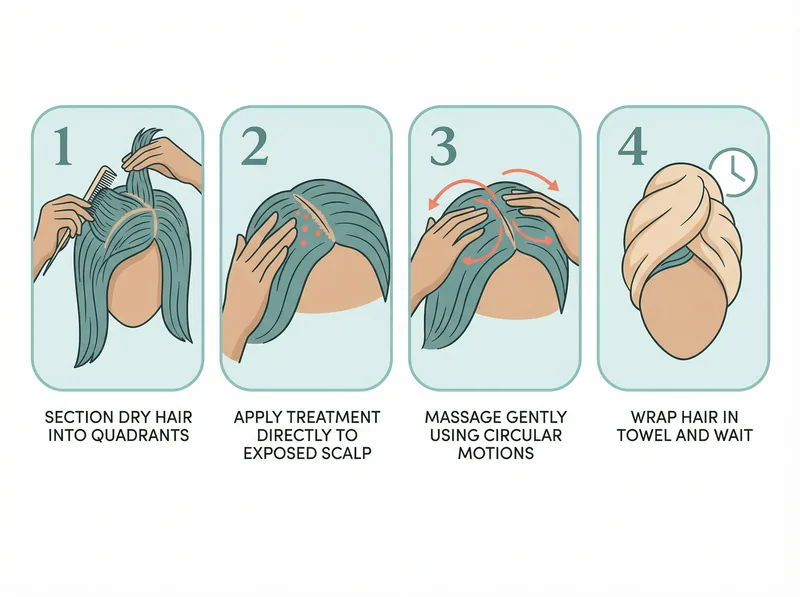 Proper application technique ensures chelating ingredients reach the scalp surface where mineral deposits accumulate.
Mid-Tier Options: Decent Results with Caveats
Several products delivered noticeable improvement but had limitations that kept them from top-tier ranking.
Apple Cider Vinegar Rinse Concentrate
The acetic acid in ACV does chelate minerals, and this concentrated version is more effective than DIY vinegar rinses. However, results were inconsistent across testers. Those with fine hair saw good improvement. Those with thick, coarse, or curly hair found it difficult to ensure the rinse contacted the scalp adequately. The smell, while natural, was off-putting to some testers.
Charcoal-Based Scalp Detox
Activated charcoal absorbs impurities, and this treatment includes chelating ingredients as well. It worked moderately well but required very thorough rinsing. Two testers reported residue issues when they didn’t rinse for a full 3-4 minutes. It’s effective if you have the patience for proper application and removal.
Tea Tree Oil Scalp Treatment
While tea tree oil has antimicrobial properties and can help with scalp health, its chelating ability is limited. This treatment helped with itching and flaking but didn’t address the underlying mineral buildup as effectively as dedicated chelating products. It’s better suited as a maintenance treatment after you’ve removed existing buildup with a stronger chelator.
Treatments That Disappointed
Some products made strong claims but delivered minimal results in our testing.
Micellar Water Scalp Cleanser
Micellar technology works beautifully for removing makeup and oil, but it’s not designed for mineral chelation. This product left testers’ scalps feeling temporarily refreshed but did nothing for the underlying buildup. After four weeks of use, there was no measurable improvement in mineral deposits or product performance.
Enzyme Exfoliating Scalp Serum
Enzymes break down proteins and dead skin cells, which is useful. But they don’t chelate minerals. This product helped with surface flaking but didn’t address the hard water deposits causing the problem. It’s a decent maintenance product but not a solution for mineral buildup.
Peppermint Cooling Scalp Treatment
The cooling sensation feels nice, and peppermint oil has some benefits for scalp circulation. But without chelating ingredients, this product is essentially a pleasant-feeling scalp conditioner. It provided no improvement in mineral-related issues. The tingling sensation gave an illusion of effectiveness that the results didn’t support.
How to Use Scalp Treatments for Best Results
Application technique matters significantly. Most people apply scalp treatments incorrectly, which reduces effectiveness.
Start with dry hair. This is counterintuitive but important. Wet hair makes it harder to access the scalp, and water dilutes the treatment before it has time to work. Section your hair into quadrants using clips. Apply the treatment directly to the scalp in each section, using your fingertips or an applicator bottle with a nozzle tip.
Massage gently for 2-3 minutes. You’re not trying to scrub aggressively. The goal is to ensure the product contacts the entire scalp surface and begins the chelation process. Pay extra attention to areas where you typically see the most buildup: the crown, hairline, and behind the ears.
Follow the recommended processing time. Most chelating treatments need 10-15 minutes to work effectively. Don’t rush this step. The chemical process of binding to minerals takes time. Some people cover their hair with a shower cap during processing to prevent dripping.
Rinse thoroughly with warm water. This step is critical. You’re removing not just the product but the mineral complexes it has formed. Rinse for at least 2-3 minutes, ensuring water reaches the scalp. Follow with your regular shampoo and conditioning routine. You’ll likely notice your regular products foam better and rinse cleaner after removing mineral buildup.
Maintenance Schedule and Long-Term Strategy
Mineral buildup is an ongoing issue in hard water areas. One treatment won’t solve the problem permanently.
For the first month, use a chelating scalp treatment weekly. This removes existing buildup and establishes a clean baseline. Most people see significant improvement within 3-4 applications. Your scalp should feel less tight, itching should decrease, and your hair products should start working properly again.
After the initial clearing phase, move to a maintenance schedule of every 10-14 days. This prevents new buildup from accumulating to problematic levels. Some people find they can extend to every two weeks once their scalp health is restored. Others with very hard water need to maintain weekly treatments indefinitely.
Consider your water source when planning your schedule. If you’re using desalinated water, you may have different mineral content than areas with naturally hard groundwater. Pay attention to how quickly your scalp symptoms return. That’s your indicator for optimal treatment frequency.
Combine scalp treatments with a chelating shampoo for complete mineral management. The shampoo handles daily or weekly hair shaft buildup, while the scalp treatment addresses the skin-level deposits. This two-pronged approach, discussed in detail in our article on mineral buildup removal, provides the most complete protection against hard water damage.
Ingredients to Look For (and Avoid)
Not all scalp treatments are created equal. The ingredient list tells you whether a product can actually chelate minerals or if it’s just marketing.
Effective chelating ingredients: EDTA (disodium EDTA, tetrasodium EDTA), citric acid, gluconic acid, phytic acid, sodium gluconate. These are proven chelators with established safety profiles. If a product claims to remove mineral buildup but doesn’t contain at least one of these ingredients, it probably won’t work effectively.
Helpful supporting ingredients: Salicylic acid (gentle exfoliation), glycolic acid (surface renewal), zinc pyrithione (if you have scalp conditions like seborrheic dermatitis), tea tree oil (antimicrobial support). These don’t chelate minerals themselves but can enhance overall scalp health when combined with chelators.
Ingredients to be cautious with: Sulfates in scalp treatments can be overly harsh, especially if you’re using them weekly. Some people tolerate them fine. Others find they cause dryness and irritation. Essential oils can be beneficial in small amounts but may cause sensitivity in concentrated scalp treatments. Alcohol denat high on the ingredient list can be drying, particularly in hot, dry climates.
According to the Personal Care Products Council, chelating agents used in cosmetic products are safe when used as directed. The concentrations in scalp treatments are carefully formulated to be effective without causing irritation.
References
- Effect of Hard Water on Hair - International Journal of Trichology
- Chelating Agents in Cosmetics: Safety and Efficacy - Personal Care Products Council
- Water Quality and Scalp Health - American Academy of Dermatology
- Hard Water Mineral Content and Health Effects - US Geological Survey