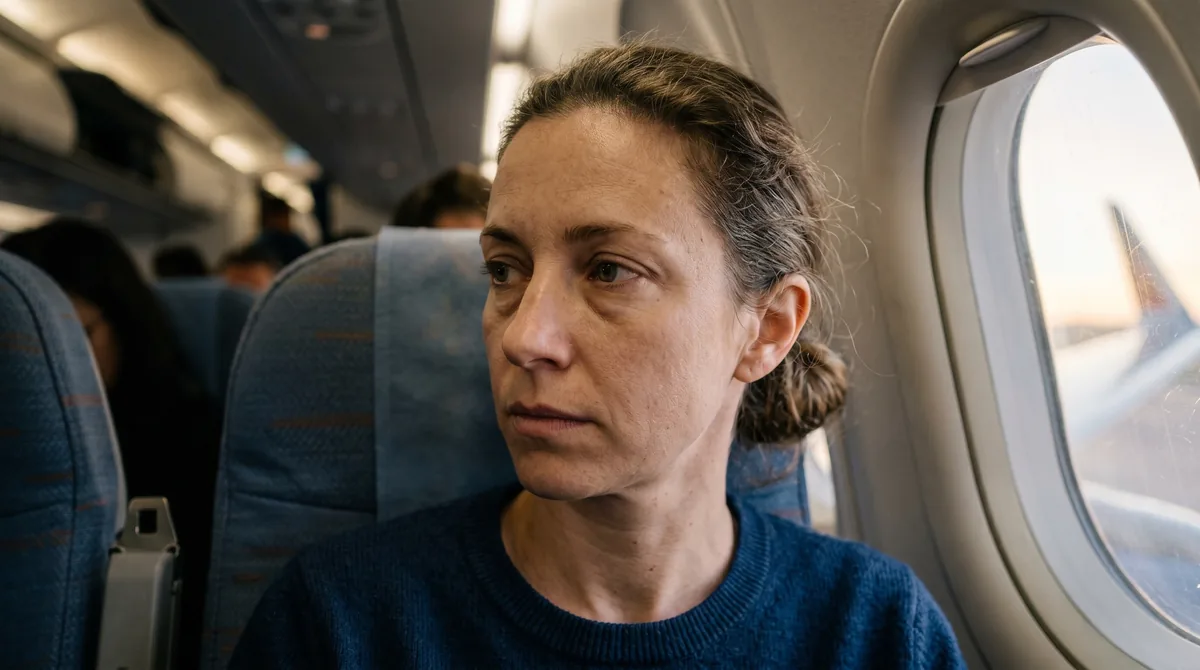
You step off a 14-hour flight and your skin feels like parchment. Your hair is flat, greasy, and somehow simultaneously dry. You look in the bathroom mirror and barely recognize the dehydrated, puffy face staring back. If you’re flying into a dry climate with hard water, you’re about to compound the damage your skin and hair just endured at 35,000 feet.
Cabin air humidity hovers between 10 and 20 percent during long-haul flights. That’s drier than most deserts. Your skin loses moisture faster than it can replace it, your scalp produces excess oil to compensate, and mineral-laden water from the airplane bathroom coats your hair in a film you can’t rinse out. By the time you land, your skin barrier is compromised and your hair is carrying environmental buildup from multiple water systems.
Here’s what actually works to recover your skin and hair after landing. This isn’t about sheet masks and Instagram routines. It’s about understanding what happened to your body during the flight and giving it what it needs to repair. This article contains affiliate links. See our affiliate disclosure for details.
What Happens to Your Skin During a Long Flight
The pressurized cabin environment creates a perfect storm for skin dehydration. Research published in the International Journal of Cosmetic Science shows that low humidity environments cause transepidermal water loss to spike within the first two hours of exposure. Your skin’s outermost layer, the stratum corneum, starts shedding moisture faster than your deeper layers can supply it.
But it’s not just dryness. The recycled cabin air is loaded with particulates, bacteria, and environmental pollutants that settle on your skin throughout the flight. Your skin’s natural protective barrier weakens as it loses moisture, making it more permeable to these irritants. By hour six of your flight, your skin is both dehydrated and inflamed.
Add to this the fact that most people don’t drink enough water during flights (because who wants to navigate a narrow aisle to a tiny bathroom six times?), and you’ve got systemic dehydration compounding the external moisture loss. Your skin cells are literally shrinking as they lose water content. This is why you land looking puffy but feeling tight. The puffiness is inflammation. The tightness is dehydration.
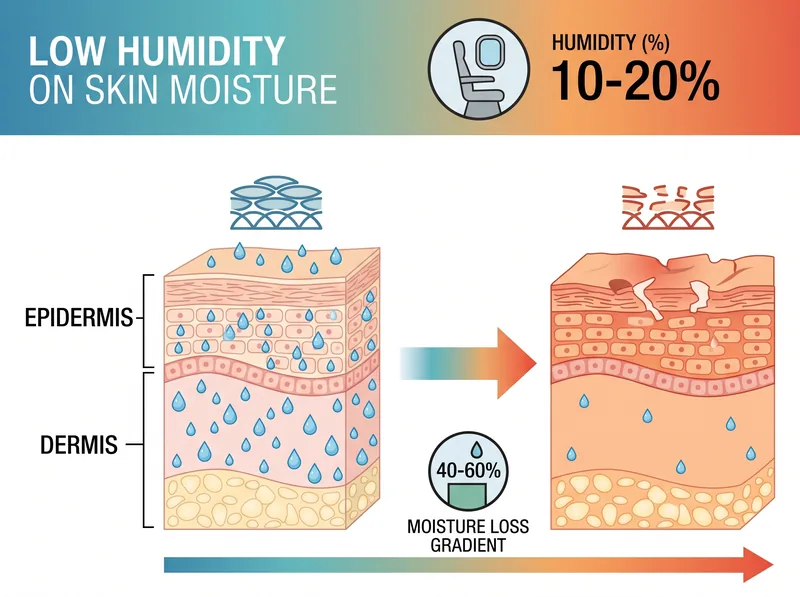 Cabin air humidity drops to 10-20%, stripping your skin’s protective moisture barrier within hours.
The Hair Problem: Mineral Buildup from Multiple Water Sources
Your hair doesn’t just get dry on a flight. It gets coated. Every time you wash your hands in the airplane bathroom, splash water on your face, or dampen your hair to smooth flyaways, you’re depositing minerals from that airplane’s water system onto your hair and scalp. Airplane water comes from municipal sources at various airports, and it’s stored in tanks that can harbor their own mineral concentrations.
If you’re flying into the Gulf region or another hard water area, you’re landing into a second layer of mineral exposure. The combination creates a buildup that regular shampoo can’t remove. You’ll notice your hair feels coated, looks dull, and won’t hold moisture no matter how much conditioner you use. That’s not damage. That’s mineral film.
The solution isn’t more moisture. It’s chelation. You need a shampoo that binds to mineral ions and pulls them off your hair shaft. A chelating shampoo like Regrowth+ is designed specifically for this, using ingredients that target calcium and magnesium deposits without stripping your hair’s natural oils.
The First 6 Hours After Landing: Immediate Recovery Protocol
Don’t wait to start recovery. The first six hours after you land are critical for limiting the damage and preventing it from becoming chronic. Your skin barrier is at its most vulnerable right now, and what you do in these hours determines whether you bounce back in a day or struggle for a week.
First: hydrate internally before you do anything topical. Drink 500ml of water within the first hour of landing. Your cells need water from the inside to restore barrier function from the outside. No serum or cream can compensate for systemic dehydration. If you’re feeling jet-lagged and foggy, add electrolytes. Your body lost more than just water during that flight.
Second: cleanse your face gently but thoroughly. You need to remove the cabin air pollutants and particulates without further stripping your compromised barrier. Use a creamy, non-foaming cleanser. Avoid anything with sulfates or high pH. Your skin’s acid mantle is already changeed. Don’t make it worse with harsh surfactants.
Third: apply a barrier repair serum or cream immediately after cleansing while your skin is still damp. Look for ingredients like ceramides, cholesterol, and fatty acids. These are the lipids your barrier needs to rebuild itself. Ceramides are particularly effective because they mimic your skin’s natural structure.
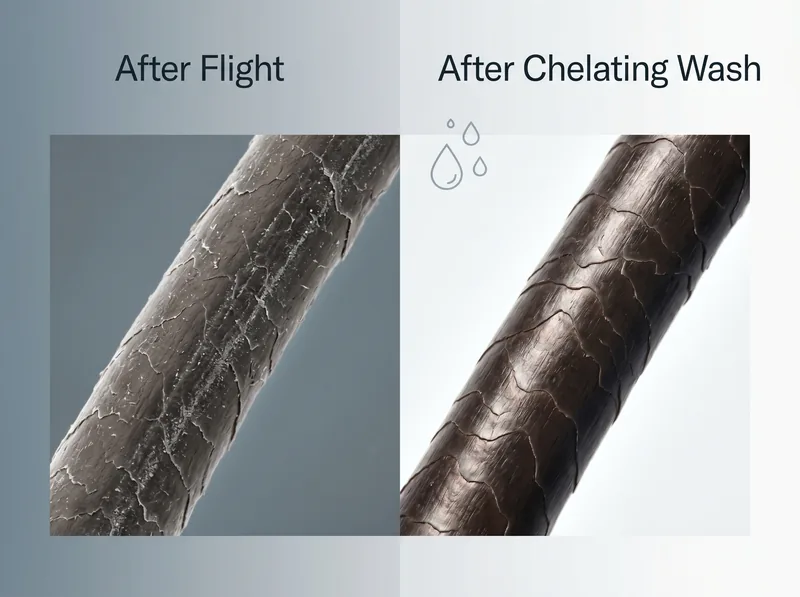 Chelating shampoo removes the layered mineral deposits that accumulate during travel through multiple water systems.
The Chelating Wash: Removing Flight Mineral Buildup
Your first hair wash after landing should be a chelating wash, not a moisturizing one. This is counterintuitive because your hair feels dry, but adding moisture on top of mineral buildup just creates more coating. You need to strip the minerals first, then add moisture back.
Chelating shampoos work by using ingredients like EDTA (ethylenediaminetetraacetic acid) or citric acid that bind to metal ions and allow them to rinse away. These ingredients are safe and widely used in cosmetic chemistry, but they’re not in every shampoo. You need a formula specifically designed for mineral removal. The best chelating shampoos will list EDTA or sodium citrate high in the ingredient list.
After the chelating wash, your hair will feel squeaky clean, almost stripped. This is normal. You’ve removed the coating. Now you can apply a deep conditioner or hair mask, and it will actually penetrate instead of sitting on top of mineral residue. Focus the conditioner on mid-lengths to ends, not your scalp. Your scalp needs to breathe after being suffocated by cabin air and mineral buildup.
The 24-48 Hour Window: Supporting Barrier Repair
Your skin barrier doesn’t repair overnight. Studies on barrier recovery show that full restoration after acute dehydration takes 24 to 72 hours, depending on the severity of damage and the quality of your recovery routine. During this window, your primary goal is supporting your skin’s natural repair mechanisms, not forcing them.
Keep your routine simple. This is not the time to introduce new active ingredients or try that retinol serum you’ve been saving. Your barrier is compromised, which means it’s more permeable than usual. Anything you put on your skin right now will penetrate deeper than it normally would. Stick to gentle, barrier-supporting ingredients: ceramides, hyaluronic acid, niacinamide, and occlusives like squalane or petrolatum.
Sleep is non-negotiable. Your skin does most of its repair work while you sleep, and if you’re jet-lagged and not sleeping properly, you’re extending your recovery time. Poor sleep improves cortisol, which impairs barrier function and slows healing. If you can’t sleep, at least rest in a dark room with a humidifier running. The added moisture in the air will help your skin retain what little hydration it has left.
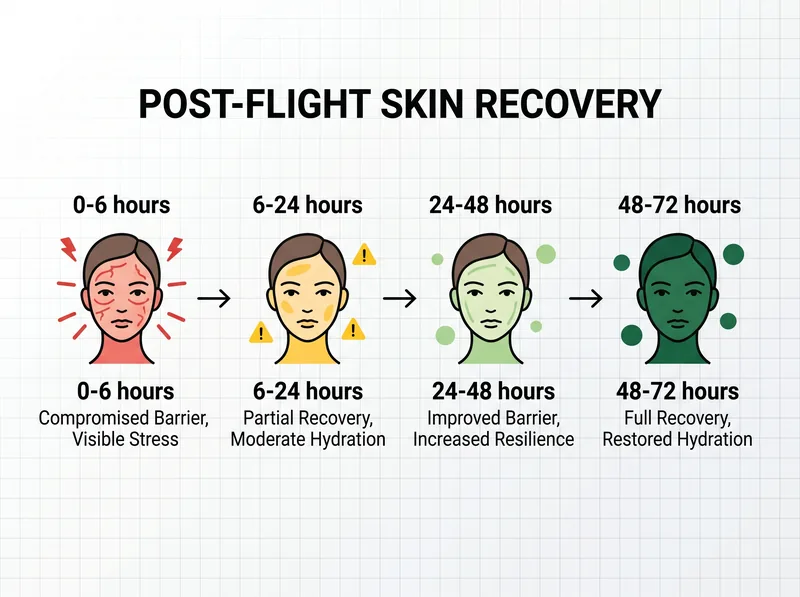 Your skin barrier needs 24-72 hours to fully recover from cabin air exposure, depending on your post-flight routine.
What Not to Do: Common Post-Flight Skincare Mistakes
Don’t over-exfoliate. Your skin is already compromised, and scrubbing it with physical exfoliants or harsh chemical peels will only make things worse. You might think you’re removing dead skin cells, but you’re actually removing the protective outer layer your skin needs to rebuild its barrier. Save the exfoliation for a week post-flight when your skin has recovered.
Don’t pile on heavy oils thinking more moisture equals better recovery. If your skin barrier is damaged, it can’t regulate what gets in and what stays out. Heavy oils can trap irritants against your skin and prevent proper barrier repair. Use lightweight, barrier-appropriate lipids instead. Squalane, jojoba, and rosehip oil are better choices than coconut or olive oil.
Don’t ignore your scalp. Most people focus on their facial skin and forget that their scalp went through the same environmental assault. If your scalp is itchy, flaky, or producing excess oil post-flight, it’s because its barrier is compromised too. A healthy scalp is the foundation for healthy hair, and neglecting it will extend your recovery time.
Long-Term Prevention: Building Resilience for Frequent Flyers
If you fly long-haul regularly, you’re not just dealing with acute dehydration. You’re dealing with cumulative environmental stress. Each flight weakens your skin barrier a little more, and if you’re not giving it time to fully recover between flights, you’re operating from a deficit. This is why frequent flyers often have chronically dry, sensitive skin even when they’re not traveling.
The solution is building barrier resilience during your non-travel periods. This means consistent use of barrier-repair ingredients (ceramides, niacinamide, cholesterol), adequate hydration, and protecting your skin from environmental stressors even when you’re on the ground. Think of it like training for a marathon. You can’t show up unprepared and expect your body to perform.
For your hair, this means regular chelating washes even when you haven’t flown recently. Hard water mineral buildup is cumulative, and if you’re living in a hard water area, you’re adding to the problem every time you shower. A weekly or bi-weekly chelating treatment keeps your hair baseline clean so that post-flight buildup doesn’t compound on top of existing deposits.
References
- Skin Barrier Function and Transepidermal Water Loss in Low Humidity Environments - International Journal of Cosmetic Science
- Effects of Air Travel on Skin Hydration and Barrier Function - Journal of Cosmetic Dermatology
- Ceramides in Skin Barrier Repair: Mechanisms and Clinical Applications - Dermatology and Therapy
- Hard Water Effects on Hair and Scalp: A Review - International Journal of Trichology